
Pallets let businesses use forklifts, pallet jacks, racking, trucks, and shipping containers the way they were designed to work. Without a properly matched pallet, none of that equipment performs efficiently.
This article covers what actually matters when sourcing wooden pallets: benefits and limitations, industry-specific applications, cost considerations, selection criteria, export requirements, and how to manage supply so a shortage never catches your operation off guard.
Key Takeaways
- Wooden pallets unitize products for efficient handling, storage, transport, and distribution.
- Total cost depends on more than sticker price: load capacity, repairability, availability, and facility fit all factor in.
- Standard and custom pallets match product dimensions, handling equipment, and export regulations.
- Inspection, proper storage, and dependable sourcing reduce disruptions, damage, and waste.
The Role of Wooden Pallets in Logistics and Supply Chain Operations
A wooden pallet is an engineered, load-bearing platform built from lumber, typically a deck of boards fastened to stringers or blocks. That raised design is what lets forklift tines and pallet jack forks slide underneath and lift the whole unit at once.
Pallets touch nearly every link in the chain:
- Production: Finished goods are palletized as they come off the line.
- Storage: Loaded pallets sit in racking or floor-stacked zones.
- Order picking and cross-docking: Whole pallets or partial pulls move toward outbound staging.
- Transport and delivery: Pallets load into trailers, containers, and retail docks.
Palletization consolidates individual cartons, bags, drums, or components into one stable, countable unit. A single forklift pass does what would otherwise take several workers handling boxes by hand.
That difference isn't new. A USDA Forest Service study found it took 3.6 man-hours to unload a floor-loaded truck of canned goods by hand, compared to 1.7 man-hours for the same truck fully palletized onto wooden pallets.
The study is decades old and shouldn't be read as a modern productivity guarantee, but the underlying mechanism hasn't changed: unitized loads move faster than loose freight.
Pallet specifications need to match your warehouse infrastructure. Rack beam spacing, conveyor widths, forklift capacity, and dock door clearances all depend on consistent pallet dimensions.
When a pallet is too wide for racking, too weak for a forklift's load center, or missing a clean four-way entry, friction shows up as:
- Product damage and unstable stacks
- Handling delays across the floor
- Rejected shipments at the receiving dock
Key Benefits and Limitations of Wooden Pallets
Strength, Cost, and Customization
Pallet strength isn't a single number. It depends on lumber species, board thickness and spacing, fastener quality, deck design, and whether the load is static, dynamic, or stacked in racking.
The National Wooden Pallet and Container Association's 2025 standard ties performance directly to these variables rather than assigning one blanket weight rating to every pallet style.
Wood's practical advantages still make it the default choice for most operations:
- Lower acquisition cost compared to many alternative materials
- Standard formats like 48x40 GMA pallets that fit common racking and trailers
- Repairability, meaning a cracked board doesn't always mean a dead pallet
- Flexible sourcing, from new hardwood and softwood to combo and 100% recycled stock
Custom builds extend that flexibility further. Oversized machinery, narrow or odd-shaped loads, and automated conveyor systems often need pallets engineered around the product rather than off a shelf.
Palleton, for example, designs custom pallets by reviewing product dimensions, load weight, handling method, and shipping workflow before finalizing specifications. That keeps the build right-sized instead of over-engineered.
Sustainability and Honest Limitations
Wood pallets have a long recovery life. A 2023 Virginia Tech thesis estimated that 89% of wooden pallets recovered in 2021 were converted into repaired or remanufactured units rather than scrapped, based on industry survey data from that year's production and recovery figures.

That recovery rate keeps a large share of pallet lumber in circulation instead of landfills.
But wood has real limitations worth stating plainly:
- It absorbs moisture and can develop mold or rot in poor storage conditions.
- Damaged boards can splinter or leave exposed nail heads.
- Pallets require regular inspection, not a "set it and forget it" purchase.
Plastic pallets solve some of these problems with easier sanitation, moisture resistance, and dimensional consistency, which matters for closed-loop programs with strict hygiene needs.
Wood tends to win out for cost-sensitive operations, heavy-duty or one-way shipments, and anywhere repairability beats replacement.
Wooden Pallet Applications Across Industries
No single pallet works everywhere. Matching construction and condition to the product, handling process, and regulatory environment is the whole point.
Manufacturers and distributors use standard pallets for finished goods, raw materials, and components moving between production and warehouse storage.
Food, beverage, and grocery operations face added scrutiny. The FDA's sanitary transportation rule requires protection against contamination during transit. It does not mandate a specific pallet material, but good-quality pallets are recognized as appropriate practice. Washed, food-grade pallets give these operations a cleaner platform for direct or near-direct product contact.
Automotive, machinery, chemical, and grain shipments often involve concentrated weight or unusual load geometry. A standard pallet isn't always built for a transmission assembly or a drum of industrial chemical. These loads frequently call for:
- Heavy-duty custom pallets engineered for racking and high weight
- Reinforced custom crates with bracing or padding for fragile or irregular items
- Specialty designs compatible with conveyors and stretch-wrap automation
Pharmaceutical and international shipments add documentation and compliance requirements on top of physical protection, including ISPM-15-compliant treatment where the destination country enforces it.
Environment changes the equation too. A pallet sitting in a dry, climate-controlled warehouse faces different stress than one staged outdoors or cycling through a refrigerated facility. Matching the pallet to the environment, not just the product, prevents a lot of avoidable damage.
How to Choose and Manage Wooden Pallets
Start with the load, not the catalog. Document these load details:
- Product weight and dimensions
- Center of gravity and packaging arrangement
- Stacking pattern and any concentrated pressure points
- Fragility and handling sensitivity
From there, match the pallet's footprint and entry style to your actual operation. A 48x40-inch GMA stringer pallet remains the dominant US format, fitting most racking, forklifts, and trailers without modification. But if your racking, conveyor, or destination country calls for something else, standard dimensions won't cut it.

Picking the Right Pallet Type
| Pallet Type | Best Use Case |
|---|---|
| Standard new (hardwood/softwood) | General warehouse and distribution use |
| Recycled or combo | Cost-sensitive, high-volume programs |
| Custom heavy-duty | Oversized machinery, racked storage |
| Washed food-grade | Food, beverage, direct product contact |
| ISPM-15 heat-treated | International export shipments |
Inspection and Storage Basics
Before putting any pallet, new or reused, into service, check for:
- Cracked boards or broken stringers/blocks
- Loose nails or protruding fasteners
- Moisture damage, warping, or mold
- Excessive contamination
- Missing or illegible treatment marks
Keep pallets off wet ground, limit unnecessary weather exposure, and separate damaged units from usable stock. A documented inspection and rotation process catches problems before they reach the dock.
Calculate Total Cost of Ownership
Look past unit price. Factor in:
- Freight and storage
- Repair and labor
- Disposal fees
- Emergency replacement purchases
Comparing suppliers on delivered cost and service reliability tells a more accurate story than sticker prices alone.
Export Compliance, Sustainability, and Supply Continuity
ISPM-15 and Heat Treatment
Many countries require solid wood packaging used in international trade to comply with ISPM-15, the international standard for regulated wood packaging material. USDA's Animal and Plant Health Inspection Service places responsibility for meeting the destination country's requirements on the US exporter, not the carrier or the pallet supplier alone. That means checking current APHIS guidance for your specific destination before shipping, since requirements and exemptions vary.
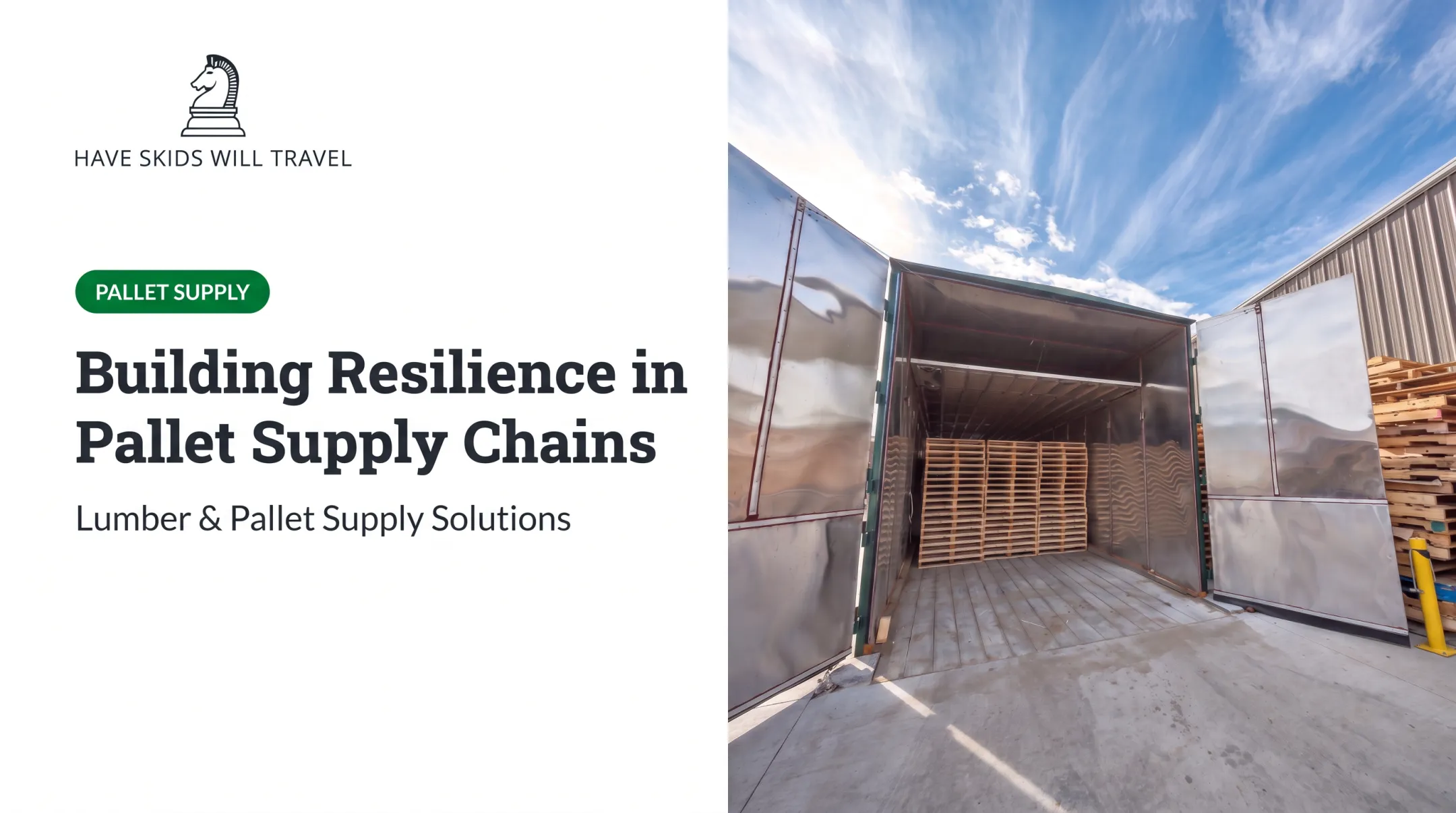
Where ISPM-15 applies, conventional heat treatment requires the wood core to reach at least 56°C (133°F) for a minimum of 30 continuous minutes. The resulting mark includes a country code, facility identification code, and treatment code (commonly "HT"). That mark is different from claims about sanitation, kiln drying, or fumigation, which address separate issues entirely.

Recovery Options and Supply Continuity
Compliance gets loads across borders. Recovery programs and supply planning keep day-to-day operations stable.
Recycled, repaired, and remanufactured pallets cut waste while retaining working value when grade and condition match the job. Buy-back and core recovery programs let businesses return usable pallets instead of discarding them.
A few practices consistently protect operations from disruption:
- Recurring delivery schedules tied to production cadence
- Backup sourcing arrangements for seasonal demand spikes
- Clear lead-time communication with suppliers
- Emergency programs for unplanned shortages
Pallet markets shift with lumber supply and freight costs. Suppliers with multiple sourcing channels—and more than one facility to draw from—absorb those swings better than a single-source setup.
Reliable Pallet Supply and Management with Palleton
Palleton has spent more than 45 years in the pallet and lumber industry, growing from a single founder with a pickup truck into a company operating seven facilities, including its own lumber mill and a custom pallet and crate shop. That footprint supports standard and custom pallet needs for businesses ranging from small operations to large manufacturers.
Custom manufacturing is where Palleton spends a lot of its engineering attention. Machinery, oversized equipment, and products with unusual dimensions don't always fit an off-the-shelf pallet, so Palleton reviews product specs, load weight, and handling method before building a design around the actual shipment.
For export shipments, Palleton offers ISPM-15 Heat Treat Certified pallets and crates, stamped and marked according to current standards. Shipment-specific compliance still depends on your destination country's rules—confirm those requirements before the load leaves the dock.
Palleton also helps teams steady supply and cut waste:
- Sourcing and logistics coordination across its multi-facility network
- Recurring supply programs aligned to customer production schedules
- Recycled, repaired, combination, and buy-back options for waste-reduction and budget goals
None of these guarantee a specific savings figure or availability, since pallet markets and shipment needs vary. But they give businesses a way to consolidate purchasing with one provider instead of juggling several.
Need help matching pallet dimensions, load requirements, delivery cadence, or export compliance to your lanes? Palleton's sales team can map the right mix for your operation.
Frequently Asked Questions
What are pallets in logistics?
Pallets are load-bearing platforms used to unitize, store, handle, and transport goods. Their raised design allows forklifts, pallet jacks, and racking systems to move them efficiently throughout a supply chain.
How much do wooden pallets cost?
Prices vary by size, grade, condition, quantity, treatment, and delivery distance. New, used, repaired, and remanufactured pallets price differently, so a specification-based quote is the best way to compare.
Why are wooden pallets used in logistics?
Wood offers strength, wide availability, repairability, and compatibility with standard forklifts and pallet jacks. It also supports both one-way and reusable shipping programs, making it practical across a wide range of industries.
How do I choose the right wooden pallet for my supply chain?
Start by evaluating load weight, dimensions, and handling equipment, then factor in racking compatibility, storage environment, shipment route, reuse cycle, and any sanitation or export requirements specific to your product.
Do wooden pallets need to be heat-treated for international shipping?
Many international shipments that use solid wood packaging must meet ISPM-15, and rules vary by destination and shipment type. Confirm requirements for your route and use properly marked, certified pallets when treatment is required.