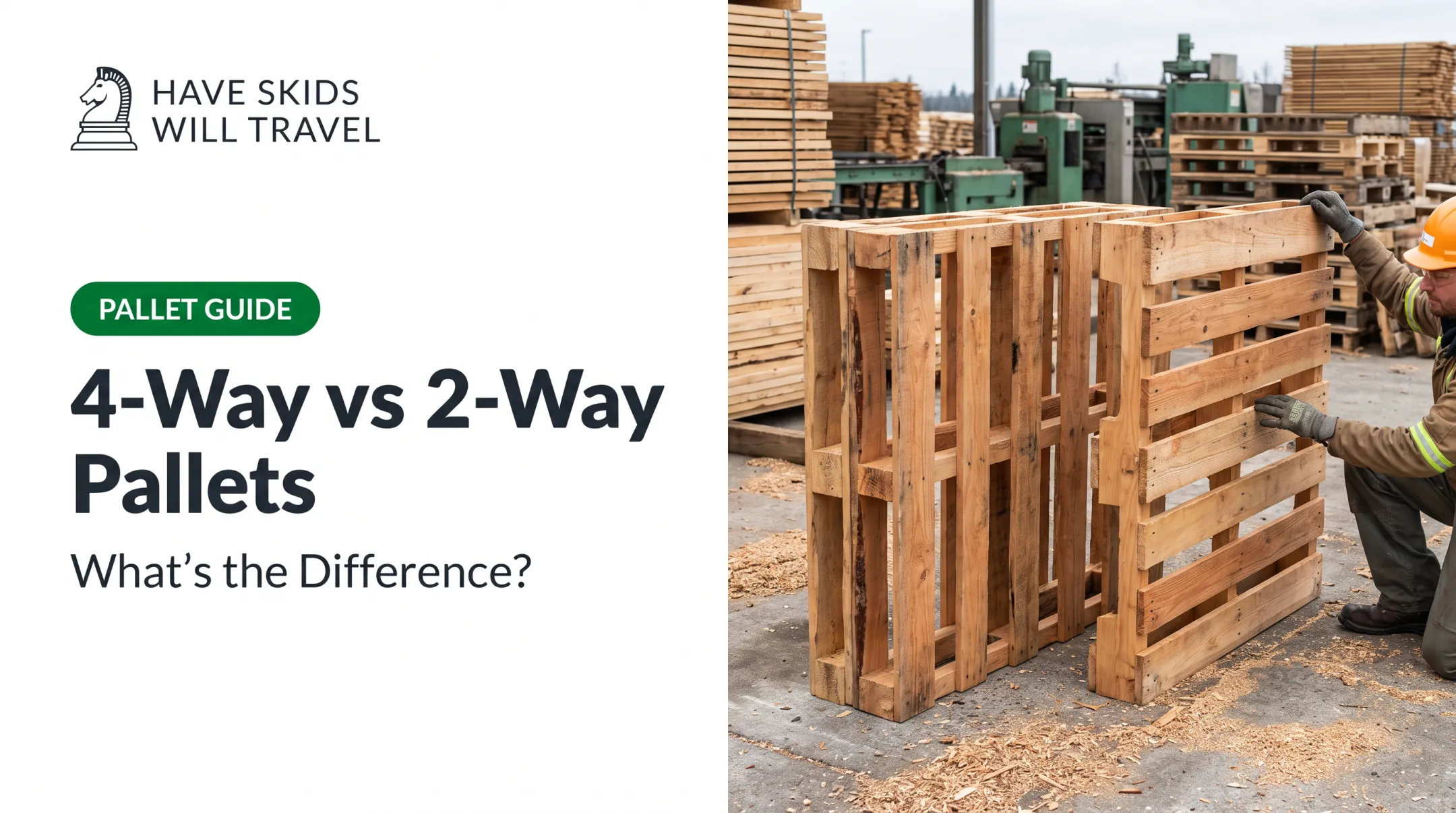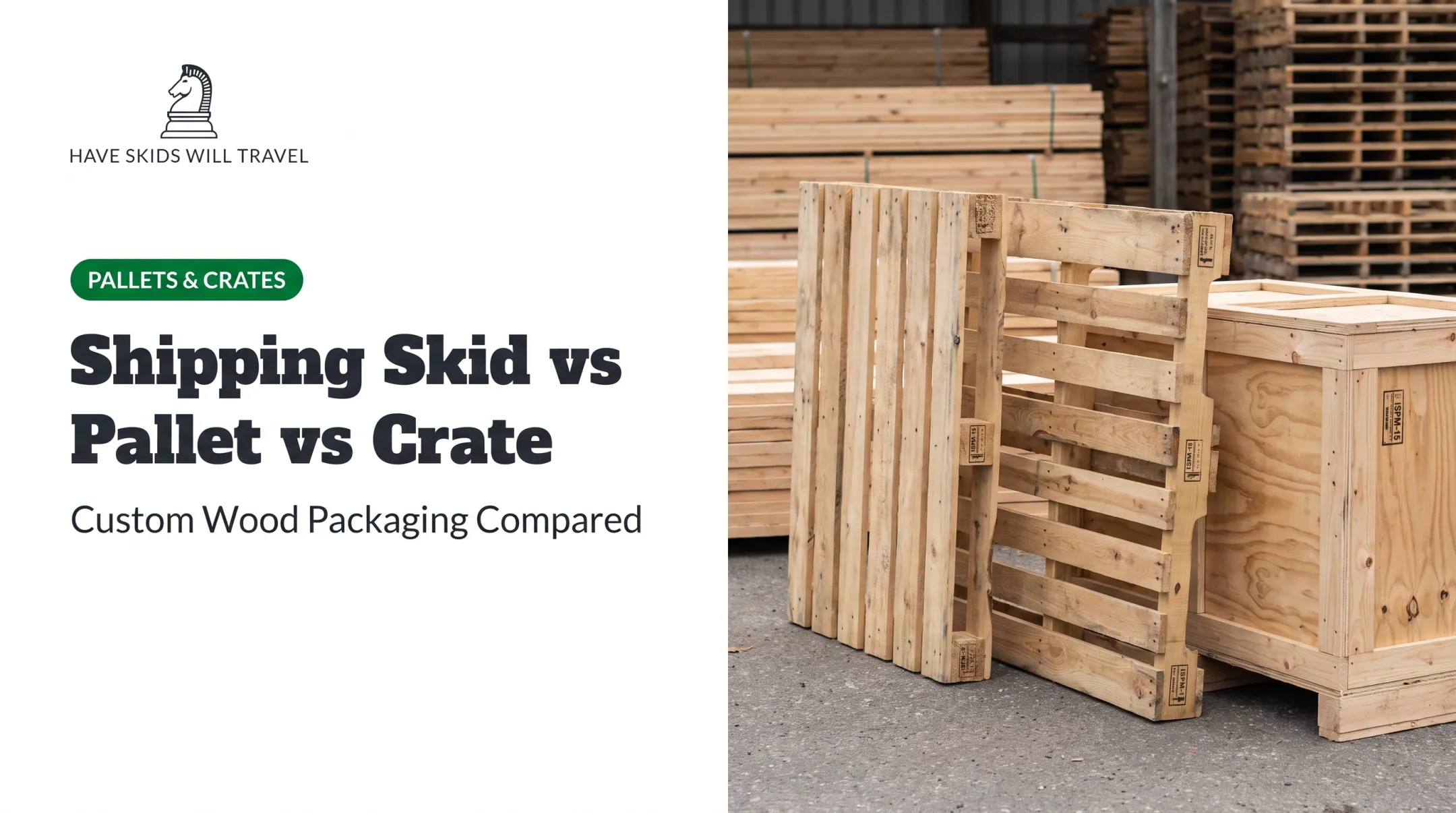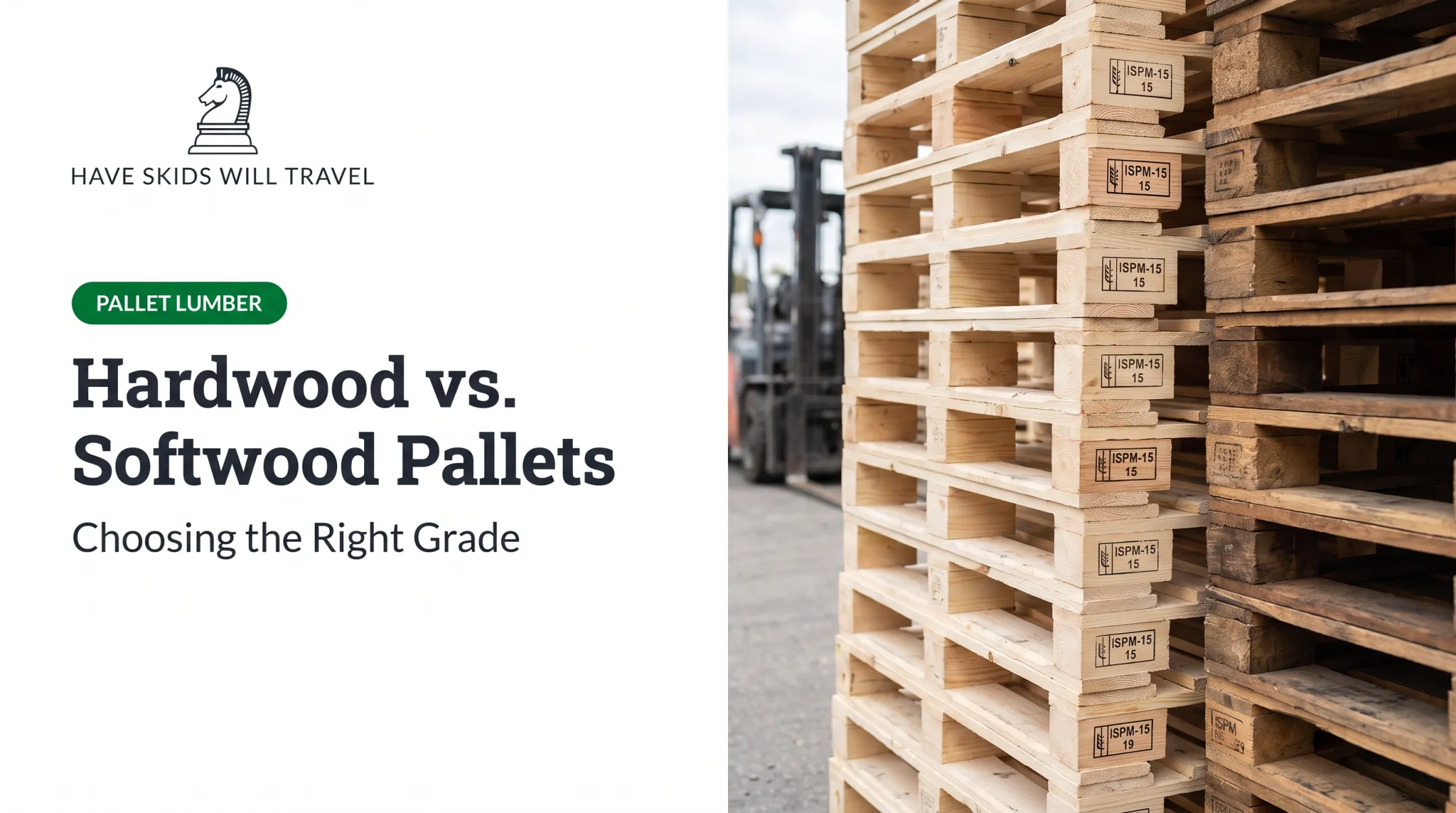

Choosing wrong isn't just a paperwork issue. The wrong pallet affects load capacity, forklift compatibility, cost per unit, and your risk of damaged shipments. This guide breaks down how each design is built, where each one fits best, and how to choose between them. Palleton has spent more than 45 years building both custom pallet types for businesses across the country.
TL;DR
- Stringer pallets use continuous support boards, typically two-way (or notched four-way) entry, and dominate US production
- Block pallets use nine blocks for true four-way forklift and pallet jack access, common internationally
- Cost vs. access: stringers usually cost less; blocks win on four-way entry and racking stability
- Pick by use case: domestic GMA freight favors stringers; export, heavy loads, and pallet jacks favor blocks
Stringer Pallet vs Block Pallet: Quick Comparison
| Factor | Stringer Pallet | Block Pallet |
|---|---|---|
| Cost | More economical, simpler construction | Higher cost due to added blocks and materials |
| Forklift/pallet jack access | Two-way standard; notched versions allow partial four-way | True four-way entry from all sides |
| Common usage region | Most common in the US | More common internationally and in export shipping |
| Repairability | Easier: individual boards swap out fast | More complex due to block configuration |
| Weight capacity | Strong for standard to heavy loads when well-built | Consistent support across four-way handling |
US production data backs this up. According to USDA Forest Service and Virginia Tech research, 77% of new US pallets built in 2021 were stringer designs, compared to just 19% block. That split flips almost entirely once you look overseas.
What Is a Stringer Pallet?
A stringer pallet gets its name from the stringers (support boards, usually 2x4s or 3x4s) sandwiched between the top and bottom deck boards. These stringers run the length of the pallet and carry the load, while the deck boards fasten directly to them.
This is the dominant pallet design in US supply chains, largely because it's cheaper to build and easier to repair. If a board cracks, you replace that board. You don't rebuild the whole unit.
Sizing and Access
The standard stringer pallet measures 48" x 40" (the GMA format), though Palleton builds custom stringer pallets to any dimension your load requires.
Solid stringers only allow entry from the two open ends. Notch the stringers and you get partial four-way access: forklift tines can enter from the sides too, just not pallet jacks.
Use Cases of Stringer Pallets
Stringer pallets show up most often in:
- Retail distribution and general merchandise
- Food distribution and one-way shipments
- General manufacturing where forklifts handle most movement
- Domestic shipping where round-trip reuse isn't the priority
Palleton manufactures custom stringer pallets in new hardwood, softwood, combo new/used, and recycled wood grades, and offers ISPM-15 heat treatment for stringer pallets headed overseas. Every treated unit gets heated to a minimum core temperature of 140°F for at least 30 minutes, then stamped with the compliance mark customs inspectors look for.
What Is a Block Pallet?
A block pallet swaps continuous stringers for a nine-block configuration: one block at each of the four corners, one centered on each side, and one in the middle. These blocks support the deck boards from underneath.
That layout is what makes true four-way access possible. Forklifts and pallet jacks can enter from any of the four sides, not just the two ends. That full entry from every side, with no notching required, is what a 4-way pallet designation means.

Block pallets sometimes include a bottom deck board running perpendicular to the top boards, adding stability for stacking and repeated handling.
Use Cases of Block Pallets
Block pallets show up most where handling flexibility matters:
- International shipping (block designs were 68% of production in a nine-country European sample, per Pallet Enterprise's 2021 market overview)
- Heavier or oversized loads needing support from any angle
- Automated warehouses and conveyor systems
That last use case carries real weight. A Virginia Tech study on automated warehouse performance found that equipment manufacturers primarily design automatic handling systems around block pallets, so stringer pallets can need retrofitting to work with some conveyor and palletizing setups.

Stringer vs Block Pallet: Which Is Better for Your Supply Chain?
There's no universal winner here. The right pallet depends on a handful of practical factors:
- Product weight — heavier or unevenly distributed loads may benefit from four-way support
- Shipping destination — domestic vs. international changes what you need
- Handling equipment — what your dock and your customer's dock actually use
- Storage duration — pallets sitting in racking longer face different stress than one-way shipments
- Budget — block pallets typically cost more; a 2010 Pallet Enterprise build-cost benchmark put a perimeter-based block pallet at roughly double a new GMA stringer
Choose stringer pallets when:
- You're shipping domestically within the US
- Cost efficiency and easy repair matter
- Your handling equipment works fine with two-way or notched access
Choose block pallets when:
- You need true four-way handling
- You're shipping internationally
- You're running automated or conveyor-based systems
Here's the thing most guides skip: build quality matters more than design type. A well-built stringer pallet, properly sized and made with sound lumber, can outperform a poorly built block pallet every time.
Palleton's custom design process starts with your product, load weight, and handling method—not a default recommendation. The team reviews your shipping requirements and right-sizes materials and layout before building anything.
Real-World Example: Choosing the Right Pallet
Consider a mid-sized food and beverage manufacturer shipping palletized product to regional grocery distribution centers. Loads arrive damaged more often than expected, and pallet spend keeps climbing as replacement units pile up.
The core issue often traces back to a mismatch between pallet construction and actual handling conditions. A common case: standard stringer pallets in a facility that has shifted to automated, four-way handling equipment.
One documented example from PalletOne's pallet comparison illustrates the scale of impact this kind of mismatch can have. A grocery distribution center that switched to block pallets reported:
- Nearly $40,000 in annual savings from reduced dock forklift needs
- An increase from 24-28 to 30 palletized loads per trailer
- Freight savings exceeding $440,000 annually

What matters is matching construction to your handling environment. A supplier who understands both sides of that choice helps stop these disruptions before they start.
If inconsistent pallet quality or rising costs are hitting your supply chain, Palleton's custom pallet design team can match type, material grade, and construction to your loads and shipping requirements.
Frequently Asked Questions
What is a stringer on a pallet?
A stringer is the support board, typically a 2x4 or 3x4, that runs between the top and bottom deck boards. It forms the structural backbone of a stringer pallet and carries the load along its length.
What are the key differences between stringer pallets and block pallets?
Stringer pallets use continuous support boards and offer two-way entry (or partial four-way with notching). Block pallets use nine individual blocks that allow true four-way forklift and pallet jack access.
What does "block pallet" mean?
A block pallet uses nine solid wood blocks — four corners, four sides, one center — to support the deck boards. This configuration allows entry from all four sides, improving handling flexibility.
What is a 4-way pallet?
A 4-way pallet allows forklift or pallet jack access from any of its four sides. Block pallets achieve this naturally through their block layout, while stringer pallets need notched stringers for partial four-way entry.
How many 4-inch blocks come on a pallet?
Standard block pallets use nine blocks: one at each corner, one centered on each side, and one in the middle.
Which pallet type is more cost-effective for standard shipping?
Stringer pallets are generally more economical for domestic US shipping. Simpler construction and easier board-level repairs keep both purchase and maintenance costs lower.