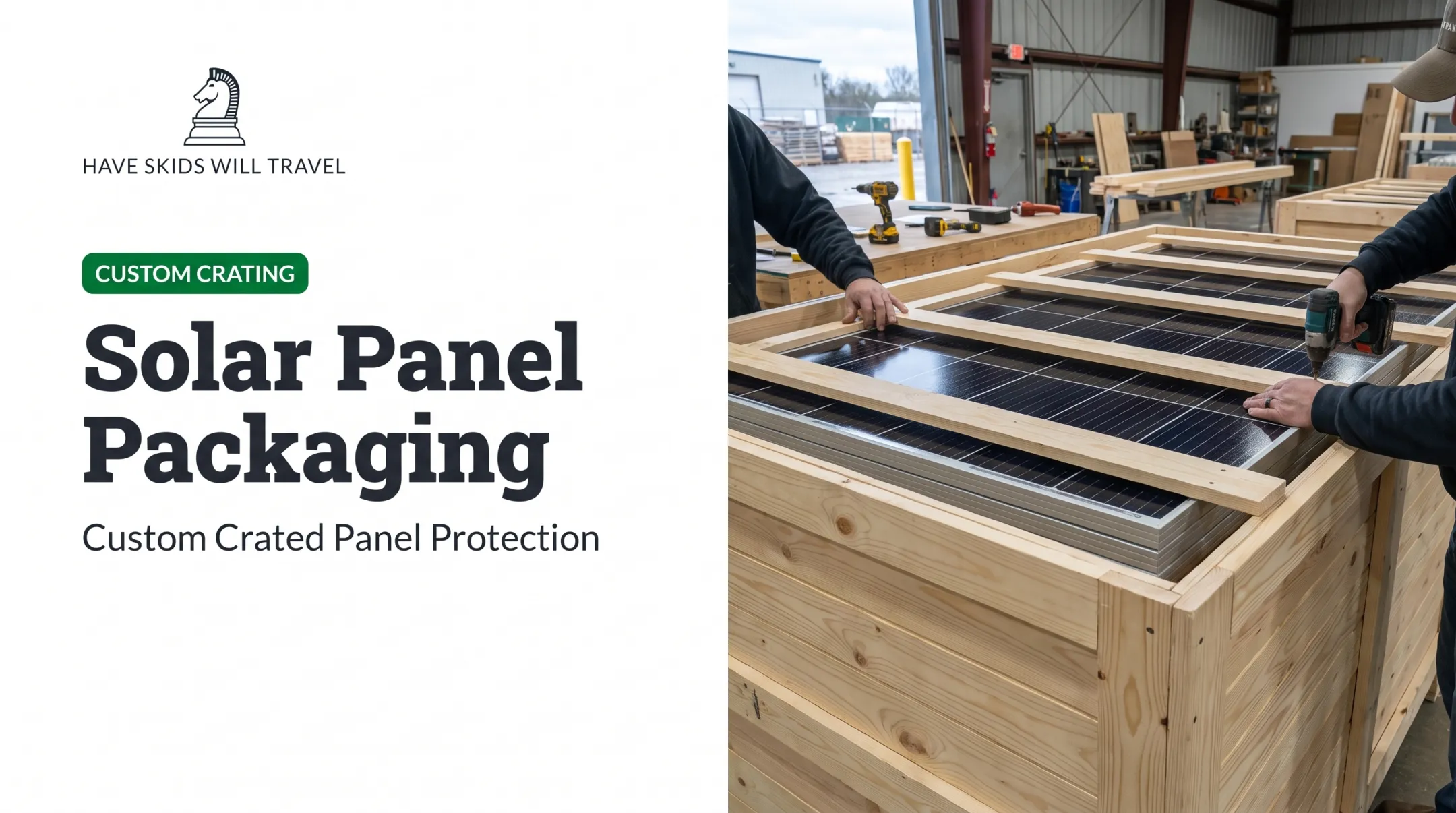

Equipment crates exist to solve exactly this problem. They're purpose-built enclosures designed to protect machinery, tools, and oversized loads through the roughest parts of the supply chain.
This guide covers what equipment crates are, the types available, the features that matter, and how to find a crate partner who won't leave you guessing on lead times or compliance.
Key Takeaways
- Equipment crates fully enclose machinery to guard against shock, moisture, and shifting during transit
- Custom crates match exact equipment dimensions; standard crates work for common, lower-cost shipments
- Most international shipments require ISPM-15 heat-treated wood packaging under USDA/APHIS rules
- An experienced crate manufacturer reduces shipping disruptions, claims, and total logistics costs
What Are Equipment Crates?
Equipment crates are heavy-duty wooden enclosures engineered to fully encase machinery, tools, or fragile components for shipping and storage. The NWPCA's Uniform Standard for Wood Containers defines a crate as a rigid structural framework fastened together to form an enclosure — distinct from an open platform.
Crates vs. pallets/skids:
- Pallets and skids are open, load-bearing bases meant to be lifted by forklift
- Crates add full enclosure and structural walls around the item
- Some designs combine both — a skidded base with a crated superstructure on top
Materials and Construction
Crate builders typically choose from:
- Plywood — lightweight, good panel strength
- Dimensional lumber — used for framing and heavy bracing
- OSB (oriented strand board) — cost-effective panel option
Material choice directly affects weight, cost, and strength. A crate built for a 30,000-lb press needs different bracing than one built for a sensitive electronics rack.
Engineering for the Journey
Crates function as engineered systems, not simple boxes. ASTM D4169 testing standards evaluate shipping containers against handling, stacking, vibration, and concentrated-impact hazards, and require testing the complete crate and cargo together, not just the lumber.
Inside the crate, several elements do the real protective work:
- Cushioning to absorb shock
- Internal bracing to stop the equipment from shifting
- Moisture barriers to prevent corrosion on metal components

Supply Crates vs. Equipment Crates
Related searches often use "supply crate" for any container built to move goods, tools, or equipment safely. Equipment crates are the specialized subset: built around a machine's weight, shape, and fragility rather than general-purpose cargo.
Types of Equipment Crates
Not every shipment needs the same crate. Here's how the main categories break down.
Standard/Stock Crates
Built to common dimensions for predictable, repeat shipments. These work well when:
- Equipment size is consistent across shipments
- Budget matters more than a fully tailored fit
- Turnaround time is tight
Custom-Built Crates
Engineered to the exact specifications of the machinery inside. Ideal for:
- Irregular shapes that won't fit a standard crate
- Sensitive electronics needing internal bracing or climate control
- Oversized industrial equipment with unique load points
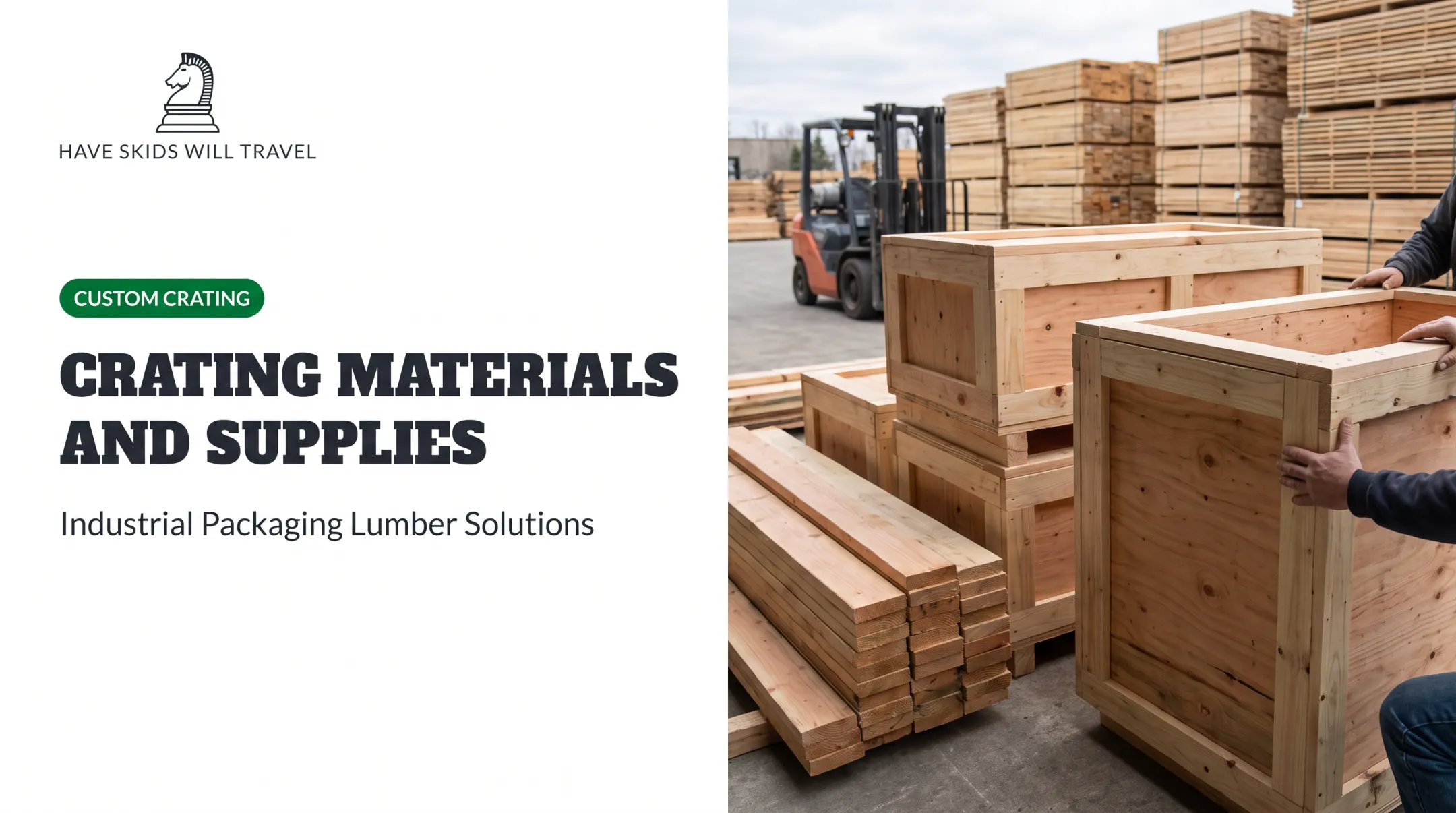
Palleton's custom crate shop evaluates the product's dimensions, weight, and shipping requirements before selecting materials (new, combination, or recycled lumber) and builds accordingly. Heavy-duty reinforced construction is standard, with padding, bracing, or climate-control features added when the equipment needs them.
Export-Ready, ISPM-15 Heat-Treated Crates
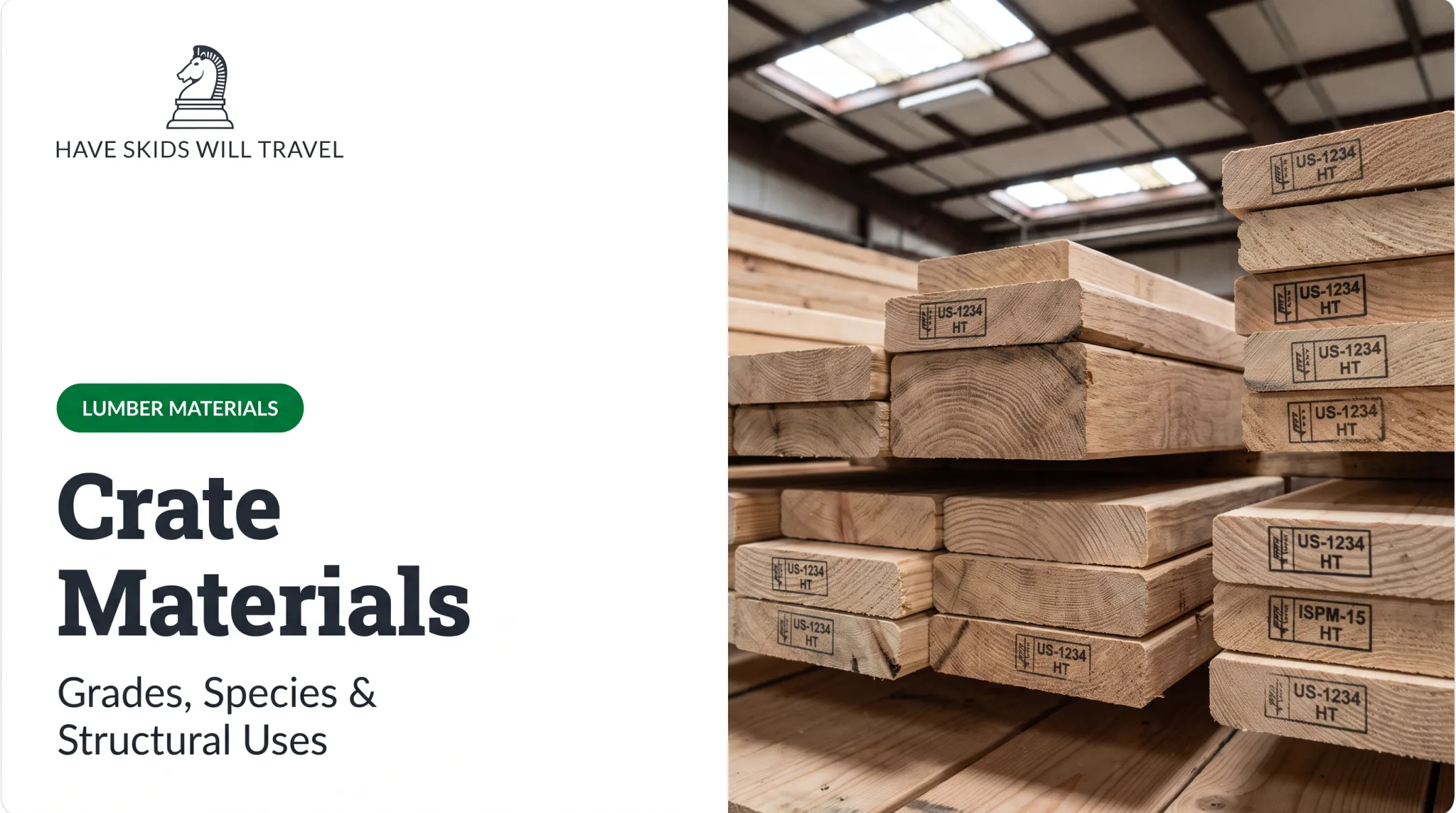
Required for most international shipments under USDA/APHIS rules. The wood is heat-treated to kill pests, then stamped with the official ISPM-15 mark so customs can clear the load.
Other Crate Formats
Depending on the load, shippers also use:
- Collapsible or reusable designs for recurring shipments
- Sled-style crates for heavy machinery that needs to skid or slide
- Cleated-panel crates for irregular shapes
Availability varies by manufacturer, so confirm capabilities before assuming a specific format is offered.

Key Features to Look for When Choosing Equipment Crates
Picking the right crate isn't just about size. A few features separate a crate that protects your equipment from one that fails halfway through the trip.
Load capacity and bracing. ASTM specifications distinguish crate types by load:
- Open/covered crates rated up to 4,000 lb
- Skidded wood-cleated boxes under 2,500 lb
- Heavy-duty sheathed crates rated up to 30,000 lb
Bracing and structural design should match the equipment's actual weight and center of gravity, not a generic assumption.
Moisture and corrosion protection. Vapor barriers and desiccants matter most for:
- Electronics sensitive to humidity
- Bare metal parts prone to rust
- Long-haul or overseas transit with unpredictable conditions
Forklift-accessible skids. A crate built with an integrated pallet base saves handling time at every dock stop. That means fewer manual moves and fewer chances for damage.
ISPM-15 compliance for export. Cross-border shipments need heat-treated, marked lumber or they risk customs holds. Specify ISPM-15-certified materials when equipment is leaving the country.

Industries That Rely on Equipment Crates
Different industries lean on crates for different reasons, but the underlying need is the same: protect expensive, hard-to-replace assets in transit.
- Manufacturing and automotive: machinery, tooling, and oversized components moving between plants or to customers
- Oil, chemical, and technology: hazardous or delicate equipment that needs specialized interior protection
- International exporters: shipments bound for ISPM-15 markets such as Canada and the EU
Dozens of countries require certified wood packaging under APHIS export guidance. The 2022 Commodity Flow Survey recorded 4.9 billion tons of manufacturing shipments nationwide, a reminder of how much freight depends on packaging that holds up.
Why Choose Palleton for Custom Equipment Crates
Palleton has spent more than 45 years in the pallet and lumber business, and that experience carries directly into crate manufacturing. The company operates seven facilities, including a lumber mill and a dedicated custom pallet and crate shop.
What sets Palleton's crate program apart:
- ISPM-15 heat-treat certification: kiln treatment to a 140°F wood-core minimum for 30 minutes, then official stamping for customs clearance
- New, combination, or recycled lumber matched to the equipment's weight and shipping requirements
- Structural bracing and padding for fragile, high-value, or oversized machinery
- Sample crates and specifications issued for approval before full production runs
- Coverage across the Midwest, with recurring or emergency programs
Palleton also runs encrypted, cloud-based tracking with 24/7 access to shipment details, so customers aren't left guessing about order status.

If you're shipping machinery that can't afford to arrive damaged, talk to Palleton's sales team about your equipment specifications and export requirements.
Frequently Asked Questions
What is a supply crate?
A supply crate is a general term for any shipping container used to move goods or tools. Equipment crates are a more specialized version, engineered specifically to protect machinery.
Where can I find military crates?
Military-spec crates typically come from manufacturers experienced in heavy-duty, custom-built crating. Palleton builds crates engineered for structural integrity and load capacity to meet rigorous specifications. Contact the sales team to discuss your requirements.
How much do custom equipment crates typically cost?
Cost depends on size, material selection, and design complexity, including bracing, padding, or heat treatment needs. Request a quote for accurate pricing based on your specific equipment.
Are equipment crates reusable?
Many reinforced crate designs can be reused multiple times if properly maintained and inspected between shipments. Confirm reuse capability with your manufacturer before planning a returnable program.
Do all export shipments require heat-treated crates?
Most international shipments require ISPM-15 heat treatment to meet customs and pest-control regulations. Some exceptions exist, such as the US-Canada exemption for wood sourced within North America . Check destination-specific rules before shipping.
How long does it take to get a custom equipment crate built?
Lead times vary based on design complexity, materials, and order volume. Contact Palleton directly for a turnaround estimate specific to your project.