
Many companies default to whatever their last supplier offered, without weighing whether it actually fits their operation. That leads to overspending on pallets that outlast their purpose, or worse, product damage from a pallet that couldn't handle the load.
This guide compares plastic and wood pallets across cost, durability, sustainability, and use cases, so you can make a decision that fits your budget and your shipping lanes.
TL;DR
- Wood pallets cost less upfront and stay widely available, repairable, and recyclable
- Plastic pallets last longer, resist moisture and bacteria, and suit hygiene-sensitive industries
- Responsibly sourced wood often has a smaller lifecycle carbon footprint than plastic (Penn State)
- Choose based on budget, shipping distance, product type, and industry regulations
- Palleton builds custom wood pallets and crates matched to load, hygiene, and export needs
Plastic vs. Wood Pallets: Quick Comparison
| Factor | Wood | Plastic |
|---|---|---|
| Upfront cost | Lower per unit | Higher per unit |
| Weight | Heavier, harder to move manually | Lighter (though rackable models can weigh more) |
| Durability | Repairable, prone to wear and moisture damage | Long lifespan, but cracked units usually need replacing |
| Hygiene/Compliance | Requires ISPM-15 heat treatment for export | Exempt from ISPM-15, easy to sanitize |
| Sustainability | Biodegradable, renewable, often lower lifecycle footprint | Reusable but petroleum-based, harder to recycle |

Cost: EPA benchmark data puts recycled hardwood pallets at roughly $11-$12.50 and virgin hardwood at $17-$19, compared to around $25-$27 for recycled plastic pallets, based on the EPA's archived pallet cost calculator data. These figures are dated benchmarks, not current quotes, but the cost gap has held up as a general pattern.
Weight and durability: Wood weighs anywhere from 39 to 50 pounds depending on construction. Plastic can be lighter (14 pounds in some models) or heavier (55 pounds for rackable designs), so don't assume plastic always wins on weight.
What is a Wood Pallet?
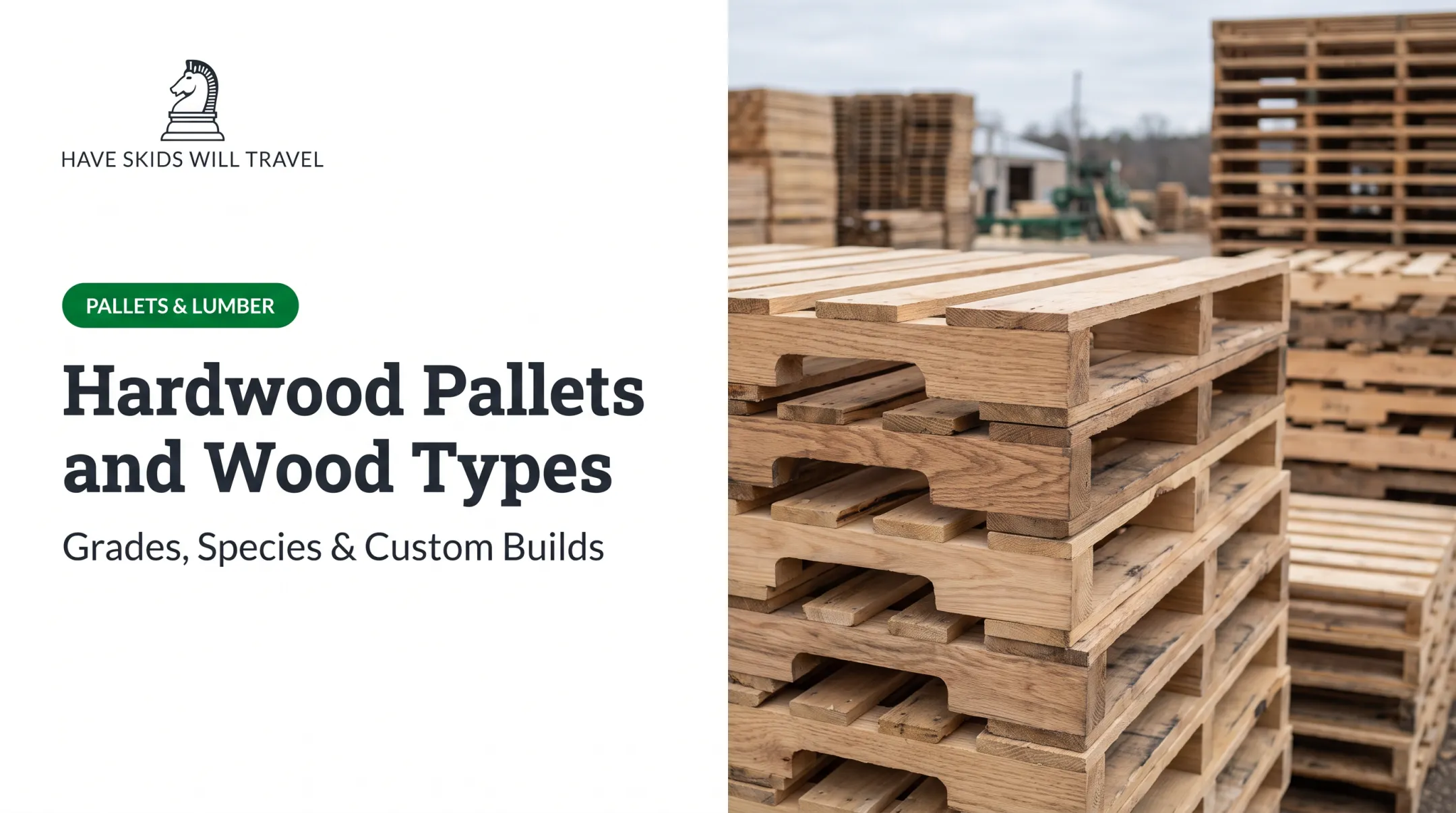
A wood pallet is the standard shipping platform most manufacturers, retailers, and food distributors have relied on for decades. It's built from stringers or blocks, decked with boards, and designed to be moved by forklift or pallet jack.
Core benefits:
- Lower cost per unit, making wood the default for high-volume shipping
- Easy to repair — a broken board rarely means a total loss
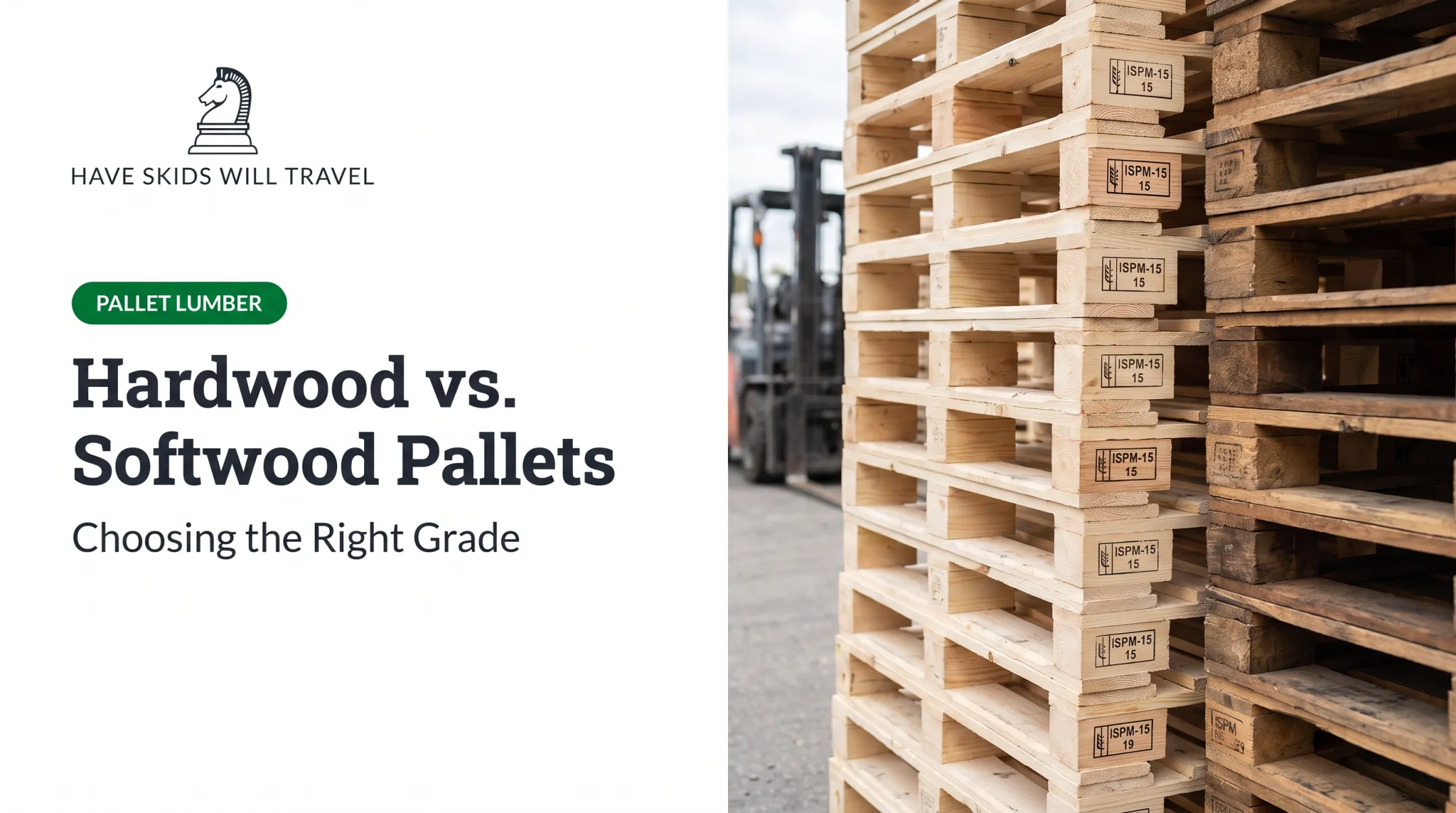
- Heat-treatment ready for ISPM-15 pest control on export shipments, a service Palleton provides
Common Variations
- Stringer pallets — the most common design, using three parallel wood supports
- Block pallets — allow four-way forklift entry
- GMA 48×40 pallets — the industry-standard size for U.S. grocery and retail
- Custom pallets — built to non-standard sizes for oversized or irregular loads
Use Cases of Wood Pallets
Wood still dominates food and beverage, automotive, retail, and manufacturing—especially for heavy or oversized loads that many plastic pallets aren’t designed for.
Common wood pallet use cases include:
- Food, beverage, and other high-volume distribution
- Automotive components and heavy manufacturing loads
- Retail outbound freight and mixed SKU shipping
- Closed-loop programs where pallets are reused and returned
- One-way shipping, where low replacement cost limits loss risk
- Custom or oversized loads that need built-to-spec dimensions
According to the National Wooden Pallet and Container Association, 93% of pallets in the U.S. are wood. That single stat explains why wood remains the default across nearly every industry, even as plastic gains ground in specialized niches.

Palleton supplies standard and custom wood pallets—new hardwood, softwood, combo, and 100% recycled options—for industries from food processing to automotive parts. Customers such as Hormel Foods and McCain Foods use wood pallets built to their handling and shipping requirements.
What is a Plastic Pallet?
Plastic pallets are load platforms molded from high-density polyethylene (HDPE) or polypropylene (PP). They deliver consistent dimensions, no splinters or protruding nails, and strong resistance to moisture and bacteria.
Core benefits:
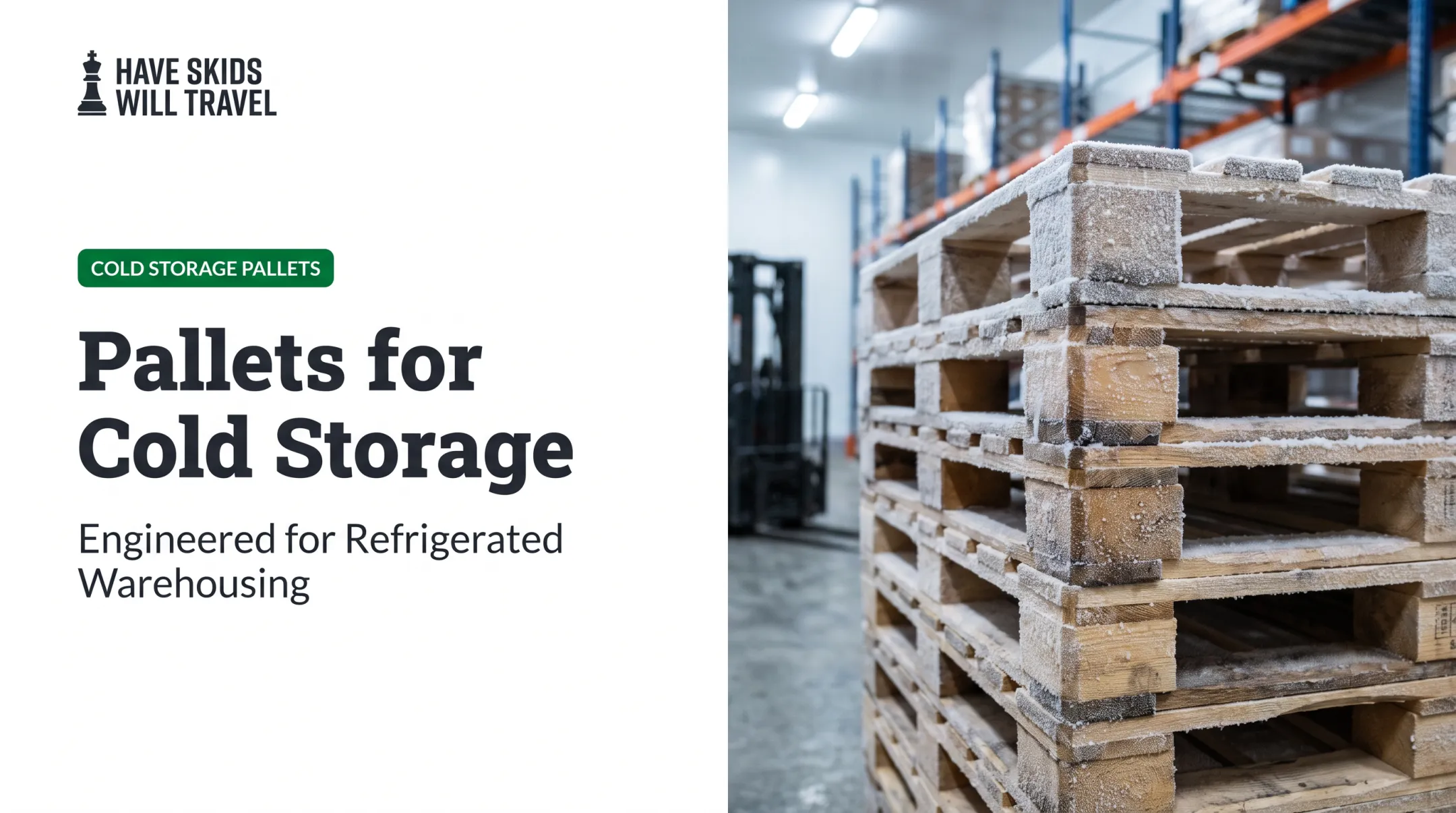
- Moisture and bacteria resistance for food-grade and pharmaceutical handling
- Lighter weight in many designs, easing manual handling
- Consistent construction that supports repeatable automated handling
Variations
- Nestable pallets for space-efficient storage and return shipping
- Rackable pallets for warehouse racking systems
- Hygienic pallets built for pharma and food-grade environments requiring frequent washdowns
Use Cases of Plastic Pallets
Plastic pallets dominate where contamination control matters more than upfront cost:
- Pharmaceuticals and chemicals
- Food-grade and frozen goods
- Technology manufacturing
Air freight and international exporters often prefer plastic because it's exempt from ISPM-15 phytosanitary treatment. USDA's APHIS wood packaging regulations don't apply to plastic pallets, which removes a compliance step entirely.
Those same closed-loop and export programs also lean on plastic's reuse life. Industry data varies widely: EPA modeling assumes 100 trips for recycled plastic, and a 2019 academic review found a typical range of 50–100 cycles, with some studies reporting up to 300.
Penn State researchers noted molded plastic pallets can exceed 200 round trips before removal from service. The right number depends on the specific model and how it's handled.

Plastic vs. Wood: Which is Better for Your Business?
There's no universal answer here. It comes down to five factors:
- Budget — Wood wins on acquisition cost every time
- Shipping frequency — One-way shipments favor wood; closed-loop, high-reuse programs favor plastic
- Product sensitivity — Pharma, food-grade, and frozen goods often need plastic's hygiene profile
- Industry regulations — Export compliance may push you toward plastic to skip ISPM-15
- Storage space — Nestable plastic designs save warehouse footprint
Choose wood if you're prioritizing cost-efficiency, repairability, or shipping heavy and oversized loads.
Choose plastic if hygiene, long-term reuse, or export compliance matters more than upfront spend.
Many businesses don't pick one. They run a hybrid approach: wood for domestic bulk shipping, plastic for export lanes or hygiene-sensitive product lines.
Palleton supports this mixed strategy by sourcing custom wood pallets through its own facilities and connecting customers with national partners for plastic options. You get one point of contact instead of juggling multiple vendors for different pallet types.
Sustainability Considerations
Plastic often gets marketed as the "greener" choice because it lasts longer, but lifecycle research challenges that claim.
A 2020 lifecycle assessment from Penn State researchers, published in the Journal of Industrial Ecology, found that conventionally heat-treated wood pallets had a carbon footprint 71.8% lower than plastic on a per-trip basis. Even against methyl-bromide-treated wood, the wood options still came out 20-30% lower. The gap widened further when researchers modeled 100,000 trips instead of one.

This is a grocery-industry study, not a universal rule, and factors like recycled plastic content, transport distance, and end-of-life handling can shift the comparison. Still, it challenges the assumption that "reusable" automatically means "sustainable."
Wood also has a strong recovery story:
- Nearly 95% of wooden pallets are recycled rather than landfilled, per 2018 industry data
- Unusable wood typically becomes mulch or livestock bedding
- Recovered steel nails can be recycled instead of discarded
Palleton puts that recovery model into practice—turning unusable pallet wood into by-products and recycling recovered nails—through programs such as:
- 100% recycled-wood GMA stringer pallets
- Combo pallets that blend new and recycled wood components
- Buy-back/core recovery on used 48×40 four-way GMA pallets, with financial incentives for returns
Frequently Asked Questions
Are plastic pallets worth the money?
For high-reuse, closed-loop, or hygiene-sensitive operations, yes. The higher upfront cost pays off over dozens or hundreds of trips. For one-way or low-volume shipping, wood usually makes more financial sense.
What are plastic pallets good for?
Plastic excels in food-grade, pharmaceutical, and export shipments where hygiene and ISPM-15 exemption matter most. It's also useful in chemical and technology sectors needing consistent, contamination-resistant handling.
How much weight will plastic pallets hold?
Capacity varies by model. One documented example, Craemer's CR4-5, rates at 16,500 lb static, 3,300 lb dynamic, and 3,100 lb racking. Always check the specific model's rating rather than assuming a universal number.
Are wood pallets cheaper than plastic pallets?
Yes, upfront. EPA benchmark data shows wood costing roughly $11-$19 per unit versus $25-$27 for plastic. Long-term cost depends on trip count and repair needs, so plastic can close the gap over many reuse cycles.
Can wood and plastic pallets be repaired?
Wood pallets are highly repairable. Palleton applies in-house inspection and repair to every recycled pallet, extending usable life. Plastic pallets generally need full replacement once cracked or structurally damaged.
Which pallet type is better for international shipping?
Wood requires ISPM-15 heat treatment and certification marks for export. Plastic is exempt from this regulation entirely, which simplifies compliance for many exporters, though other customs and product requirements still apply.