
This scenario plays out more often than it should. Most countries require ISPM 15 certified heat-treated wood packaging for international shipments, and missing that stamp can stop a container in its tracks. This article covers what ISPM 15 actually requires, how heat treatment works, which materials are exempt, and what happens when packaging doesn't comply.
Palleton is an ISPM-15 Heat Treat Certified manufacturer of custom pallets and crates, serving businesses across the country from seven facilities.
Key Takeaways
- ISPM 15 is a mandatory international standard governing solid wood packaging in export shipments
- Heat treatment kills pests without chemical residue, making it the preferred compliance method
- Non-compliant crates risk customs rejection, fines, or destroyed shipments
- Plywood, OSB, and thin wood (6mm or less) are exempt from the regulation
- Working with a certified manufacturer like Palleton simplifies compliance from the start
What Is ISPM 15 and Why Does It Exist?
ISPM 15, short for International Standards for Phytosanitary Measures No. 15, was adopted by the International Plant Protection Convention (IPPC) in 2002 and revised in 2009, 2013, and 2018. Its purpose is straightforward: stop invasive pests and tree diseases from spreading through wood packaging used in global trade. Raw wood can carry insects, larvae, and fungi that survive shipping and establish themselves in new regions once unpacked. Pinewood nematode is a frequently cited example: a pest capable of devastating forests if it hitches a ride inside an untreated pallet.
What Falls Under the Regulation
The standard covers solid wood packaging thicker than 6mm, including:
- Crates and shipping boxes
- Pallets
- Dunnage (loose wood used to brace cargo)
- Cable drums and spools In the United States, the USDA's Animal and Plant Health Inspection Service (APHIS) coordinates the national program, while the American Lumber Standard Committee (ALSC) administers the actual treatment and marking programs. Producers enroll with an ALSC-accredited inspection agency, which controls issuance of the compliance mark. Most trading nations have adopted ISPM 15 requirements. You can check current implementation status through the IPPC's official directory.

Do You Need Heat-Treated Pallets to Ship to Canada from the USA?
Generally, yes, with one important exception. Canada's current entry directive exempts wood packaging moving directly from the continental United States when it is made entirely from US or Canadian-origin wood. That exemption does not apply if:
- The wood comes from Hawaii or US territories
- The wood originates outside the US or Canada
- The shipment route is not direct continental movement Bottom line: confirm wood origin and shipping route before assuming you're exempt. When in doubt, ship compliant.
How Heat Treatment Works and What the Marking Requirements Are
Heat treatment (HT) requires raising the wood's core temperature to at least 56°C (133°F) for a minimum of 30 continuous minutes inside a certified kiln. Core sensors verify the temperature actually reaches the center of the wood, not just the surface.
This differs from methyl bromide fumigation, which requires enclosed exposure for at least 16-24 hours followed by an aeration period. Heat treatment leaves no chemical residue, which is why many exporters, particularly those shipping food, pharmaceuticals, or general cargo, prefer it operationally.
Reading the Stamp
A compliant ISPM 15 mark includes:
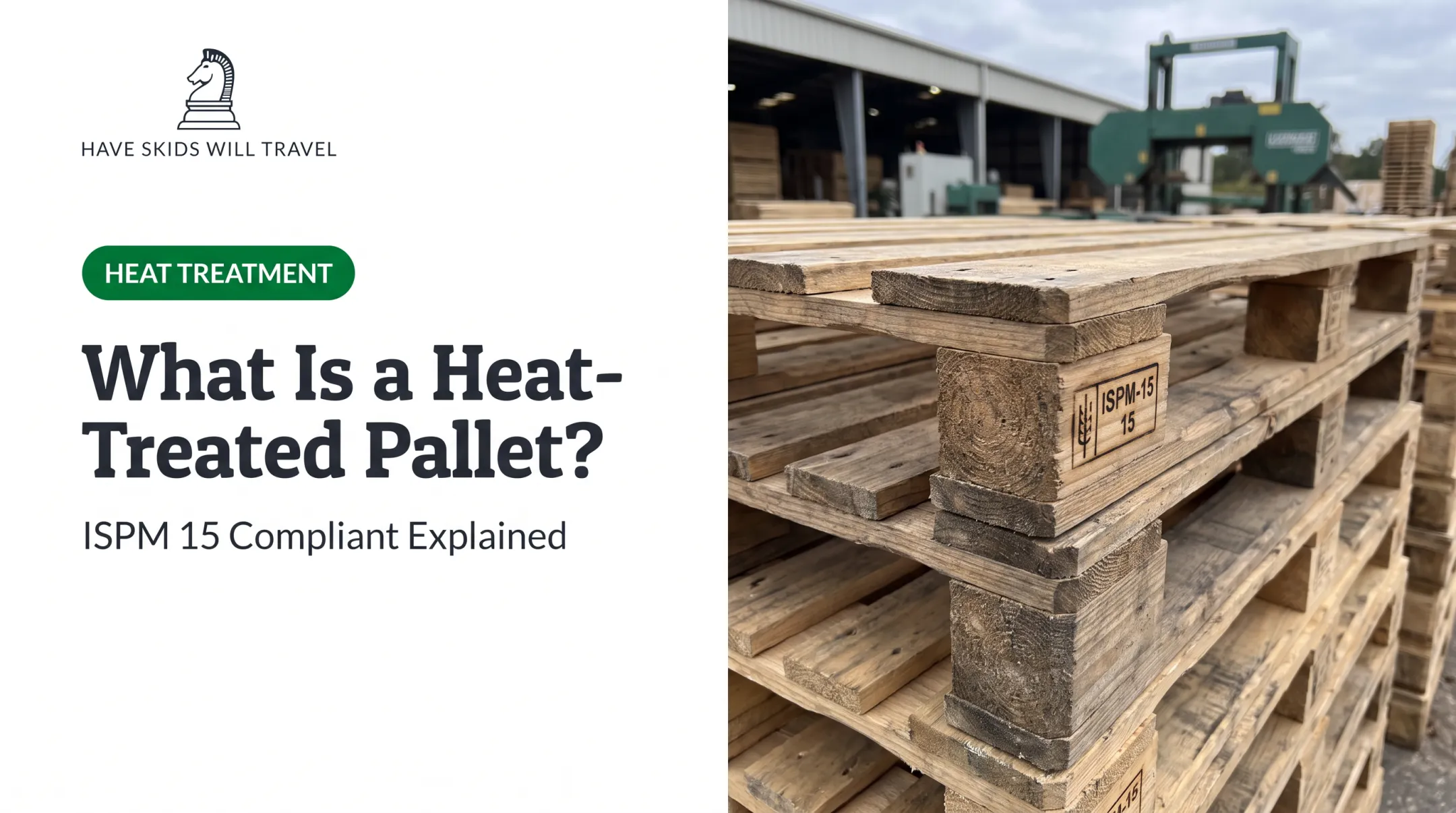
- The IPPC logo (often called the "wheat stamp")
- A two-letter country code identifying origin
- A unique facility registration number for the treatment provider
- The treatment code: HT for heat treatment, MB for methyl bromide
A sample format looks like "US-12345 HT," though the actual codes are unique to each certified producer.
Getting Certified
Becoming ISPM 15 certified means enrolling with an ALSC-accredited inspection agency, which audits the treatment process and authorizes use of the compliance mark. Palleton treats pallets and crates in controlled, monitored kilns, bringing each wood core to at least 140°F (above the 133°F minimum) for 30 minutes before applying the ISPM 15 stamp.
Heat treatment does not weaken the wood. Treated crates carry the same structural load capacity as untreated ones. The process targets pests and moisture, not fiber strength.

Heat-Treated vs. Untreated Durability
Heat treatment does offer some durability side benefits, even though its primary purpose is pest control. The kiln process reduces moisture content, which lowers the risk of mold and fungal decay compared to green, untreated lumber. That said, there's no published data showing a dramatic extension in service life. HT wood tends to hold up a bit better in storage, but it isn't a different category of product.
Outdoor Use and Weather Resistance
No. ISPM 15 heat treatment is a phytosanitary measure, not a weatherproofing process. It doesn't seal the wood or make it rot-proof. For outdoor storage, exporters should still:
- Keep crates off bare ground on dunnage or racking
- Cover with tarps during extended outdoor staging
- Inspect for standing water or prolonged wet exposure before loading
What Wood and Products Are Exempt from ISPM 15?
Not every wood component needs treatment. The standard exempts:
- Plywood, OSB, particleboard, and veneer manufactured using glue, heat, or pressure
- Solid wood 6 mm or less in thickness
- Non-wood packaging such as cardboard or plastic
The catch: a crate built mostly from exempt material but containing even one solid-wood component over 6 mm still needs that component treated and marked. Mixed construction doesn't automatically qualify for exemption.

Reused or repaired crates carry their own wrinkle. A previously certified crate generally stays compliant as long as it remains structurally unmodified. If it's repaired with new, untreated lumber, that repair material typically needs its own treatment and re-stamping before the crate ships again.
Risks of Using Non-Certified Wood Packaging
Non-compliant wood packaging isn't allowed to enter most destination countries. When customs or agricultural inspectors flag a shipment, consequences can include:
- Shipment rejection at the port of entry
- Forced destruction of the wood packaging on-site
- Return-to-origin shipping costs, often at the importer's expense
- Civil penalties up to $100,000 (APHIS-reported), with felony convictions in some cases
Watch for Fraudulent Stamps
APHIS has specifically warned exporters against altering certified wood packaging or mixing certified and non-certified material in the same shipment. Fraudulent stamps carry the same legal exposure as counterfeit phytosanitary certificates.
Ask any supplier for a certificate of treatment before you ship. A stamp alone isn't proof. Documentation backing it up is what protects you if customs asks questions.
Where to Buy ISPM 15 Certified Wood and How Palleton Can Help
When selecting a supplier for export-compliant crates, look for:
- In-house heat treatment capability: reduces lead time and adds accountability
- Proper documentation practices: treatment records tied to each stamp
- Custom crate design experience: irregular loads, heavy machinery, and fragile goods
Palleton is ISPM-15 Heat Treat Certified, manufacturing custom pallets and crates from a network of seven facilities. Palleton builds crates to fit the shipment rather than forcing the shipment to fit a standard box, which matters for exporters moving oversized equipment or delicate components.
Palleton serves customers across several export-heavy industries:
- Pharmaceutical and chemical shippers needing consistent, documented compliance
- Automotive components manufacturers shipping parts internationally
- Food and beverage companies (long-term customers include Hormel Foods and McCain Foods)
- General manufacturing, including machinery and oversized-load crating
For businesses managing recurring export shipments, Palleton's national account sourcing and encrypted, cloud-based tracking system give customers 24/7 access to inbound and outbound pallet details. That access helps when you coordinate compliance documentation across multiple shipments and destinations.

If you're planning an export shipment and need crates built right the first time, contact Palleton for a quote.
Frequently Asked Questions
What is ISPM 15 and what are the requirements for wooden crates and pallets?
ISPM 15 is an international standard requiring solid wood packaging over 6mm thick to be treated (usually heat treatment or fumigation) and marked with an IPPC-approved stamp before crossing international borders.
How do I get ISPM 15 certification?
Certification requires enrolling with an ALSC-accredited inspection agency, which audits your treatment process and authorizes use of the official compliance mark once your facility meets the standard.
How should wood be heat-treated for international shipping (ISPM 15)?
The wood's core must reach at least 56°C (133°F) and hold that temperature for a minimum of 30 continuous minutes inside a certified kiln, verified with core temperature sensors.
Where can I buy ISPM 15 certified wood?
Buy from ISPM 15–certified suppliers such as Palleton, which provide pre-treated, properly stamped pallets and crates ready for export.
What wood and products are exempt from ISPM 15 regulations?
Plywood, OSB, particleboard, veneer, and any solid wood 6mm or thinner are exempt, along with non-wood materials like cardboard and plastic packaging.
Are heat-treated pallets better than untreated pallets?
Heat treatment lowers moisture content, which can reduce mold and decay risk compared to green lumber, though it isn't a guaranteed durability upgrade. Its primary purpose remains pest elimination.