
Many exporters run into trouble not because their product is fragile, but because the packaging or the documents weren't export-ready. Common failure points include:
- Using an untreated wood pallet that gets flagged at the destination port
- Underestimating moisture damage on long ocean transits
- Missing or mismatched paperwork that stalls customs clearance
- Quoting freight from product dimensions instead of final packed measurements
This guide walks through choosing a compliant pallet, packing and documenting the load correctly, estimating true landed cost, and coordinating pickup through final delivery.
Key Takeaways
- Confirm ISPM-15 treatment and marking on solid-wood pallets and crates; check the destination country’s current rules first.
- Match pallet material and construction to cargo weight, fragility, moisture exposure, and handling conditions.
- Price the full landed cost (freight, duties, taxes, insurance, and handling), not just the base freight rate.
- Keep docs consistent: commercial invoice, packing list, bill of lading or air waybill, and durable labels.
Why International Pallet Shipping Requires Extra Planning
A domestic pallet might see one truck and one dock. An export pallet often passes through a trucker's trailer, an export terminal, a vessel or aircraft hold, a destination warehouse, and a customs inspection station — sometimes all within the same week. Each handoff adds a chance for impact, shifting, moisture exposure, or delay.
Who's Responsible for What
International shipments involve more parties than a domestic move, and their roles don't always overlap the way shippers assume.
| Party | Typical responsibility |
|---|---|
| Shipper/exporter | Prepares export documents and generally retains compliance duties even when using an agent |
| Freight carrier | Issues the bill of lading (ocean) or air waybill (air) as the carriage contract |
| Importer of record | Files entry information and must exercise reasonable care in classification and valuation |
| Customs broker | Licensed to conduct customs business on behalf of the importer or consignee |
| Consignee | Receives the goods; not automatically the same party as importer of record |
Before booking freight, confirm in writing who prepares documents, who pays duties and taxes, and who handles delivery at destination. Incoterms 2020 rules exist specifically to spell this out between buyer and seller.
Ocean vs. Air: A Quick Comparison
Neither mode is cheaper in every scenario. According to Maersk's analysis of freight cost factors, air freight moves faster and suits urgent or perishable cargo, while ocean freight is generally more cost-effective for bulky shipments where longer transit times are acceptable.
- Ocean: Lower cost per unit for large or heavy pallets, longer transit, more handling touchpoints
- Air: Higher cost, faster transit, tighter dimensional and weight restrictions
- Multimodal: Combines both: useful when part of the route lacks port or airport access
Regulations also vary by destination. Always verify current requirements directly with the destination country's plant protection authority, U.S. Customs and Border Protection, the International Plant Protection Convention, and your carrier. Don't assume one country's rules apply everywhere.
Choosing an Export-Ready Pallet
Pallet selection starts with the cargo, not the catalog. Consider:
- Cargo dimensions and total/per-item weight
- Center of gravity and stacking requirements
- Forklift or pallet-jack access at both ends of the trip
- Expected handling environment and moisture exposure
- Whether the pallet returns home or gets discarded at destination
Comparing Pallet Materials
Solid-wood pallets are widely available and handle heavy loads well, but export shipments typically require approved treatment and marking before they leave the dock.
Plastic pallets resist moisture and can be reused, but confirm destination acceptance, carrier load limits, and how you'll secure the cargo. Plastic isn't automatically a shortcut around compliance questions.
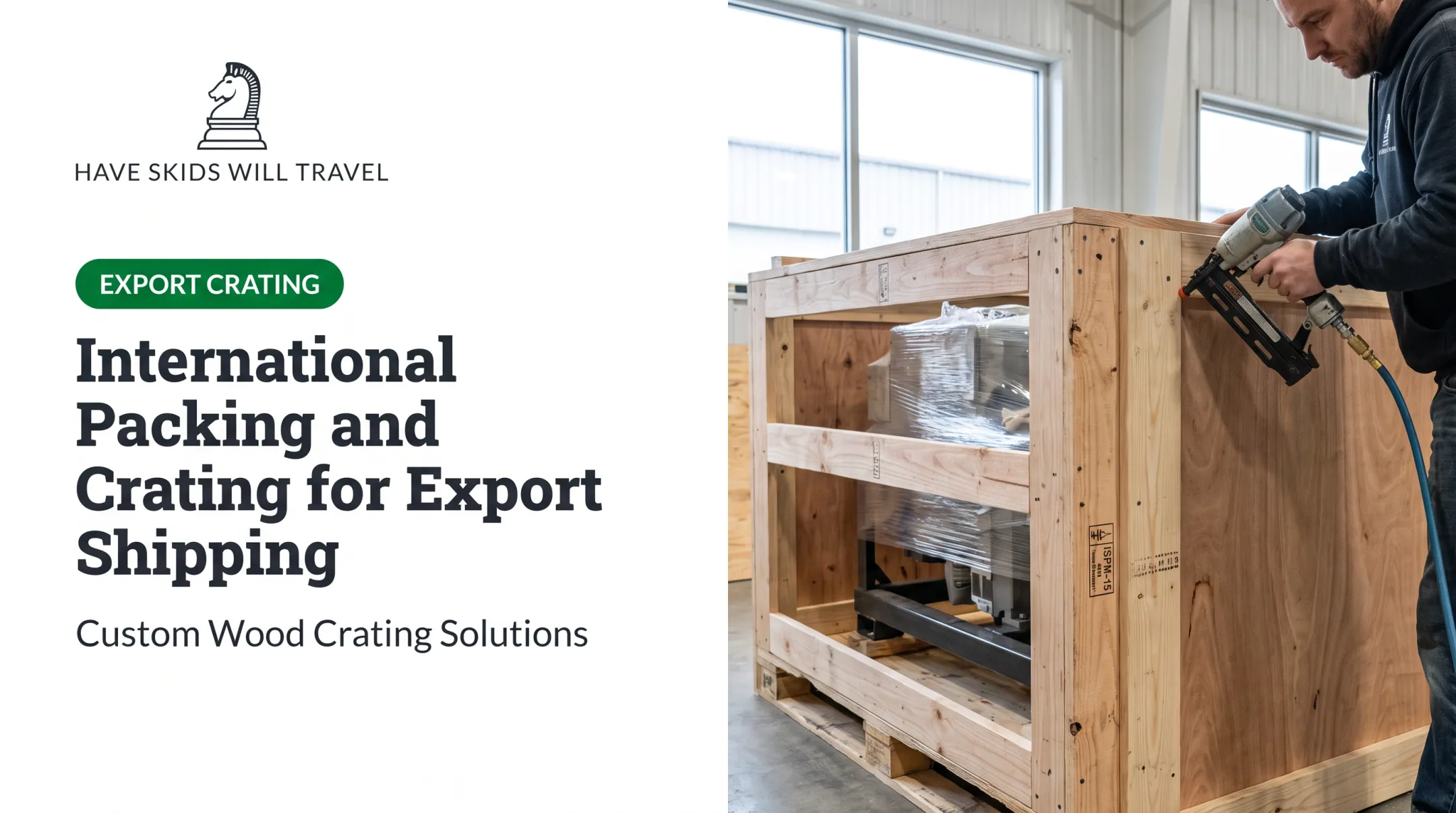
Custom wood pallets and crates work best for machinery, oversized freight, or irregular loads needing blocking, bracing, or full enclosure. Palleton's custom pallet and crate program builds these around product dimensions, load weight, and the destination's handling method, using new, combo, or recycled lumber depending on cost targets.
What ISPM-15 Actually Requires
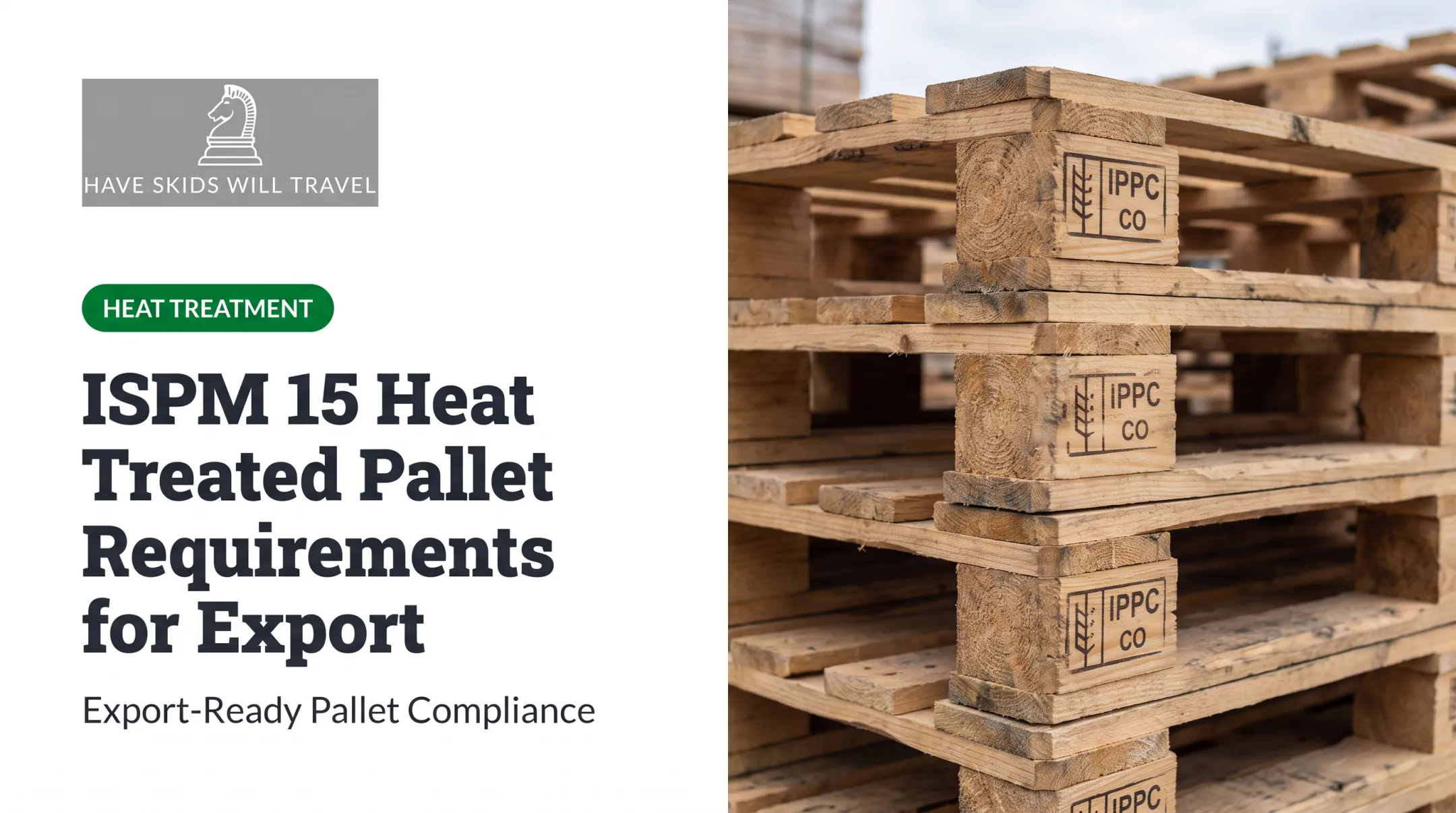
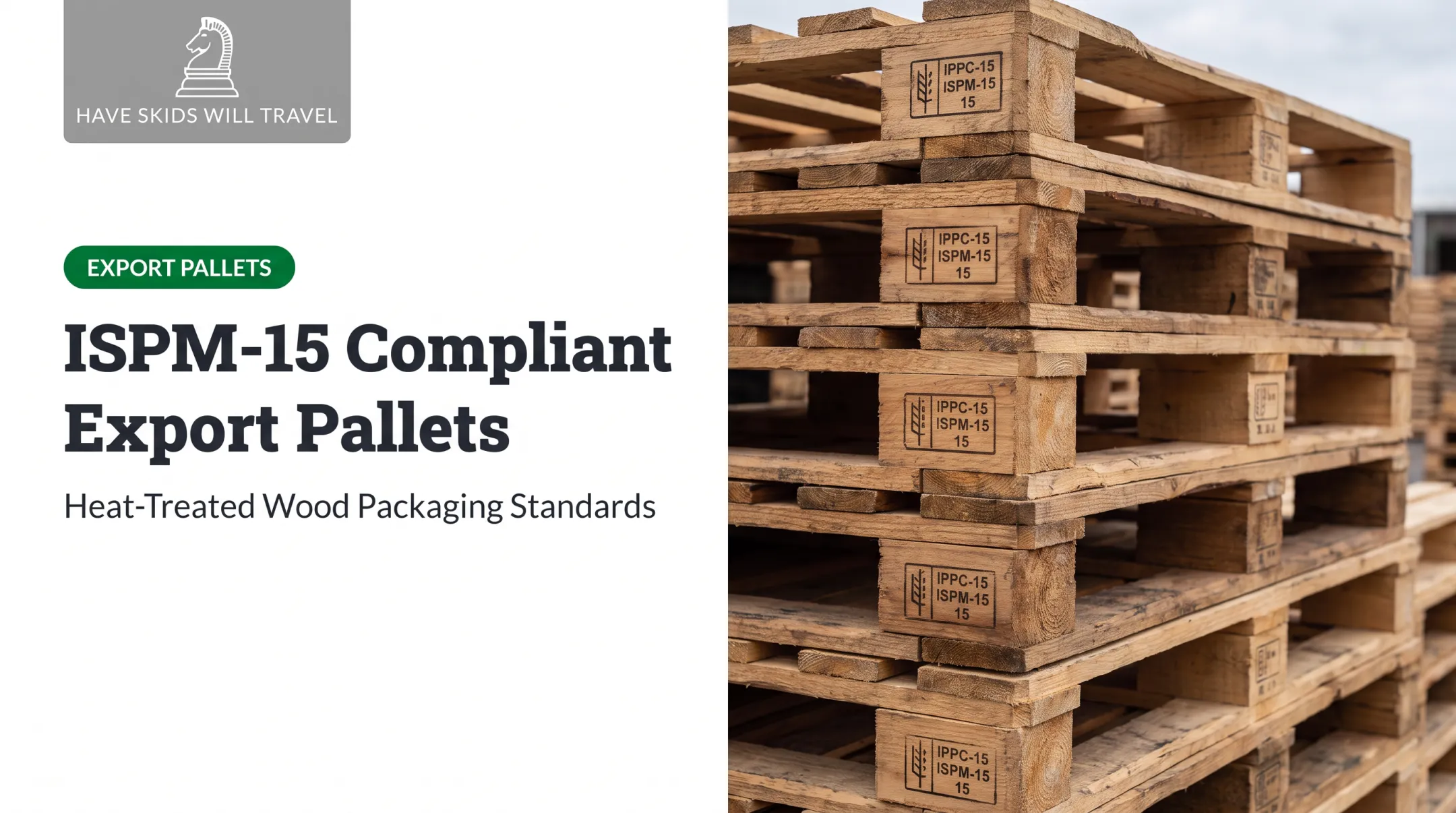
ISPM-15 covers raw solid-wood packaging (pallets, crates, and dunnage) used in international trade. Packaging made entirely of processed wood, like plywood or OSB, falls outside its scope, though you still need to check whether any raw-wood blocks or skids were added.
Per the IPPC's ISPM-15 standard, approved treatments include heat treatment (HT), dielectric heating (DH), and two fumigation methods. For conventional heat treatment, the wood core must reach 56°C (133°F) for 30 continuous minutes, and the wood must be debarked first. The compliant mark includes:

- The IPPC logo
- A country code
- A unique producer or treatment-facility code
- The treatment code (HT, DH, MB, or SF)
An unmarked or incorrectly marked pallet can be detained, treated, destroyed, or reshipped at the importing country's discretion. That mark also doesn't replace accurate customs documents or cargo declarations.
Destination rules vary. APHIS's guidance for exporting ISPM-15 compliant wood packaging lists numerous enforcing countries, including the EU, UK, Mexico, Japan, India, Australia, and New Zealand — but explicitly notes the list isn't exhaustive. A conditional exemption exists for U.S.-Canada shipments, but it requires specific origin documentation.
Palleton's ISPM-15 Heat Treat Certified pallets and crates come with treatment records and certification markings for inspectors and customers, which covers the wood-packaging side of compliance. Still, verify the destination country's current requirements before you order. Rules change, and the last country you shipped to may not match the next one.
Preparing and Documenting an International Pallet Shipment
Before the first board goes on a pallet, gather the data that will drive both your packing decisions and your paperwork:
- Product description, quantity, and HS code
- Gross and net weight, plus pallet and shipment dimensions
- Declared value and country of origin
- Destination address and any special handling needs
Building a Stable Load
A well-built load keeps weight low and centered, stays within the pallet's footprint, and avoids top-heavy or pyramid stacking. Protect vulnerable surfaces and distribute weight evenly across the deck boards.
For restraint, match the method to the cargo rather than relying on stretch wrap alone:
- Corrugated pads and corner boards for surface protection
- Blocking and bracing for heavy or irregular items
- Strapping for load stability during transit
The joint IMO/ILO/UNECE CTU Code instructs packers to keep the center of gravity low and centered and fill gaps to prevent sliding or tipping. That guidance applies even when a palletized load looks tightly stowed.

Moisture and Environmental Protection
Ocean transit can mean weeks of humidity and temperature swings. Depending on the product, consider liners, covers, desiccants, corrosion protection, or sealed crates. Verify product-specific requirements rather than defaulting to one method for every shipment.
Labels and Documents
Place handling labels where they stay visible after wrapping. Include shipper and consignee details, piece count, weight, dimensions, and any orientation or special handling marks.
Core documents for most international shipments:
- Commercial invoice: describes goods and values for customs duty assessment
- Packing list: lists pieces, weights, and dimensions
- Bill of lading (ocean) or air waybill (air): the carriage contract
- Certificate of origin: required in some destination markets, not all
Keep product descriptions, values, weights, and country-of-origin data consistent across every document. Mismatches between the invoice and the packing list are a common cause of customs holds.
Before the carrier arrives, run a final check:
- Photograph the loaded pallet
- Verify the ISPM-15 mark if applicable
- Confirm labels are readable
- Record final measurements and weight
- Retain copies of everything, including tracking numbers
Understanding International Pallet-Shipping Costs and Transport Options
Freight quotes depend on more variables than most first-time exporters expect:
- Origin and destination
- Freight mode (ocean, air, or multimodal)
- Pallet dimensions and total weight
- Cargo value and number of pallets
- Service level (port-to-port vs. door-to-door)
Separating Freight Costs from Everything Else
The base freight rate is rarely the full cost. Budget separately for:
- Pallet or crate construction
- Inland drayage and terminal handling
- Documentation and customs brokerage
- Duties, taxes, and storage fees
- Insurance and destination delivery fees
For air cargo specifically, IATA calculates billable weight as whichever is higher (actual weight or volumetric weight), plus possible fuel, security, and handling surcharges. That means a light, bulky pallet can cost more to ship by air than its scale weight suggests.
On ocean moves, plan for accessorial risk: demurrage charges apply once free time at the terminal expires, and detention charges apply for extended use of carrier equipment. Neither is automatic, but both are common enough to budget for.

Getting Accurate Quotes
Quote from the packed shipment's final measurements, not the product's dimensions alone. Extra bracing or a protective crate adds inches and pounds—and those changes can shift freight class, dimensional weight, and the final bill.
Cost-Reduction Strategies
- Use standard pallet dimensions when the cargo allows it
- Eliminate unused space without compromising protection
- Consolidate compatible shipments to share freight costs
- Compare total landed cost, not just the base freight rate
- Choose reusable packaging only if you have a recovery plan for it
Palleton's custom pallet program uses engineering and design tools to right-size materials and layout. It offers new, combo, or recycled lumber so you can hit cost targets while balancing protection against per-unit cost on recurring export programs.
If you need a custom export pallet, crate, or heat-treated packaging setup, Palleton can help size the solution. Palleton does not handle customs clearance or book ocean or air freight directly.
International Pallet Shipping Checklist
Use this as a final pass before freight leaves your dock:
Before pickup:
- Pallet or crate selected and ISPM-15 status verified, if applicable
- Load secured, measured, and weighed at final packed dimensions
- Documents prepared and cross-checked for consistency
- Labels applied and visible after wrapping
- Insurance or declared-value decision made
- Consignee contact details confirmed with the carrier
Before delivery:
- Tracking and customs status confirmed
- Delivery appointment requirements understood
- Inspection procedures reviewed with the consignee
- Process in place for documenting any visible damage on delivery paperwork
Rules and fees vary by commodity and destination country, so review requirements with your carrier, importer, customs broker, and destination authorities before each new lane. What worked for your last shipment to Germany won't necessarily apply to Vietnam.
Frequently Asked Questions
How much does it cost to ship a pallet internationally?
Cost depends on origin, destination, mode, packed size and weight, cargo type, service level, and duties or taxes. Always quote from actual packed measurements, not product-only estimates.
How do I send a pallet overseas?
Choose an export-ready pallet, secure and measure the load, prepare commercial and customs documents, then book freight. Work clearance and final delivery with your carrier or broker using the destination country’s rules.
What pallets are approved for international shipping?
Solid-wood pallets and crates commonly need ISPM-15 treatment and an authorized mark. Plastic may be accepted on many lanes, but confirm carrier and destination-country rules before you ship.
Can you use plastic pallets for international shipping?
Yes, in many cases. Plastic resists moisture and can be reused, but verify load capacity, how you secure the load, and whether your carrier and destination accept them.
What is a standard freight pallet size?
The most common U.S. footprint is 48 by 40 inches, often called a GMA pallet. Final size still depends on your cargo, container or trailer fit, and destination handling equipment.
How many kilograms is one pallet?
Total weight is the empty pallet, packaging, and cargo combined—there is no single standard figure in kg or lb. Weigh the full packed shipment and match it to carrier and equipment limits.