
Beyond the clutter, damaged pallets create real safety hazards, and dumpster fees for disposal add up quickly. Many businesses don't realize there's a better option sitting right in front of them.
Professional pallet recycling programs turn that liability into savings, and sometimes revenue. This guide covers how the process works, who benefits most, and how to choose a partner capable of servicing a multi-location operation.
Key Takeaways
- Pallet recycling cuts landfill waste and reduces demand for new lumber
- Buy-back programs can generate revenue instead of costing you disposal fees
- Recurring pickups prevent pileup and free up dock or floor space
- One partner like Palleton can handle buy-back, scheduled pickups, and replacement pallets in a single program
What Is Pallet Recycling and Why It Matters for Businesses
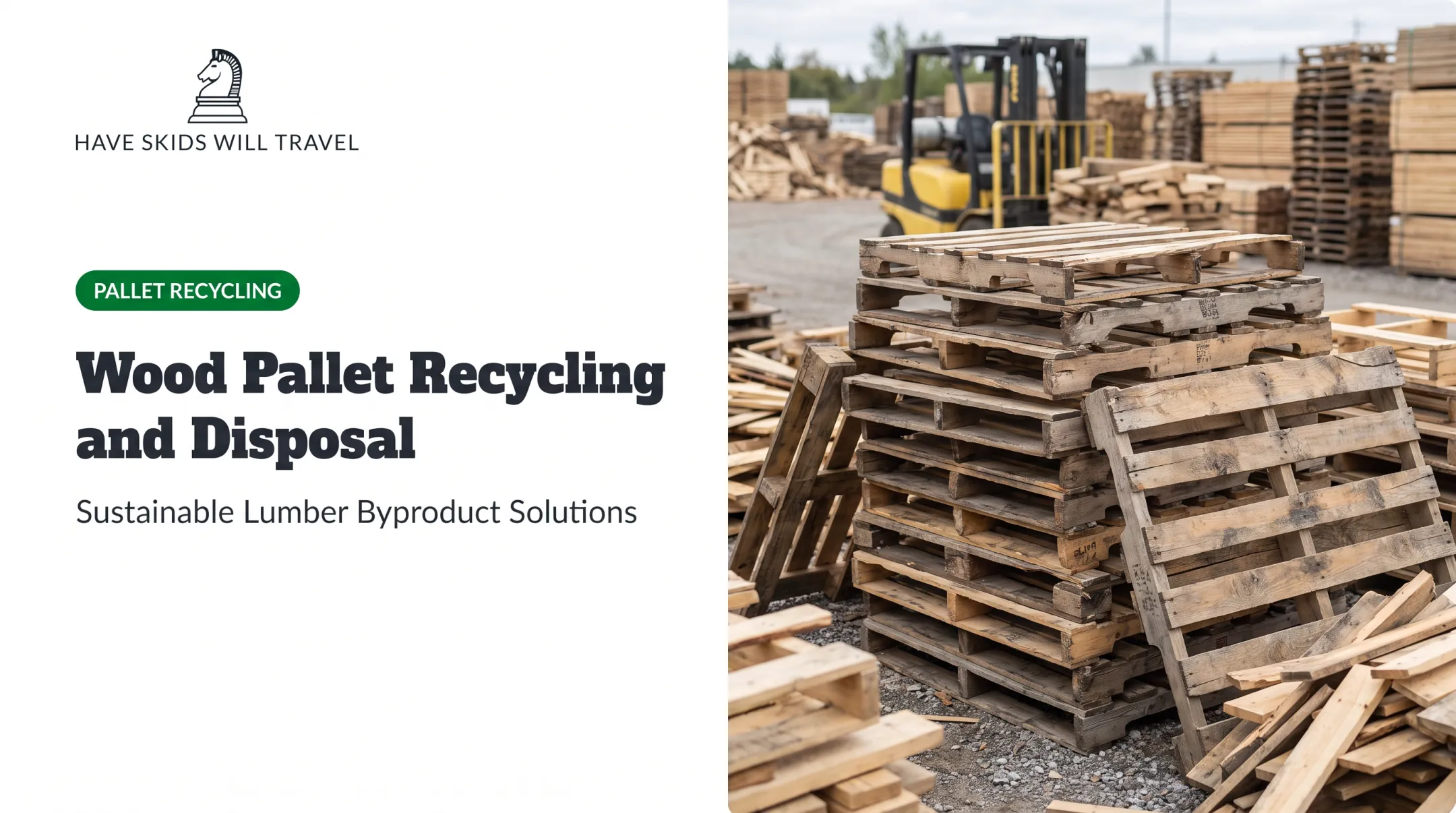
Pallet recycling means collecting, sorting, repairing, and reusing wood pallets, rather than tossing them in a dumpster. Wood that's too damaged to reuse gets ground into mulch, livestock bedding, or biofuel.
The volumes are large. A 2020 study from Virginia Tech, the USDA Forest Service, and the National Wooden Pallet & Container Association estimated 513 million new wood pallets were produced in the U.S. in 2016, alongside 326 million recycled or remanufactured pallets that same year.
Roughly 390 million pallets were recovered for further use: repaired and resold, sold as-is, or broken down for material recovery.
Why this matters for your bottom line:
- Cuts disposal costs by keeping pallets out of landfills
- Eases pressure on virgin timber supplies
- Matches new-pallet performance standards when properly repaired and treated, including for international shipping
A recycled or combo pallet isn't a downgrade. Once inspected, repaired, and if needed, heat treated, it does the same job as a new pallet at a fraction of the cost.
How the Pallet Recycling Process Works
The process is more involved than "pick up and grind." Here's the typical flow:
- Collection – Pallets are picked up from warehouses, manufacturers, retailers, and distribution centers, either on a set schedule or on-call.
- Sorting – Each pallet gets graded by condition and size, then routed for repair, resale as-is, or breakdown.
- Repair and reconditioning – Broken boards get replaced, structures reinforced, and pallets cleaned to meet quality or food-grade standards.
- Final disposition – Repaired pallets return to circulation or a buy-back program. Unusable wood is chipped into mulch or biofuel.

Grading Isn't Universal: But It's Important
Industry terms like "A-grade," "#1," or "B-grade" are common shorthand, but they aren't governed by one single national standard. The National Wooden Pallet & Container Association's Uniform Standard sets recognized minimum quality benchmarks, but individual recyclers define their own grade criteria on top of that.
Work with a partner who explains their grading system up front. Palleton, for example, uses in-house inspection and repair standards to sort recycled pallets into multiple grades matched to a customer's load requirements and budget. You know what you're getting before the load ships.
The Business Case: Cost Savings and Revenue Opportunities
Pallet recycling programs create value on both sides of the ledger. Consider the full picture:
- Eliminated disposal fees: Free pickup of usable pallets means no more dumpster or landfill charges for material that still has value
- Buy-back revenue: Surplus pallets in good condition can be sold back instead of scrapped, turning a cost center into a small revenue stream
- Lower total pallet spend: Combo or recycled pallets typically cost less than buying 100% new lumber, without sacrificing structural performance
- Reclaimed space: Clearing accumulated pallets frees up dock and floor space, which also reduces trip-and-fall hazards
- Reduced admin overhead: Consolidating purchasing, recycling, and tracking with one provider prevents the scramble that comes from juggling multiple vendors

A 2024 industry analysis on pallet management noted that rebate value depends heavily on pallet condition, location, labor cost, and commodity values. Your specific savings will vary. There's no universal dollar figure here, but the mechanisms above are consistent regardless of your industry.
Palleton puts the same levers to work by purchasing used 48×40 four-way GMA pallets, offering combo new/used options, and providing buy-back or core recovery where applicable—all through a single account.
Which Industries and Business Types Benefit Most
Pallet recycling programs work well anywhere pallets flow through in volume. That includes:
- Warehouses, distribution centers, and 3PLs with steady turnover and constant inbound/outbound pallet activity
- Manufacturers generating pallets from production lines, especially automotive, chemical, and heavy equipment shippers
- Food and beverage companies that need food-grade washed or heat-treated pallets to meet sanitation requirements
- International exporters requiring ISPM-15 heat-treated pallets and crates for customs compliance
Export Compliance and ISPM-15 Requirements
If you ship internationally, recycled wood alone doesn't clear customs. The USDA's Animal and Plant Health Inspection Service requires wood packaging material to be treated and marked under ISPM-15 before it crosses borders.
The mark itself includes the IPPC logo, a two-letter country code, a facility number, and a treatment code (HT for heat treatment).

Palleton's heat-treatment process brings each pallet's wood core to a minimum of 133°F for at least 30 minutes, then applies the required compliance stamp. A recycled pallet can be export-ready; it just needs proper treatment and documentation first.
Setting Up a Pallet Recycling Program for Your Business
Getting started doesn't require a massive overhaul. It requires a few honest assessments:
- Count your volume. How many pallets does your operation generate monthly, and what sizes and grades are they?
- Pick a pickup model. Recurring scheduled pickups work well for steady-flow operations. On-call or emergency service fits businesses with unpredictable spikes.
- Decide: sell outright or enroll ongoing? A one-time sale of surplus pallets differs from a recurring buy-back relationship. Pick based on your generation rate.
- Ask about tracking technology. Encrypted, cloud-based tracking gives 24/7 visibility into inbound and outbound pallet activity, cutting disputes and improving accountability.

Why Consolidating Vendors Simplifies Things
Juggling separate vendors for pickup, repair, and export heat treatment creates scheduling gaps and unclear accountability. Consolidating buy-back and related services with one provider keeps the program easier to run.
Palleton brings over 45 years of experience and seven strategically located facilities, including a lumber mill and a custom pallet shop. Coverage spans the Midwest, which helps if you move pallets across multiple sites instead of a single warehouse.
Choosing the Right Pallet Recycling Partner
Not every recycler offers the same depth of service. Before signing on, check for these:
- Proven experience and logistics reach — Can they service your locations and volume, not just headquarters?
- Environmental commitments — Confirm landfill diversion practices and reporting you can use for sustainability tracking.
- Full service suite — Pickup, buy-back, repair, and certified heat treatment for exports should all be available under one roof.
- Responsive, honest communication — Clear lead times for both recurring routes and emergency pickups.
A good litmus test: ask for a sample monthly report before you sign anything. It should reconcile pickups, usable outputs, and material recovery clearly enough that you're never left guessing where your pallets went.
Palleton's account team builds on that transparency with year-end recycling recognition that shows recycled product totals by facility or company-wide — a simple way to see the tangible impact of your program.
Frequently Asked Questions
What is pallet recycling?
Pallet recycling is the process of collecting, repairing, and reusing wood pallets instead of discarding them. Wood too damaged for reuse gets processed into mulch, livestock bedding, or biofuel.
Does pallet recycling cost anything for businesses?
Pickup of usable pallets is typically free and may include payment through buy-back programs. Damaged loads requiring extra handling may carry a small quoted fee, depending on the provider.
How does a pallet recycling program save my business money?
Savings come from free pickup, buy-back revenue, eliminated disposal fees, and reclaimed dock or floor space. The exact amount depends on your volume, location, and pallet condition.
Can pallet recycling pickups be scheduled on a recurring basis?
Yes. Most providers offer recurring routes for steady-volume operations, plus on-call or emergency options for unexpected overflow.
What types of pallets can be recycled?
Standard wood pallets in common sizes are accepted, including damaged units that get repaired or broken down for wood and hardware reuse.
How do I start a pallet recycling program for my business?
Start by assessing your monthly pallet volume and types, then contact a provider like Palleton to set up pickup scheduling, buy-back terms, and tracking. Most programs can be operational within a few weeks.