
In MMH's 2024 Pallet Report, among buyers acquiring used wood pallets, 28% said quality wasn't as good as expected, 29% said they paid more than anticipated, and 25% reported outright shortages. That's three separate ways a "lowest bid wins" strategy can backfire.
Supplier vetting fixes that. It's a structured review of a provider's products, processes, capacity, compliance, service reliability, and commercial terms, measured against your actual shipping and warehouse requirements.
This guide walks through the process: defining your pallet program, verifying supplier evidence, auditing capabilities, comparing total cost, and setting up ongoing performance controls.
Key Takeaways
- Vet suppliers for consistent spec delivery, not just an attractive unit price
- Request evidence on quality, lumber sourcing, heat treatment, inspection, capacity, and change control
- Weigh delivered cost, damage risk, shortages, storage, and admin effort as part of total cost
- Confirm samples, references, and site visits before signing a long-term agreement
What Is Pallet Supplier Vetting?
Pallet supplier vetting is the structured procurement process used to determine whether a provider can reliably meet your product, operational, regulatory, commercial, and continuity requirements. A one-page questionnaire is not enough. Vetting compares written evidence against your real-world shipping, storage, and handling conditions.
The Supplier Models You'll Run Into
Not every pallet provider operates the same way, and the right fit depends on your use case:
- Manufacturers that build new pallets to a controlled spec
- Recyclers or remanufacturers that repair and resell recovered cores
- Distributors that resell pallets sourced from other producers
- National sourcing partners that coordinate supply across multiple regions or facilities
- Combination providers that offer manufacturing, recycling, and sourcing under one roof
A one-way export shipment calls for different evidence than a recurring warehouse pallet program or a food-grade washed pallet for sanitary handling.
The Evidence That Actually Matters
A sound evaluation connects your pallet specification to verifiable supplier evidence, not a brochure or a verbal promise. Five categories carry the weight:
- Product fit: dimensions, entry configuration, deck style, load rating, grade, and compatibility with your forklifts, racking, or conveyors
- Quality control: how pallets get inspected, repaired, sorted, rejected, and released, consistently across every facility
- Supply capability: inventory, production or recovery throughput, lead times, and the ability to handle demand spikes
- Compliance documentation: heat-treatment records, ISPM-15 evidence for exports, inspection logs, and insurance information
- Service and accountability: order accuracy, communication, issue resolution, and a defined process for approving changes
Benefits of a Properly Vetted Pallet Supplier
A reliable pallet supplier shows up in your operational numbers, not just on a scorecard. Fewer damaged loads, safer handling, and fewer warehouse interruptions follow directly from consistent pallet quality.
Virginia Tech's pallet study describes how protruding nails and structural failures cause pallets to jam in automated systems, leading to equipment damage, product loss, and downtime. That's the operational cost of a poorly vetted supplier made concrete.
Vetting pays off in a few specific ways:
- Fewer rejections and reworks from consistent inspection standards
- Lower total spend through right-sized specs, buy-back credits, and fewer emergency buys
- Protected compliance and reputation for food, pharmaceutical, chemical, automotive, or export shipments
- More predictable purchasing, which makes inventory planning easier across every facility
None of this shows up on a per-unit price sheet. It shows up in fewer dock delays and fewer calls to expedite a replacement order.
What to Consider When Vetting a Pallet Supplier
Before sending an RFQ, document your actual application so every finalist is scored the same way. Capture at least:
- Product weight, dimensions, and load distribution
- Handling equipment and storage method
- Shipment route, export destinations, and delivery schedule
- Expected volume and acceptable pallet condition
Evaluate each supplier against that written requirement, the same evidence requests, and the same sample process so proposals compare fairly.
Product Specifications, Quality, and Performance Evidence
Ask for a controlled specification or drawing: dimensions, tolerances, pallet type, material or lumber grade, tare weight, entry points, deck configuration, repair criteria, and markings. Don't accept a generic description.
Load claims need context, too. Static, dynamic, racking, floor storage, and stacking loads behave differently, so ask for the test method and support conditions behind any number a supplier quotes. For wood pallets specifically, review:
- Component quality and fastener or repair standards
- Contamination controls for dirt, moisture, and residue
- Criteria used to classify new, recycled, repaired, or remanufactured units
Pull samples from more than one production or recovery lot when consistency matters, and document dimensions, weight, appearance, and handling performance before approving anything. Track KPIs tied to this category:
- Product damage rates
- Pallet rejection rate
- Equipment compatibility issues
- Replacement frequency
Quality Systems, Traceability, and Change Control
Ask how the supplier tracks incoming materials, repair activity, inspections, and nonconforming pallets through to a release decision. Confirm whether a shipment can be traced back to a facility, a production date, and an inspection result if a problem turns up later.
Change control matters just as much. A shift in lumber grade, repair method, treatment provider, or subcontractor without notice is how an approved spec drifts over time.
Request current certifications and confirm the legal entity, facility, and scope match what you're buying. A general certificate isn't proof that every pallet on a truck meets it.
Capacity, Compliance, and Export Readiness
Capacity problems rarely show up during the sales pitch. They show up during a seasonal spike or a lumber shortage, which is exactly when you can't afford a shortfall.
Verifying Real Capacity and Continuity
Find out whether the supplier owns its facilities, relies on affiliated operations, or depends on third-party partners. Ask how one consistent standard gets enforced across that network. Verify practical capacity through:
- Current inventory levels and production or repair throughput
- Lumber or material availability and fleet arrangements
- Documented lead-time assumptions, not estimates
- A plan for seasonal demand, equipment failures, and emergency replenishment
If the program is operationally significant, a plant visit is worth the time. Confirm the address, watch how pallets move through sorting or manufacturing, and compare what you see against the proposal on paper.
Export, Compliance, and Industry-Specific Fit
International shipments using solid wood packaging bring their own rulebook. IPPC's ISPM 15 standard sets out approved treatment methods, bark-tolerance limits, and the official mark, which combines the IPPC symbol, country code, and a unique producer or treatment code.
Noncompliant wood packaging can be refused, treated, or destroyed at the border. That cost and delay is one no procurement team wants to explain upward.
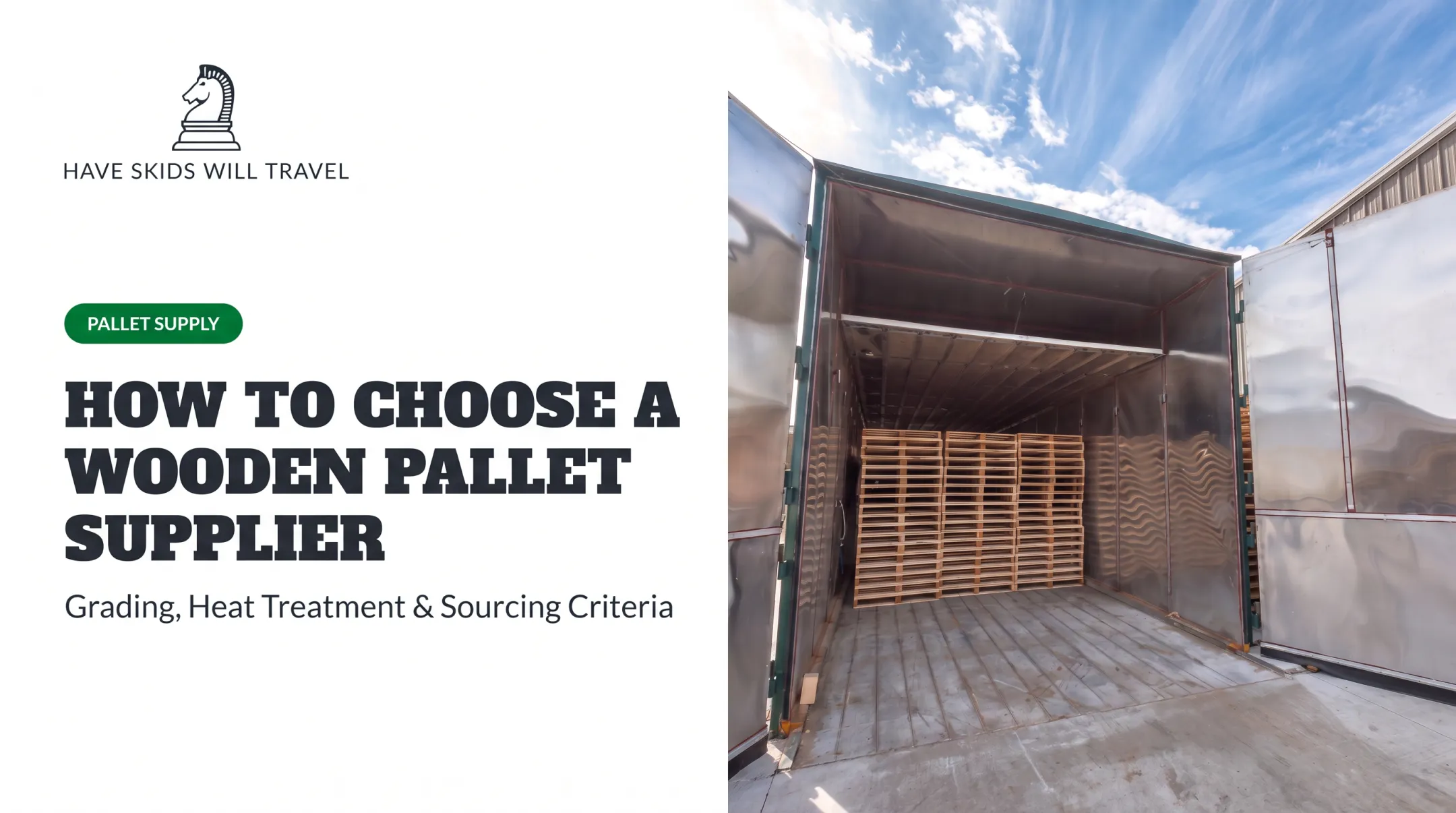
Palleton is ISPM-15 Heat Treat Certified for pallets and crates, with monitored heat treatment that brings the wood core to at least 56°C (133°F) for a minimum of 30 minutes, stamped in accordance with current requirements.

For sensitive loads, also confirm how the supplier controls pests, mold, moisture, and chemical residue during storage and delivery. Food-grade, pharmaceutical, and automotive programs often need documentation beyond a standard pallet order.
Relevant KPIs include customs holds, rejected deliveries, and contamination incidents. Always verify current regulatory requirements with authoritative U.S. or destination-market sources before finalizing a program.
Commercial Terms and Ongoing Supplier Governance
The lowest quote rarely stays the lowest once freight, rejections, and admin time get factored in.
Normalizing Quotes Beyond Unit Price
Compare competing quotes on the same terms: pallet condition and spec, quantity, freight, delivery frequency, accessorial charges, payment terms, and minimum order requirements. Then look at what each quote doesn't mention:
- Pallet weight and stacking efficiency, which affect storage footprint and freight cube
- Usable life, repairability, and disposal or recycling value
- What happens when pallets arrive damaged, short-shipped, or outside spec
- Pricing adjustment terms, warranties, and termination or transition support
A procurement scorecard that weights product fit, quality evidence, capacity, compliance, service, and total cost according to your actual priorities beats an arbitrary percentage split every time.

Service, Sustainability, and Staying on Track
Assess the supplier's communication model, order confirmation process, and escalation path for urgent issues.
Review sustainability claims through evidence, not homepage slogans. Look for recycled or combination pallet options, buy-back programs, and documented end-of-life handling.
Build a post-approval review cadence around:
- Agreed KPIs and tracked complaint trends
- Periodic business reviews and sample rechecks
- Requalification after major changes to pallet design, material, facility, or subcontracting
A supplier that passes the initial audit can still drift from spec a year later if nobody's checking.
How Palleton Can Help
Palleton has spent over 45 years in the pallet and lumber industry, built from a founder's pickup truck and a hammer into a multi-facility operation. That history matters here because supplier vetting is really about trust backed by evidence, and a long track record gives you more of that evidence to check.
Palleton operates seven strategically located facilities, including a lumber mill and a custom pallet and crate shop. It is a Midwest-based operation with national account sourcing for customers who need coverage beyond that footprint. Procurement teams working with Palleton can access:
- Standard 48″x40″ GMA stringer pallets in new hardwood, new softwood, combo, or 100% recycled wood
- Custom pallets and shipping crates engineered around product dimensions, load weight, and handling method
- ISPM-15 heat-treated export packaging with documented treatment records
- Food-grade washed pallets for sanitary handling requirements
- Recycling and buy-back programs, plus flexible recurring or emergency supply
Palleton also purchases, tracks, and sells pallets through itself rather than passing you between multiple vendors. Encrypted, cloud-based tracking gives customers visibility into pallet activity around the clock. Features vary by program, so confirm details against your requirements before committing volume.

If you're putting a pallet program out to bid, share your dimensions, load profile, industry, delivery schedule, export needs, and quality requirements. That's the information needed to evaluate a right-fit program instead of defaulting to a generic pallet.
Conclusion
The strongest pallet supplier is the one whose evidence, capacity, quality controls, service model, and commercial terms match your operational risk. The lowest initial quote rarely tells that story on its own.
Run the same sequence for every finalist:
- Define requirements
- Verify documentation
- Evaluate samples
- Visit or audit the facility when it matters
- Compare total cost
- Formalize performance expectations in writing
Supplier approval is not a one-time event. Review delivery, quality, compliance, and continuity performance periodically, and requalify the supplier after any meaningful operational change.
Frequently Asked Questions
What is the going rate for pallet storage?
Rates vary by market, facility type, pallet size, duration, and whether you need warehouse storage or a management service. Request current local quotes rather than relying on a published average.
What are the pallet requirements for Australia?
Pallets entering Australia generally need ISPM-15 treatment and marking under current biosecurity and timber-packaging rules. Confirm requirements with Australian biosecurity authorities, your carrier, customs broker, and the importer before shipping.
What documents should I request from a pallet supplier before approval?
Request product specs, load-test data, inspection or repair standards, lumber documentation, export heat-treatment records, insurance, lead times, and change-control process. Missing any of these is a red flag.
Should I conduct a plant visit before selecting a pallet supplier?
Yes, especially for a program that's operationally significant or long-term. Inspect storage and loading practices, sorting or manufacturing flow, and safety controls, then compare what you observe against the supplier's RFQ response.
How should I compare pallet supplier quotes beyond unit price?
Compare delivered cost, quality and usable life, freight, storage density, repair exposure, shortage risk, buy-back value, and admin effort. The cheapest unit price rarely produces the lowest total cost.