
The material you choose for that crate does more than protect the product. It affects freight cost, customs clearance, and whether you can reuse the crate again. Get it wrong, and you're either overpaying for excess protection or risking damage claims and customs holds.
This guide breaks down the major crate materials, how to match one to your shipment, and the mistakes that trip up even experienced shippers.
Key Takeaways
- Choose crate material with protection, freight cost, and customs compliance in mind
- Wood, metal, plastic, and corrugated cardboard serve different weight, budget, and durability needs
- International shipments need ISPM-15 heat-treated wood or a compliant alternative
- Matching material to shipment frequency and environment prevents overspending and damage claims
What Is a Crate and Why Material Matters
A crate isn't just a bigger box. It's a rigid, custom-built enclosure engineered around an item's specific dimensions, weight, and handling requirements. That makes it the opposite of a one-size-fits-all cardboard shipper. Industries that depend on crating include:
- Manufacturing and heavy equipment
- Food and beverage
- Automotive
- Agriculture
- Oil and chemical
- Exporters shipping internationally Choosing the wrong material creates real problems: crushing damage, moisture or pest infiltration, customs delays, or wasted freight spend from overbuilding a crate that's heavier than the job requires. Customs compliance is not a minor detail, either. In FY24, US Customs and Border Protection and APHIS issued 1,807 Emergency Action Notifications for noncompliant wood packaging material — 517 tied to actual pest infestation and 1,290 for missing or illegible treatment stamps (USDA APHIS/CBP data). Noncompliant shipments simply aren't allowed to enter the country.
Types of Crate Materials
Solid Wood Crates
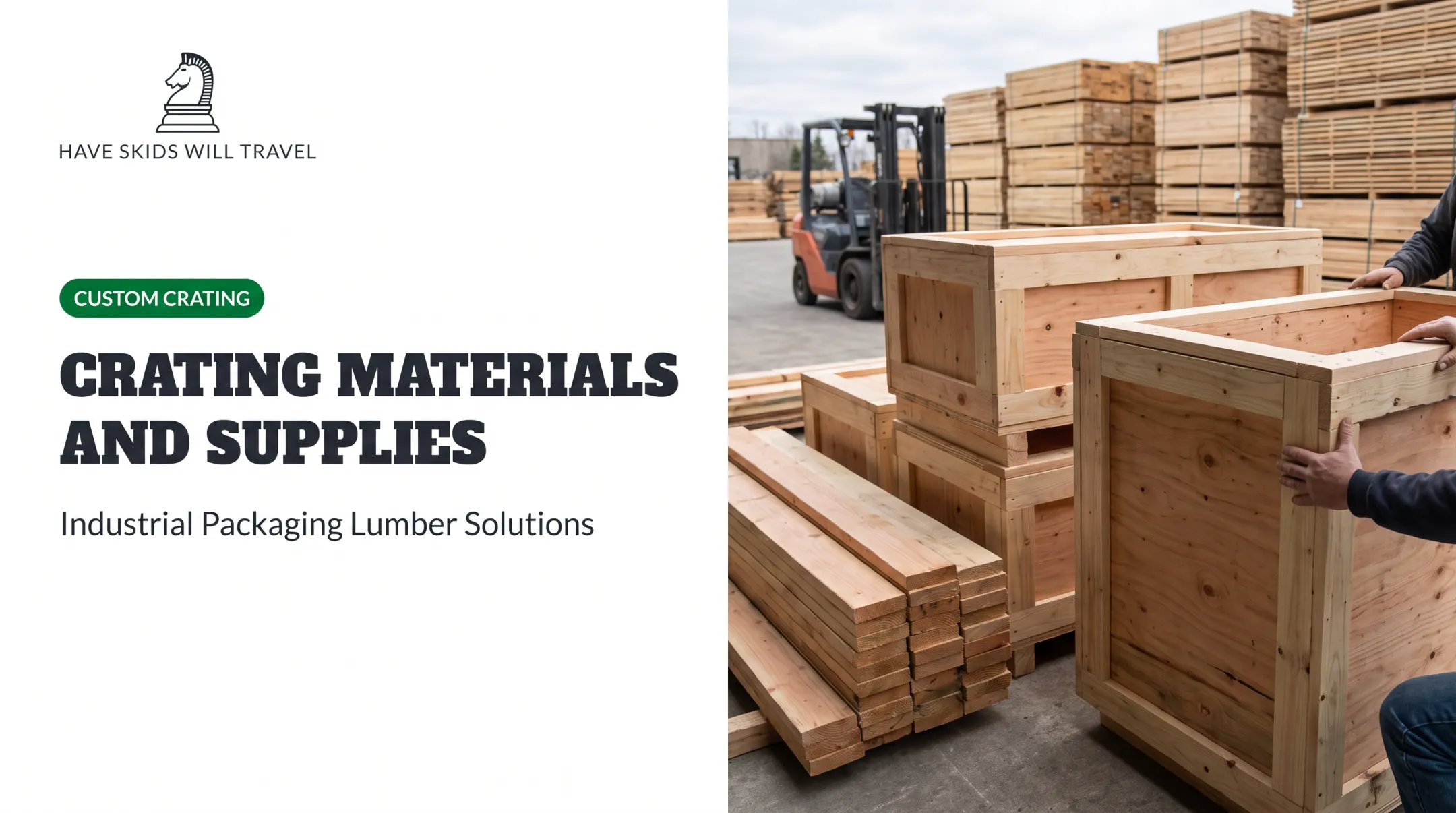
Solid lumber — pine, hardwood, or plywood combinations — is still the most common industrial crating material. Buyers choose it for strength, easy field repair, and lower cost than metal or engineered options.
Best-use cases:
- Heavy or irregularly shaped equipment
- International shipments requiring ISPM-15 certification
- Situations where field repair matters more than minimal weight
Limitations:
- Heavier than plastic alternatives
- Vulnerable to moisture and pests if left untreated
Wood crate builders, including Palleton, typically offer both hardwood and softwood options, along with new, combination, or recycled lumber selected based on the product's weight and shipping requirements. That flexibility helps control cost without sacrificing performance.

Metal Crates (Steel/Aluminum)
Metal crates make sense when cargo is extremely heavy, high-value, or destined for repeated round trips. Mining equipment, aerospace components, and construction machinery are typical candidates.
Strengths:
- High durability and load capacity
- Strong moisture resistance
- Long service life across multiple shipments
Limitations:
- High upfront cost
- Longer fabrication lead times than wood
In one reported case, a galvanized-steel crate built for a 2,000-lb diesel engine was reused 3–5 times before retirement (FCA Packaging). Actual cycle counts still vary with design and handling.
Plastic Crates (HDPE)
Injection-molded HDPE crates are lightweight, weatherproof, and well suited to electronics, medical devices, or sensitive equipment that ships repeatedly.
Two common plastics cover most use cases:
- HDPE: Better for heavier loads and cold storage; one catalog lists a working range as low as -30°C
- PP (polypropylene): Lighter, more heat-resistant, and typically chosen for reusable, less extreme-temperature applications
One structural-foam HDPE container model carries a rated capacity of 2,000 lbs and is fully recyclable at end of life (ORBIS Corporation). Reusable plastic systems can support hundreds of cycles, depending on the model and how they're handled.

Corrugated Cardboard Crates
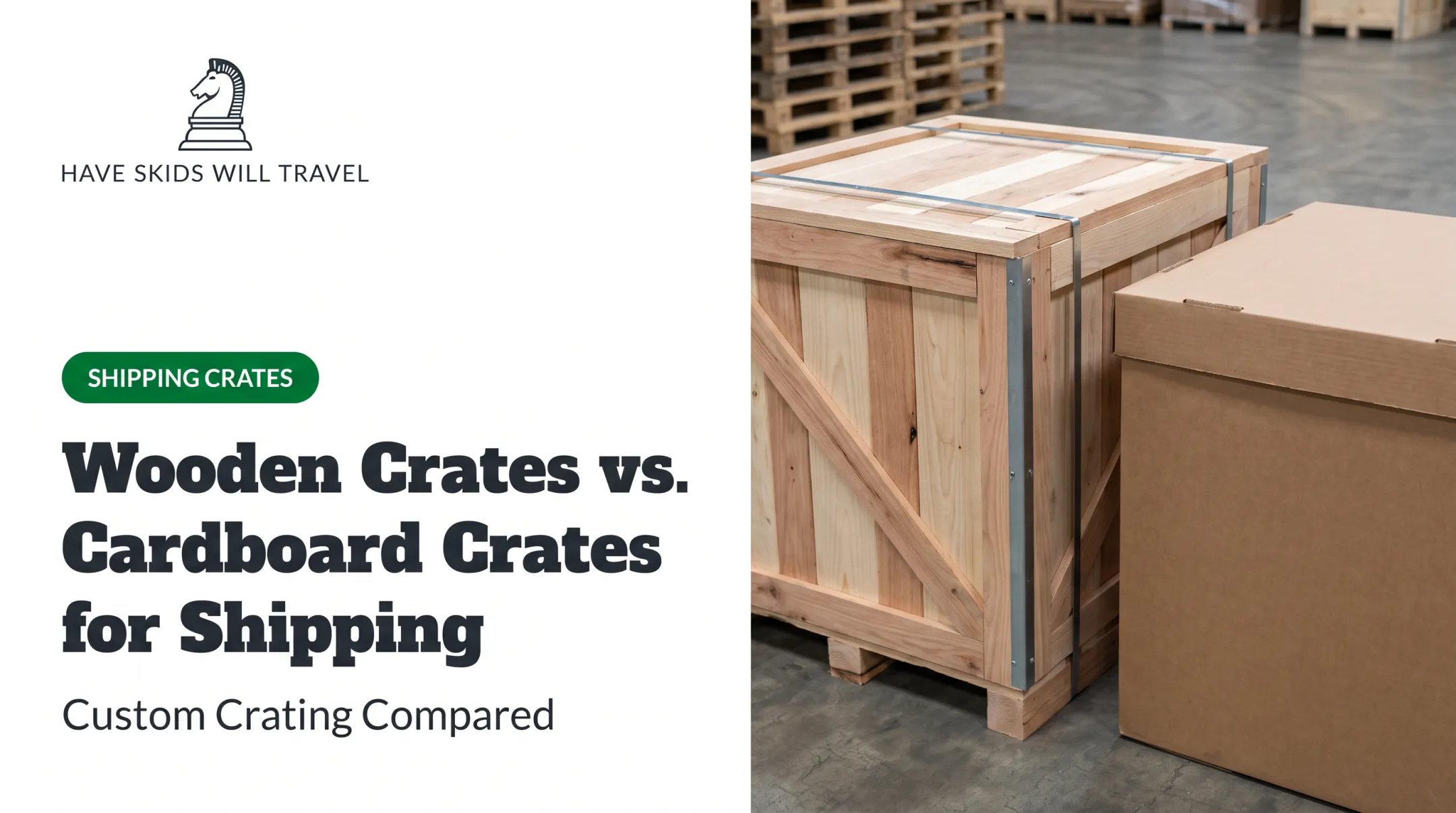
Triple-wall corrugated crating, often built on a wood skid base for forklift handling, is the lowest-cost, generally single-use option for lighter industrial or retail goods.
Tri-Wall reports that its triple-wall board delivers roughly 10 times the compression strength of standard single-wall corrugated (Tri-Wall Group). Edge crush strength for heavy-duty triple-wall boards typically runs 60-90 ECT, versus 32 ECT for standard single-wall board.
Wooden Crate Components and Materials Breakdown
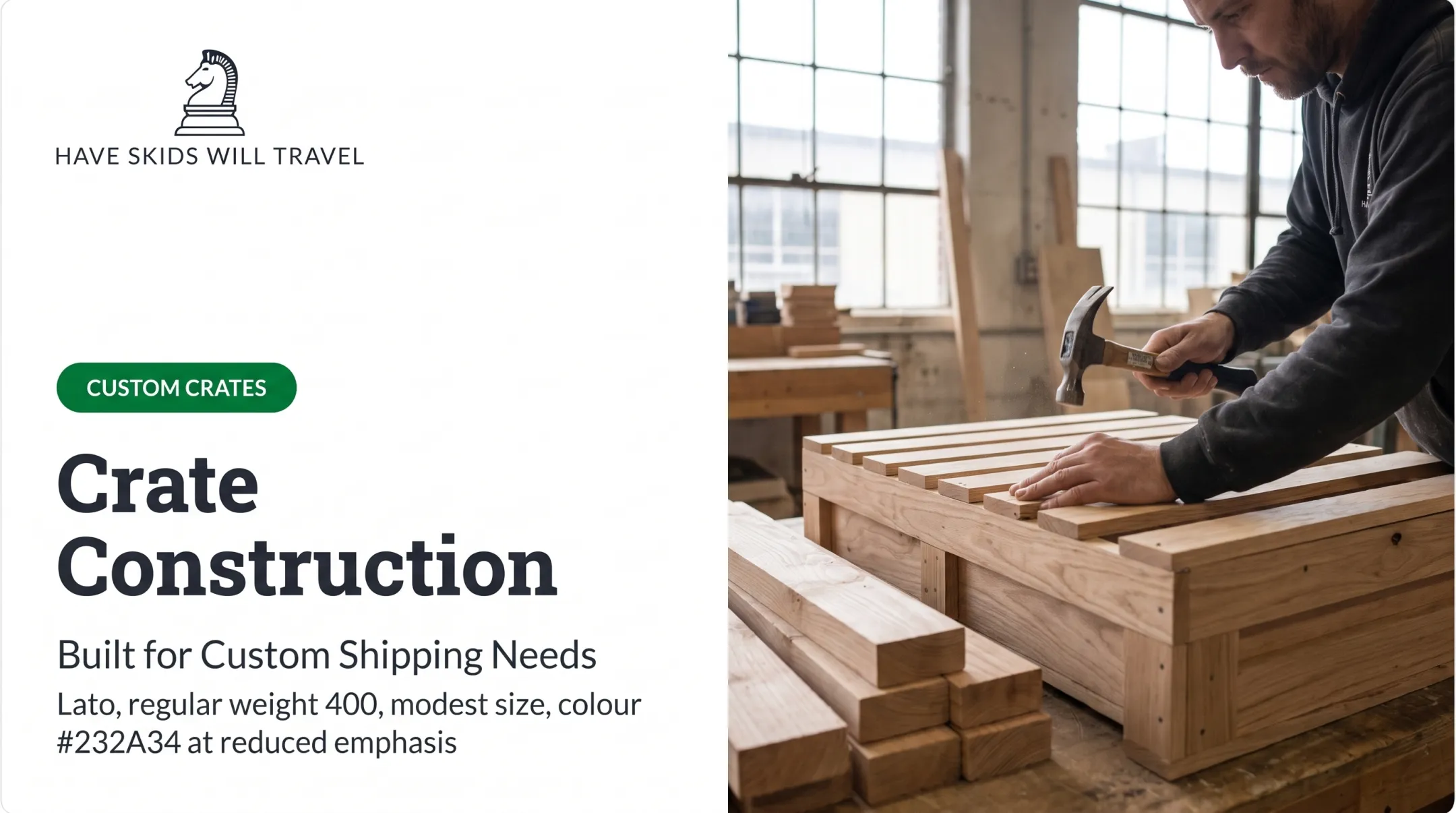
A wood crate isn't just boards nailed together. Typical builds include:
- Framing: Timber framing forms the structural skeleton, often with reinforced supports for heavier loads
- Panels: OSB or plywood panels sheath the frame
- Fasteners and adhesives: Hold the structure together under load
- Coatings: Protect against moisture where needed
Custom builds may also add forklift-access skids and internal cushioning for fragile items. Those are design options, not standard on every crate.
How to Choose the Right Crate Material
Selecting a crate material comes down to five practical questions:
- What's the item's weight, fragility, and value? Heavier or higher-value items typically need wood or metal for adequate protection.
- How far and by what mode is it shipping? Ocean and air freight into most countries require ISPM-15-compliant wood or a non-wood alternative.
- Will the crate be reused? One-way shipments favor wood or corrugated. Recurring lanes justify the higher upfront cost of metal or plastic.
- What environment will it face? Outdoor storage or humid climates call for moisture- and pest-resistant materials.
- Do you have the internal expertise to specify this correctly? If not, work with a manufacturer that can advise on material selection, structural design, and compliance.
That last point matters more than most shippers expect. Frequent or high-volume crate programs especially benefit from an established manufacturer that can validate the spec before you build or buy.
Palleton has spent more than 45 years in the pallet and lumber industry, with a dedicated custom pallet and crate shop and ISPM-15 heat-treat certification for export shipments.
Its process starts with the product's weight, shipping requirements, and handling conditions, then applies engineering judgment to select the material and structure that fit — new, combination, or recycled lumber — without overbuilding.
For export crates requiring heat treatment, the wood core must reach 140°F (56°C) at minimum for 30 continuous minutes, followed by an official ISPM-15 stamp showing the country code, facility number, and "HT" treatment designation.

Common Mistakes to Avoid When Selecting Crate Materials
These material missteps raise freight cost or delay shipments:
- Overbuilding. Choosing metal or heavy-duty wood when a lighter material would fully protect the item just adds unnecessary freight weight and cost.
- Ignoring compliance requirements. Shipping non-heat-treated wood internationally risks an Emergency Action Notification and a rejected shipment at the border.
- Underestimating long-term costs. Choosing the cheapest one-way material for monthly shipments often costs more over a year than a reusable crate upfront.
Frequently Asked Questions
What is a crate made of?
Most crates are built from wood — solid lumber or plywood — with metal, plastic, and corrugated cardboard also common depending on load weight and durability needs.
What are the different types of crates?
By material: wood, metal, plastic, and corrugated. By design: open slat, fully sheathed, foldable, and nestable configurations.
What wood is best for shipping crates?
Hardwood offers higher strength and impact resistance for heavy or high-value loads. Softwood is lighter and more economical when the shipment does not need maximum durability.
Do wooden crates need to be heat-treated for international shipping?
Yes. Most countries, including the US, require ISPM-15 heat treatment and an official stamp before wood packaging can clear customs.
Which crate material is most cost-effective for heavy machinery?
Solid wood is typically the most cost-effective upfront choice. Reusable metal crates can save money over multiple shipments if the same route repeats.
Can crate materials be reused or recycled?
Wood and metal crates can often be repaired and reused across multiple shipments. Corrugated crating is generally single-use but recyclable — old corrugated containers are widely recovered and recycled in the US.