
Blocking and bracing is the practice of stopping that movement before it starts. It's not glamorous, but it's the difference between a shipment that arrives intact and one that arrives as a claim number.
According to TT Club's claims analysis, 65% of cargo damage traces back to cargo that was poorly packed, blocked, or secured inside transport units, according to TT Club's 2017 analysis. That's a claims-based figure, not a universal damage rate, but it's a strong signal that securement failures are avoidable and common.
This guide breaks down blocking versus bracing, the techniques used on ocean and rail containers, wood requirements for export shipments, and where to place a container once it's off the truck.
Key Takeaways
- Blocking stops side-to-side movement; bracing stops tipping, rolling, or fore-aft shifting
- Even weight distribution and void-filling form the foundation of every load plan
- Export wood must meet ISPM-15 heat-treatment standards or risk customs rejection
- Under-securing cargo remains the most common, avoidable cause of transit damage
What Do Blocking and Bracing Mean for Container Shipments?
The IMO/ILO/UNECE CTU Code, the global reference for packing cargo transport units, defines these terms functionally rather than by a strict "lateral vs. vertical" split, though that's the easiest way to remember them.
Blocking fills horizontal space so cargo can't slide. Common methods:
- 2x4 lumber framing wedged against structural points
- Wooden chocks positioned at pallet edges
- Dunnage bags (airbags) inflated between cargo rows to close gaps
Bracing stops cargo from tipping or rolling. Typical tools include:
- Shoring bars and load bars
- Tie-down straps
- Cargo nets
Blocking vs. Bracing at a Glance
| Function | Blocking | Bracing |
|---|---|---|
| Movement controlled | Side-to-side (lateral) | Tipping, rolling, fore-aft |
| Common materials | Lumber, chocks, dunnage bags | Straps, shoring bars, nets |
| Failure result | Load shift, wall damage | Toppled cargo, crushed goods |

Most real-world loads use both together. A pallet braced against rolling but never blocked laterally will still slide into its neighbor.
The CTU Code also notes that blocking should transfer force into structurally significant components, meaning corner posts and bottom rails, not the doors or roof. That distinction becomes critical once vibration enters the picture.
Why Rail and Ocean Transit Raise the Stakes
Standard trucking generates relatively mild, steady motion. Rail and ocean transit don't.
A 1977 DOE/NRC study on rail-car vibration recorded sustained forces of roughly 0.19g longitudinal and transverse, with occasional coupling shocks spiking to 33-51g longitudinal during coupling events.
Ocean transit works differently. The GDV Container Handbook cites a rule of thumb of roughly 1g vertical and up to 0.8g horizontal from sustained pitching, rolling, and yawing.
In plain terms: rail delivers sharp, short jolts. Ocean delivers prolonged, multi-directional motion. Either one will find a poorly blocked load.
Core Blocking and Bracing Techniques for Ocean and Rail Containers
Every load plan starts the same way: even weight distribution across the container floor. Concentrated weight on one side stresses the frame and makes bracing far less effective, since force isn't spread evenly across structural points.
From there, three techniques do most of the work:
- Lateral void fillers – dunnage bags, inflatable airbags, or adjustable braces close side-to-side gaps. The CTU Code recommends keeping cumulative horizontal voids under 15 cm (about 6 inches); anything larger needs dedicated filler material.
- Fore-and-aft bracing – chock blocks or engineered lumber framing stop cargo from creeping toward the doors or nose during acceleration and braking.
- Lateral bracing at intervals – for a full ISO container, place dunnage or timber braces at multiple points across the width so load forces transfer through several structural contacts, not one.

Different cargo types need different approaches:
- Heavy machinery – reinforced timber framing and supports built to the equipment's exact footprint, not generic lumber
- Palletized goods – strapping plus void-fill between rows
- Fragile items – cushioned bracing that absorbs shock instead of only restraining movement
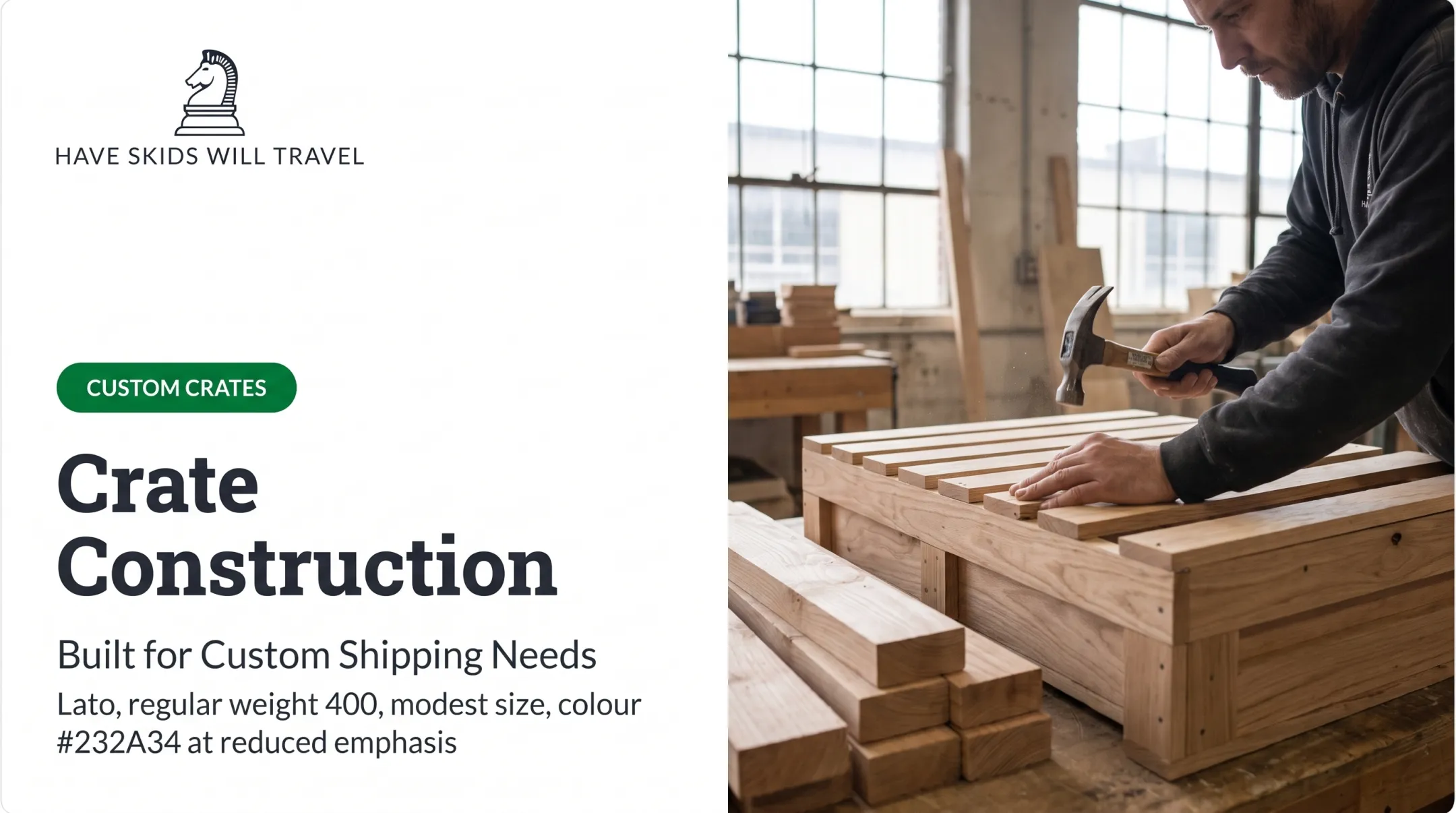
Palleton's custom pallet and crate manufacturing, plus dimensional lumber and dunnage supply, gives shippers one source for materials matched to the actual cargo.
For heavy or oversized equipment, that can mean a reinforced crate with built-in padding and bracing, engineered around the product's weight and shipping requirements before it reaches the container.
What Wood Is Acceptable for Blocking and Bracing?
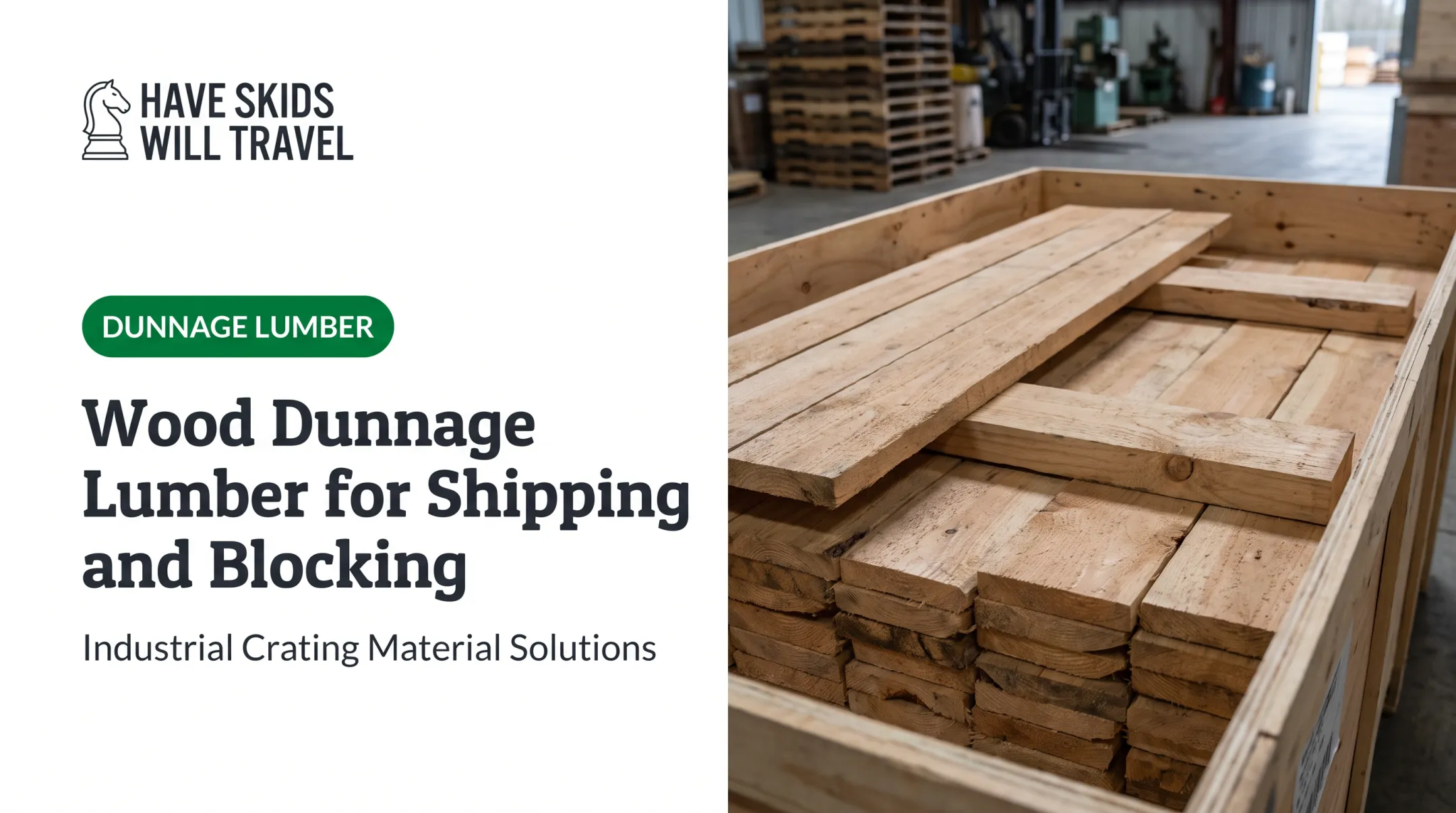
Not every scrap of lumber belongs in a container. Wood used for blocking or bracing has to hold up under repeated load without splitting, and that starts with structural quality.
Sound blocking lumber should be:
- Free of excessive knots, rot, or splits
- Rated for the compressive force it will bear
- Dimensionally consistent—commonly 2x4s, favored for strength-to-weight and easy fastening
The CTU Code notes that nailed blocking arrangements can typically resist somewhere between 1-4 kN per nail, depending on timber quality, so sound lumber directly affects how much load each fastener can carry.
ISPM-15: The Rule That Trips Up Exporters
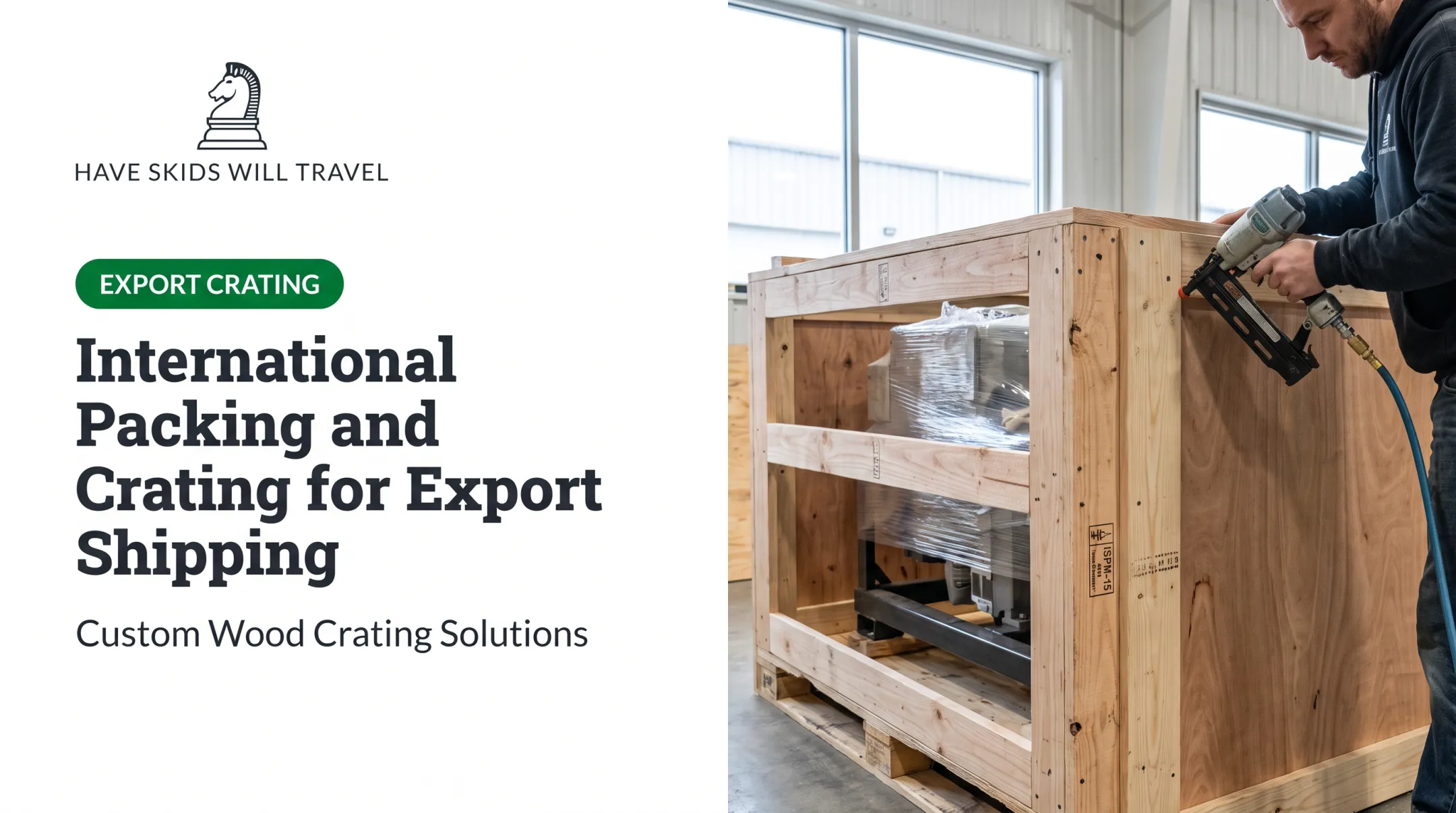
Any solid wood packaging material crossing an international border, including blocking, bracing, and dunnage, must meet ISPM-15 heat-treatment standards. USDA APHIS requires the wood to be pest-free, heat-treated, and properly marked before it enters or leaves the U.S.
Treatment means heating the wood's core to at least 56°C (133°F) for a minimum of 30 minutes, then stamping it with an official mark showing the treatment code, such as "HT."
Skip this step, and the consequences are real:
- CBP treats unmarked wood packaging as automatically non-compliant
- Inspectors can issue an Emergency Action Notification
- Shipments can be delayed, fumigated, or turned back at the border entirely
Palleton heat-treats pallets and crates in monitored kilns, bringing the wood core to at least 56°C (133°F) for at least 30 minutes, then marks each unit per ISPM-15 requirements. For exporters, sourcing certified wood upfront avoids the scramble of re-treating or replacing dunnage after a shipment gets flagged.

Should a Shipping Container Sit on the Ground or on Blocks?
For long-term parking or on-site storage, put the container on blocks—not bare ground. Raising it improves drainage and ventilation. Standing water against a steel floor accelerates corrosion and rot, especially around the wooden floor substructure.
What makes a good support:
- Concrete blocks or footings placed under the four corner castings
- Steel beams rated for the container's loaded weight
- Dedicated container piers designed for even weight distribution
Corner castings are the load-bearing points on a container—the same ones used as reference points for internal cargo blocking. Support must land on those corners evenly, or the frame can sag and twist over time.
Concrete blocks work when they sit level and are rated for the load. Uneven placement under one corner, with the others left unsupported, creates frame stress that shows up months later as door misalignment or roof leaks.

Common Blocking and Bracing Mistakes That Cause Cargo Damage
Most damage claims trace back to a handful of repeat mistakes.
Under-securing the load. Too little dunnage or too few straps is the single most common cause of shifted cargo. It's tempting to skip a bag or two to save time, but a 6-inch void is all it takes for a pallet to start moving.
Bracing in only one direction. Securing cargo against the doors while ignoring the nose end leaves half the load unprotected. Containers get loaded, unloaded, and reloaded in either orientation, and rail yards don't care which end faces forward.
Skipping the final check. Before sealing the container:
- Confirm void-fill is complete across all gaps
- Verify strap tension hasn't loosened during loading
- Check that bracing contacts structural points, not just walls or doors
That last walk-through takes ten minutes. Skipping it is how a well-planned load turns into a damage claim three weeks later.
Frequently Asked Questions
What does "block and brace" mean?
Blocking prevents cargo from sliding side-to-side, while bracing prevents it from tipping, rolling, or shifting fore-and-aft. Together, they form a complete securement system for a loaded container.
What is the purpose of blocking and bracing?
It prevents cargo from shifting during transit, protecting both the product and the container structure. Proper securement also reduces damage claims and avoids costly delays at destination.
What is the difference between blocking and bracing cargo?
Blocking controls lateral (side-to-side) movement using materials like lumber and dunnage bags. Bracing controls vertical and tipping movement using straps, shoring bars, or load bars.
Which blocking and bracing method prevents cargo from moving side to side in an ISO container?
Lateral void fillers, such as dunnage bags or adjustable braces, placed at regular intervals across the container's width. This keeps cumulative gaps below the recommended 6-inch threshold.
Is it better to place a shipping container on the ground or on blocks?
Blocks are generally better, especially for long-term or stationary use. They improve drainage and ventilation while reducing moisture damage to the container's floor structure.
What wood is acceptable for blocking or bracing?
Wood must be structurally sound, free of excessive knots or rot, and typically in dimensional lumber form like 2x4s. For export shipments, it must also carry ISPM-15 heat-treatment certification.