
Businesses using pallets for outdoor storage, landscaping projects, or exterior displays need to know how to pick the right wood, apply the right treatments, and maintain pallets so they hold up season after season. This guide covers wood selection, weatherproofing methods, hardware choices, and how long you can realistically expect outdoor pallets to last.
Key Takeaways
- Moisture cycling and UV exposure are the two biggest threats to outdoor pallet wood
- ISPM-15 heat-treated (HT) pallets are the safer, more widely available choice compared to MB-stamped alternatives
- Exterior paint, stains, and marine varnish each offer different tradeoffs between protection and appearance
- Corrosion-resistant fasteners and off-ground storage matter as much as the wood treatment itself
- Sourcing from a certified supplier like Palleton helps ensure consistent, ISPM-15-compliant wood for your project
Why Wood Pallets Need Weatherproofing for Outdoor Use
Wood is hygroscopic. It absorbs and releases moisture depending on humidity and temperature, and that constant exchange changes the wood's physical properties, according to USDA Forest Products Laboratory's Wood Handbook. Every wetting-and-drying cycle causes the fibers to swell and contract.
Over time, this creates:
- Cracking and splitting along the grain as fibers weaken
- Swelling at joints, which loosens nails and fasteners
- Rot, when moisture content stays elevated too long without drying
UV exposure adds a second layer of damage. FPL research shows that outdoor wood weathering happens mostly at the surface, and short-wave UV light degrades that surface quickly, causing the graying and splintering you see on old, unprotected pallets (USDA FPL, 2007).
The NWPCA estimates that more than 1.8 billion pallets are in service in the U.S. daily, and 93% are wood (NWPCA).

Many of those pallets spend time outdoors in storage yards, at loading docks, or on job sites. Without protection, they break down noticeably faster than pallets kept indoors.
Choosing the Right Wood Pallet Type for Outdoor Projects
Softwood vs. Hardwood
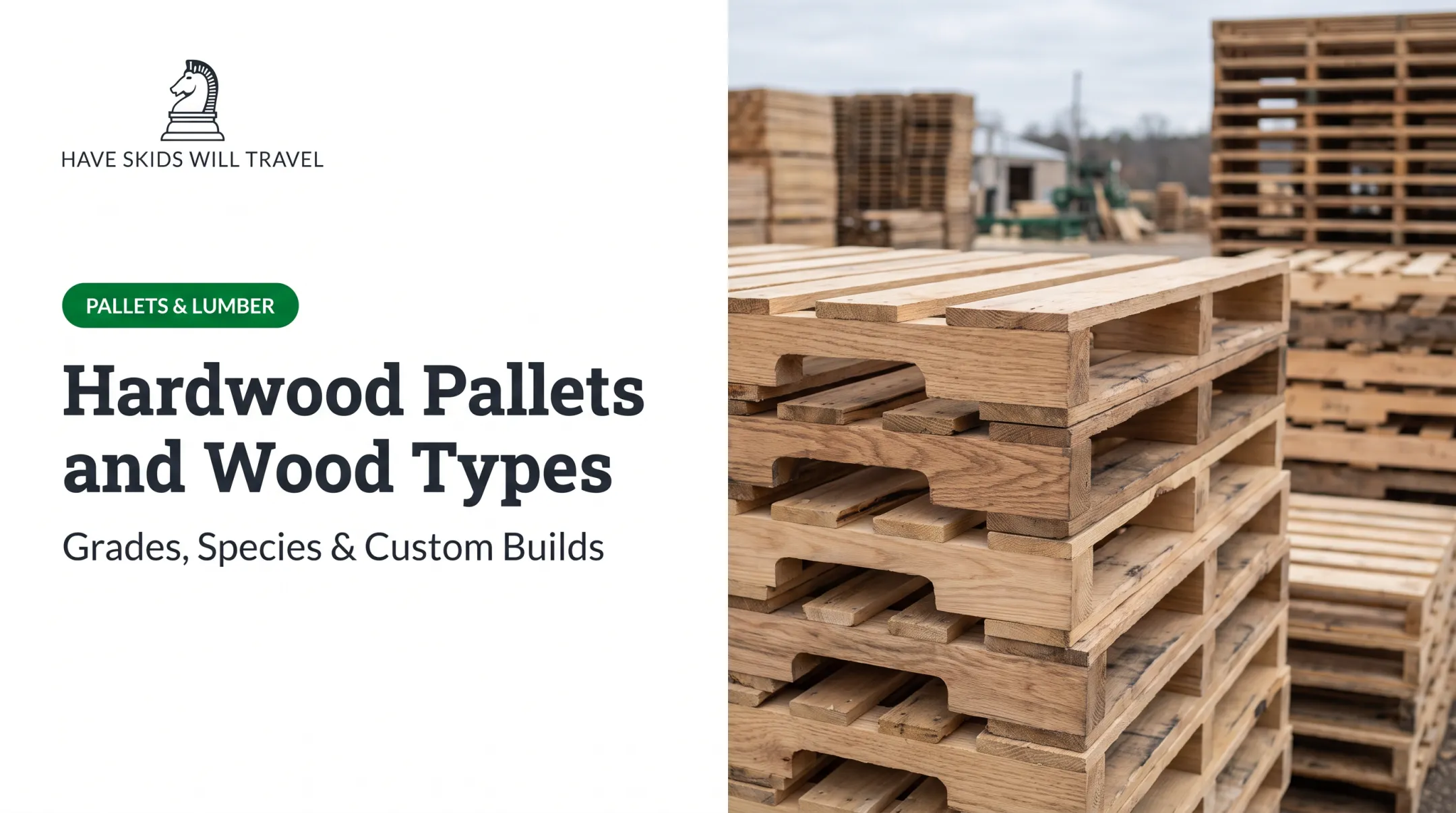
Pallets are typically built from either softwood (like pine) or hardwood. Hardwood tends to be denser and heavier, but claiming one category is universally "better" outdoors oversimplifies things. Durability depends on species, moisture content, board thickness, and how well the pallet was built, not just the softwood/hardwood label.
Palleton supplies both new hardwood and softwood pallets, along with combo (new/used) and recycled options, so businesses can match wood type to load requirements and budget rather than guessing based on category alone.
HT vs. MB Treatment Marks
Every pallet used in international shipping under ISPM-15 rules carries an IPPC stamp showing its treatment code:
- HT (Heat Treatment): Wood core heated to at least 56°C (133°F) for 30+ minutes
- MB (Methyl Bromide): A fumigation method restricted since 2005 due to ozone-depletion concerns, per APHIS's environmental assessment
For outdoor use or reuse, HT is the practical choice. It avoids chemical fumigant residue and is more widely accepted. Palleton's pallets and crates are ISPM-15 Heat Treat Certified, with each unit stamped to confirm compliance. That documentation helps whether you're exporting goods or need a pest-free pallet for outdoor storage.
Block vs. Stringer Design
Block pallets allow forklift access from all four sides. Stringer pallets (like the standard 48×40 GMA pallet) are usually accessed from two ends unless notched.
Four-way access improves handling convenience, but it isn't proof of better weather performance on its own. Choose based on how you'll move and inspect the pallet, not just design type.
Weatherproofing Methods: Sealants, Stains, and Paints
Different finishes offer different tradeoffs between protection level and appearance. | Finish Type | Protection Level | Appearance | Reapplication | |---|---|---|---| | Exterior paint | Strongest UV/moisture barrier | Opaque, hides grain | Check manufacturer label | | Outdoor stain | Moderate water resistance | Shows wood grain | Varies by product | | Clear sealant | Water repellent | Clear, natural | Often yearly | | Marine spar varnish | Good UV + water protection | Glossy, clear | Multiple coats needed | | Natural oils (tung, linseed) | Limited UV protection | Natural look | Every 9-24 months |

Exterior-grade paint offers the strongest barrier. Products like 100% acrylic exterior paints are formulated to resist cracking, peeling, and blistering while blocking UV rays (Sherwin-Williams Everlast product page). The downside: you lose the visible wood grain.
Outdoor wood stains strike a middle ground. Semi-transparent exterior stains resist moisture and UV damage while letting the wood's natural texture show through. Reapplication intervals vary, so inspect deck boards and stringers each season and follow the product label.
Clear waterproofing sealants penetrate the wood and repel moisture without building a thick film. They keep pallets looking natural but usually need more frequent touch-ups than paint or spar varnish.
Marine spar varnish is a durable, glossy option often used on boats and outdoor furniture. It requires multiple coats but delivers solid UV and water protection when the product label confirms exterior suitability. For high-volume pallet fleets, paint or stain is usually the more cost-effective choice.
Natural oil finishes like tung or linseed oil penetrate the wood rather than coating the surface. Manufacturer guidance typically calls for reapplication every 9 to 24 months, far more often than paint or varnish.
Whichever finish you choose, prioritize the wood's weak points: end grain, joints, nail holes, and any existing cracks. That's where water gets in first.
Weatherproof Hardware and Fasteners
The wood treatment matters, but rusted nails and failed glue joints can undo all of it.
Fasteners: Stainless steel is the standard for exterior wood connections. Simpson Strong-Tie rates 304/305 stainless as very good for exterior wood-to-wood connections, and recommends 316 stainless for wet, coastal, or de-icing-salt environments (Simpson Strong-Tie).
Mixing a low-grade fastener with a stainless connector creates a weak point. Match your hardware grades throughout the build.
Adhesives: For joints exposed to rain, use a water-resistant adhesive:
- PVA Type III (such as Titebond III): meets ANSI/HPVA Type I water-resistance standards for interior and exterior use
- Polyurethane construction adhesive: waterproof for demanding exterior work, but not continuous submersion
If you're sourcing pallets for exterior builds, ask Palleton about fastener specs up front—standard construction docs may not list exact grades.

Best Practices for Storing and Maintaining Outdoor Pallets
Even a well-treated pallet fails early if it's stored poorly. Follow these fundamentals:
- Elevate pallets off the ground: at least 6 inches per USDA FPL guidance, so moisture and mud cannot wick into the wood
- Cover with breathable tarps: skip airtight plastic; trapped humidity under sealed covers can be worse than no cover at all
- Inspect periodically: check for swelling, cracking, splintering, or rust streaks around fasteners
- Reapply sealant or paint: when the finish starts thinning, graying, or cracking
FPL research also warns that wood stored above 20% moisture content for extended periods without drying can develop decay. Letting pallets dry out between wet spells matters just as much as the initial treatment.

How Long Will Pallets Last Outside?
There's no single lifespan for outdoor pallets. Untreated pallets left outside can start breaking down within months, especially in wet climates. Treated, sealed pallets stored properly—elevated, covered, and inspected—can last several years.
Lifespan depends on:
- Wood type and grade
- Coating quality and reapplication schedule
- Local climate and moisture exposure
- How consistently you maintain the finish and hardware
Frequently Asked Questions
How long will pallets last outside?
Untreated pallets can degrade within months of continuous outdoor exposure. Sealed, well-stored pallets with proper hardware can last multiple years, depending on climate and wood species.
Are wooden pallets waterproof?
No. Pallets aren't inherently waterproof, but sealants, exterior paint, and proper elevated storage can make them more water-resistant for longer outdoor use.
Can I use any pallet for outdoor DIY projects?
Not necessarily. Check for the IPPC stamp and confirm it reads HT, not MB. Avoid unmarked pallets since you can't verify their treatment history or chemical exposure.
What's the best sealant for outdoor pallet wood?
Exterior paint gives the strongest full barrier but hides the grain. Marine spar varnish and outdoor stains offer good protection while keeping the wood look visible.
How do I know if a pallet is heat-treated or chemically treated?
Look for the IPPC stamp, usually burned or printed into the wood. It shows a treatment code: HT for heat treatment or MB for methyl bromide fumigation.
Where can businesses source pallets for outdoor use in bulk?
Palleton offers ISPM-15 Heat Treat Certified pallets and crates, built from new hardwood, softwood, or recycled lumber across seven facilities. Contact Palleton at 402-933-3375 for bulk outdoor and export sourcing.