
Get any of these wrong, and you're looking at customs holds, fines, or a shipment sent straight back home.
This guide breaks down what qualifies as a crate shipment, the ISPM-15 rules that govern wood packaging worldwide, the paperwork customs actually checks, and how to pick a crating partner who won't leave you guessing.
Key Takeaways
- Export crates must meet ISPM-15 wood treatment standards to clear customs
- Documentation—commercial invoice, bill of lading, certificate of origin—matters as much as the physical crate
- Custom-engineered crates cut damage risk and long-term shipping costs
- Partnering with an ISPM-15-certified crating supplier simplifies compliance and avoids customs delays
What Is a Crate Shipment?
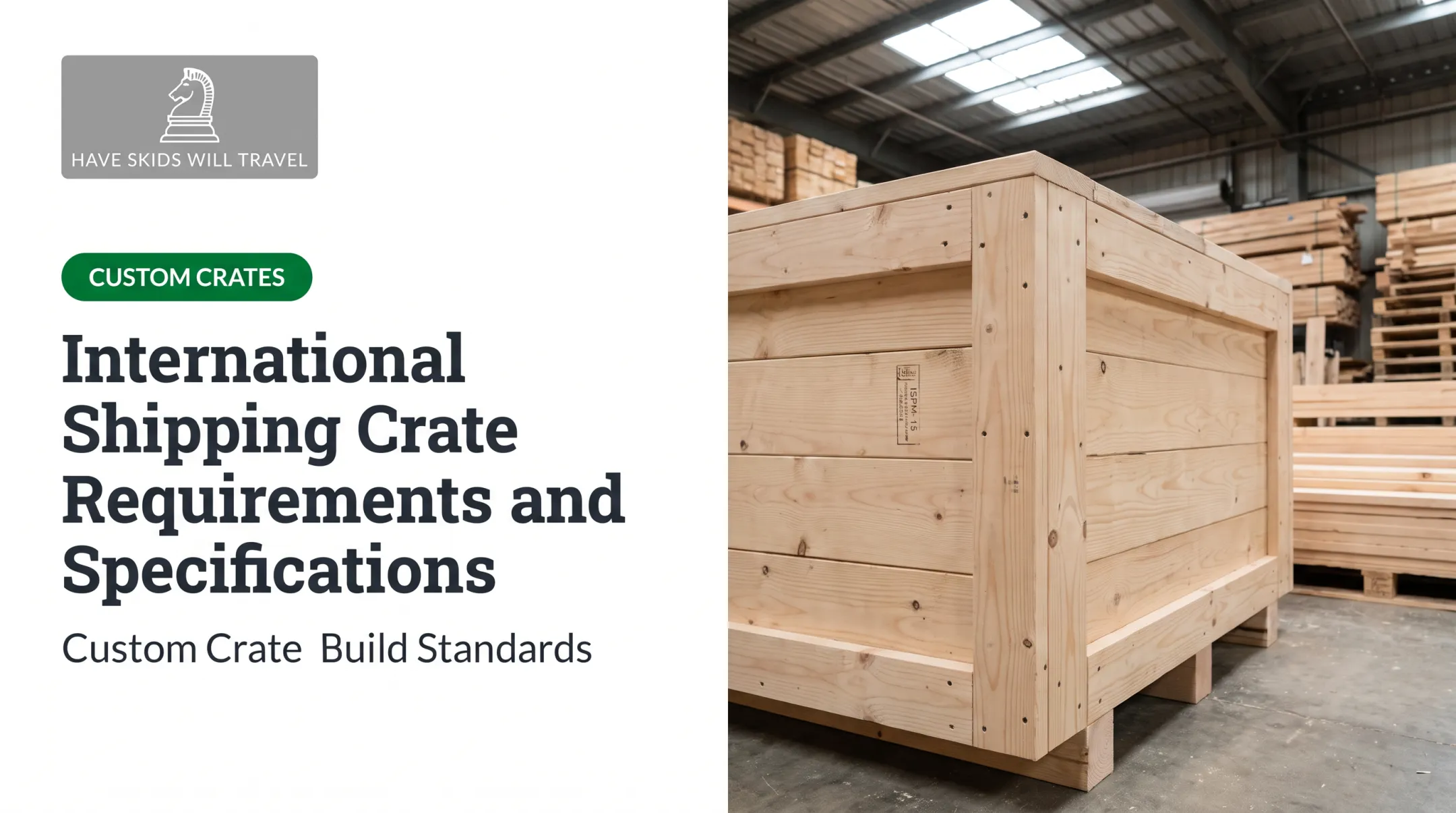
A crate shipment is cargo packed inside a rigid wooden or engineered structure built specifically to protect goods during handling, storage, and transit. Unlike a standard cardboard carton, a crate is a structural enclosure (walls, framing, and often internal bracing), not just a container.
How crates differ from pallets and cartons:
- Pallets are flat unit-load bases used to stack and move goods; they don't enclose cargo
- Cartons offer light protection for smaller, lower-risk items
- Crates provide full structural enclosure for fragile, heavy, or high-value cargo
Industries that rely on crate shipments for export include machinery manufacturers, automotive parts suppliers, technology companies shipping servers or hardware, and chemical producers moving sensitive equipment.
Palleton builds custom wooden crates to spec for irregular dimensions, fragile contents, and high-value products, with reinforced construction when extra load capacity is needed.

ISPM-15 and Wood Treatment Requirements for Export Crates
ISPM-15 is the international standard that governs raw wood packaging in global trade. Its purpose is straightforward: stop wood-boring pests and invasive species from hitching a ride across borders inside pallets and crates. According to ISPM 15's official text, the standard applies to raw wood packaging material like dunnage and crating—but excludes plywood and other processed wood that's already effectively pest-free.
Heat Treatment vs. Fumigation
Two treatment methods are recognized:
- Heat treatment (HT) — Wood core reaches a minimum of 133°F (56°C) for at least 30 continuous minutes, eliminating pests without chemicals
- Methyl bromide fumigation (MB) — Chemical treatment performed by certified fumigators
Heat treatment has become the preferred route for a practical reason: the EPA classifies methyl bromide as an ozone-depleting substance, and US production was phased out in 2005 except for narrow quarantine exceptions. HT avoids that regulatory complexity entirely.
For shippers who need HT-compliant packaging ready to go, Palleton's pallets and crates are ISPM-15 Heat Treat Certified, with wood heated to a 140°F core temperature for a minimum of 30 minutes and marked accordingly.
The IPPC Mark ("Bug Stamp")
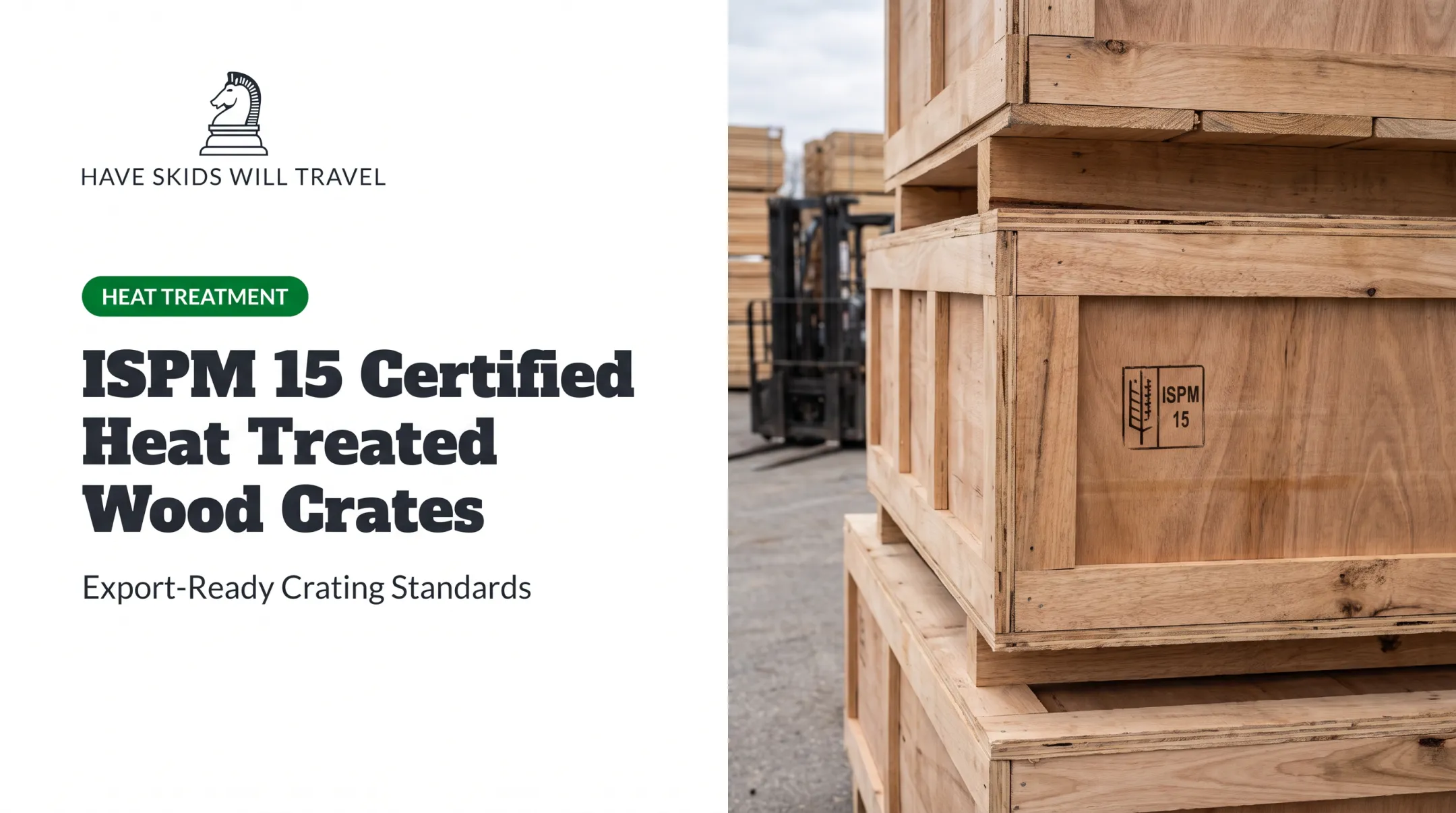
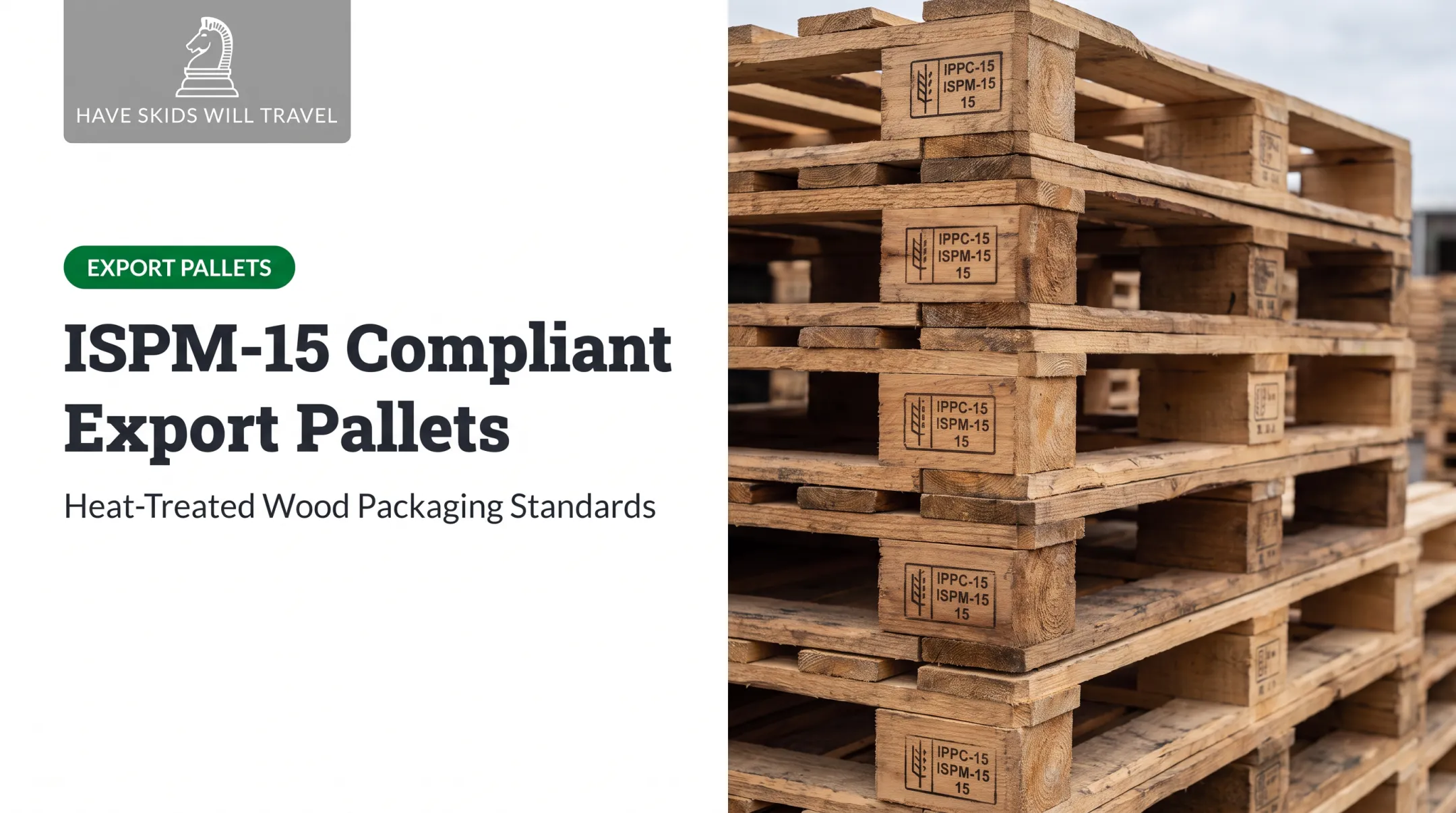
Every treated crate needs a visible IPPC mark (the so-called "bug stamp"). It must be legible, durable, and ideally stamped on two opposite sides. The mark should show:
- Treatment symbol
- Country code
- Facility ID
- Treatment code (HT or MB)
Miss it, and customs won't let your shipment through. US Customs and Border Protection's mitigation guidelines confirm that unmarked or improperly marked wood packaging counts as a violation, with penalties potentially tied to the value of the goods involved.
In one documented 2025 enforcement event, US authorities flagged widespread noncompliance tied to a missing hyphen in the required mark format. Even small formatting details matter to inspectors.

Treatment rules apply globally, but destination countries can add their own import requirements. Verify those specifics before you ship.
Key Documentation Requirements for International Shipping Crates
Even a perfectly built, properly stamped crate won't move if the paperwork doesn't match. Four documents matter most:
- Bill of Lading (BOL) — Serves as proof of shipment and the carrier's receipt of goods. A straight BOL is non-negotiable; a negotiable version can function as a transferable ownership document.
- Commercial Invoice — Customs uses this to calculate tariffs and assess the value of your cargo. Descriptions, quantities, and values here must match your packing list exactly.
- Certificate of Origin — Identifies where goods were manufactured, often required to determine duty rates or satisfy a letter-of-credit condition.
- Certificate of Insurance — Confirms cargo coverage; typically required when a buyer, lender, or sales contract calls for it.
If any of these documents are missing or don't match the crate's physical labeling, expect shipment holds, fines, or cargo returned to origin.

For first-time exporters, a freight forwarder or experienced crating partner can prevent these headaches. They've seen the paperwork mismatches before and know what customs officers actually check.
Designing the Right Export Crate for Your Cargo
Crate design isn't one-size-fits-all. It depends on product weight, fragility, dimensions, and how the cargo will travel: ocean, air, or rail.
Common Crate Types
- Open crates: Skeletal frames for durable machinery that doesn't need full enclosure
- Sheathed crates: Open frames with partial paneling for extra protection without solid-wall weight
- Closed/solid-wall crates: Full enclosure for fragile, high-value, or sensitive cargo
Moisture and Bracing Considerations
Long ocean transits bring humidity swings that cardboard and untreated wood handle poorly. Design for the voyage, not just the dock:
- Internal bracing to stop cargo from shifting in transit
- Vapor barrier packaging against condensation on multi-week hauls
- Moisture-control features matched to route and dwell time
Palleton builds specialty crates with padding, bracing, and climate-control options around the product, its weight, and the shipping route.

Oversized and Heavy Machinery
Heavy equipment often needs reinforced skids or custom pallets built into the crate structure, not a separate base. That keeps the load stable during forklift moves and crane lifts at port.
Before production, weight specs, handling method, and shipping requirements should drive the build. Palleton engineers heavy-duty reinforced crates and custom pallets for oversized, high-weight loads with those factors locked in up front.
Choosing an Export Packing and Crating Partner
Not every crate builder understands export compliance. When vetting a partner, look for:
- ISPM-15 certification — Confirms the provider can legally treat and mark wood packaging for export
- Custom manufacturing capability — Builds to your product's exact dimensions and fragility needs, not just standard sizes
- Cross-industry experience — Food, automotive, pharma, and chemical shipments all carry different handling and regulatory considerations
Palleton brings over 45 years of pallet and lumber experience, plus ISPM-15 heat-treated crating and custom manufacturing, so exporters can meet compliance and protection requirements from the start.
Custom-crate work covers one-off prototype builds and full-scale production programs. That range matters when export volume is growing, not just a single shipment.
Reliability matters as much as certification. A partner with flexible, recurring, or emergency programs means fewer scrambles when volume spikes or a ship date moves up.
Frequently Asked Questions
What is a crate shipment?
A crate shipment is cargo packed in a rigid, structural wood enclosure built to protect goods during transit. Unlike cartons or pallets, crates fully enclose and brace the cargo inside.
What are the requirements for international shipping crates?
Export crates need ISPM-15-compliant wood treatment, a properly displayed IPPC mark, and accurate supporting documents like a commercial invoice and bill of lading. Missing any of these can trigger customs delays.
Do all wood pallets and crates need to be heat treated for export?
Only raw, solid wood packaging materials require ISPM-15 treatment. Processed materials like plywood or certain engineered wood products may be exempt, since they're already considered pest-free.
How long does it take to get a custom export crate built?
Lead times vary based on design complexity, order volume, and whether it's a one-off or recurring production run. Always confirm specific timelines directly with your crating provider before finalizing shipment dates.
What happens if my export shipment doesn't meet ISPM-15 standards?
Noncompliant wood packaging can be held at customs, fumigated on arrival, fined, or refused entry entirely. Inspectors may issue formal notices requiring corrective action before the shipment moves forward.