
Heat treatment is a controlled heating process used to eliminate pests, larvae, and fungi hiding inside wooden pallets and other wood packaging. This matters for U.S. pallet buyers, exporters, manufacturers, warehouse teams, and supply-chain managers who have to choose between kiln-dried, heat-treated, or dual-treated pallets.
The two terms get used interchangeably, and that's where problems start. Kiln drying manages moisture in the wood. Heat treatment supports phytosanitary compliance for international shipping. They're not the same thing, and assuming one covers the other can delay a shipment or get it refused at the border.
This article breaks down the difference, how the process works, where each treatment applies, common misconceptions, and what to check before you order.
Key Takeaways
- Heat treatment and kiln drying both use heat, but they solve different problems.
- ISPM-15 heat treatment eliminates pests for export compliance; it does not guarantee low moisture content.
- Kiln drying reduces wood moisture, improving dimensional stability and reducing warping risk.
- A pallet can carry both treatments when a shipment needs moisture control and export compliance.
- Confirm required markings, documentation, and specs with your destination country and supplier.
What Are Kiln Drying and Heat Treatment?
Kiln drying is a controlled lumber-drying process. Wood goes into a chamber and heat removes moisture down to a specified target.
Under the American Softwood Lumber Standard, the KD designation means a maximum 19% moisture content at the time of surfacing. Targets vary by species, grade, and intended use (NIST PS 20-25, 2025).
Heat treatment is a controlled heating process designed to kill insects, larvae, and other pests living inside wood packaging. The same lumber standard defines heat treatment (HT) as chamber heating to a prescribed core temperature and duration — with or without reducing moisture content. That last part matters. Heat treatment was never built to dry wood; it was built to kill what's living inside it.
What each process actually delivers:
- Kiln drying supports moisture management, dimensional stability, and lower risk of warping, cracking, or mold.
- Heat treatment supports pest elimination and, when properly marked, ISPM-15 compliance for international shipping.
Kiln drying is primarily about moisture. Heat treatment is primarily about phytosanitary protection.
Heat-treated wood is not automatically kiln-dried, and kiln-dried wood is not automatically ISPM-15 compliant. A pallet can receive both treatments, but your supplier needs to confirm the sequence, specs, documentation, and markings for your specific order.

Why Heat Treatment Is Used for Pallets and Where It Applies
Untreated wood packaging can carry invasive pests across borders without anyone noticing until the damage is already done. The Asian longhorned beetle is a documented example. USDA APHIS says it most likely entered the United States hidden inside wood packaging material from Asia, and it attacks and kills maple and other hardwood trees (USDA APHIS).
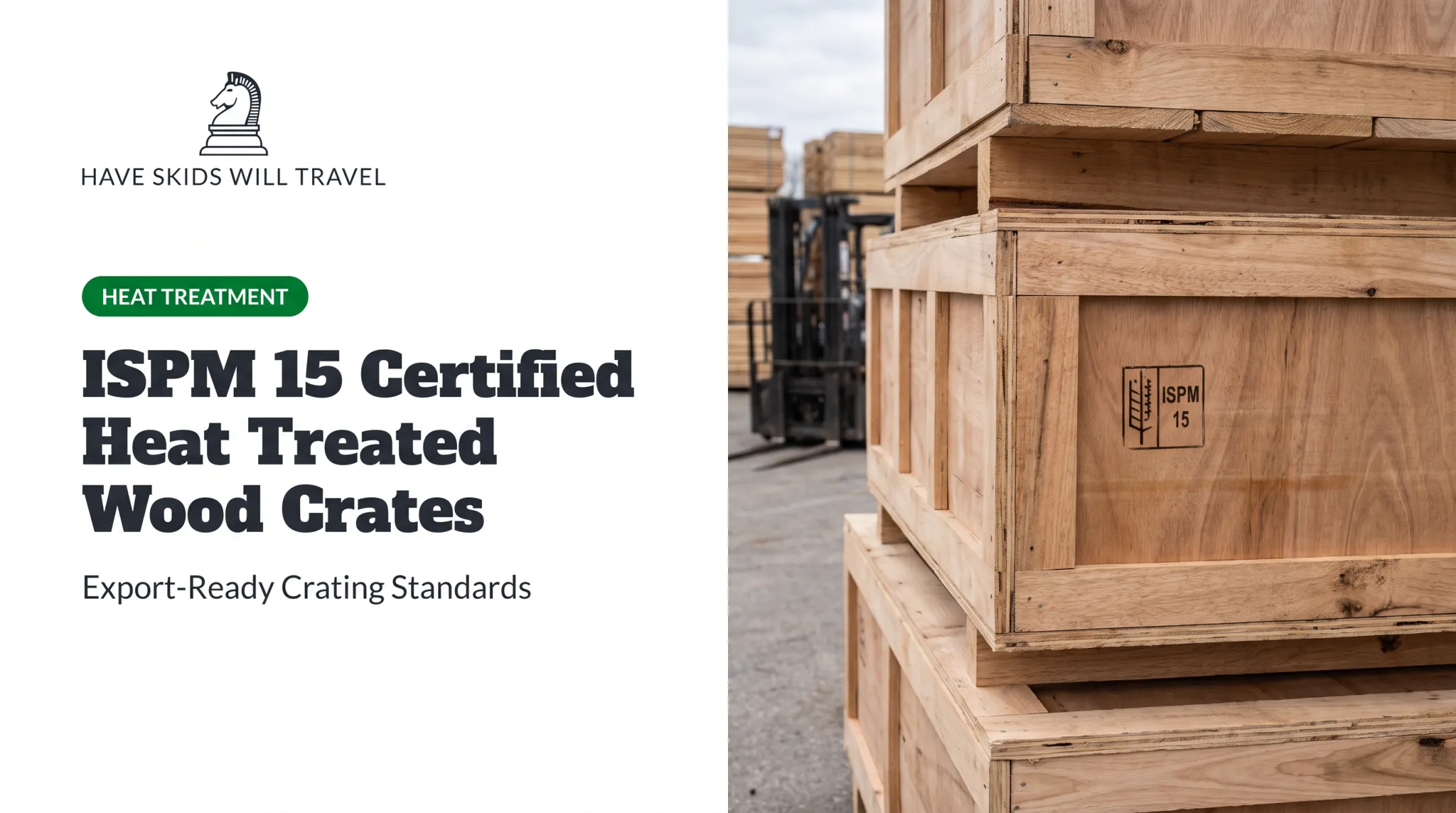
ISPM-15 is the international framework governing solid-wood packaging used in cross-border trade, including pallets, crates, and dunnage. Packaging made entirely from wood 6mm thick or less, or wholly from processed wood like plywood or particleboard, is generally exempt. A compliant mark is not optional. Exporters and importers should verify current scope and exemptions with official plant-health authorities before shipping.
What a Compliant Mark Should Include
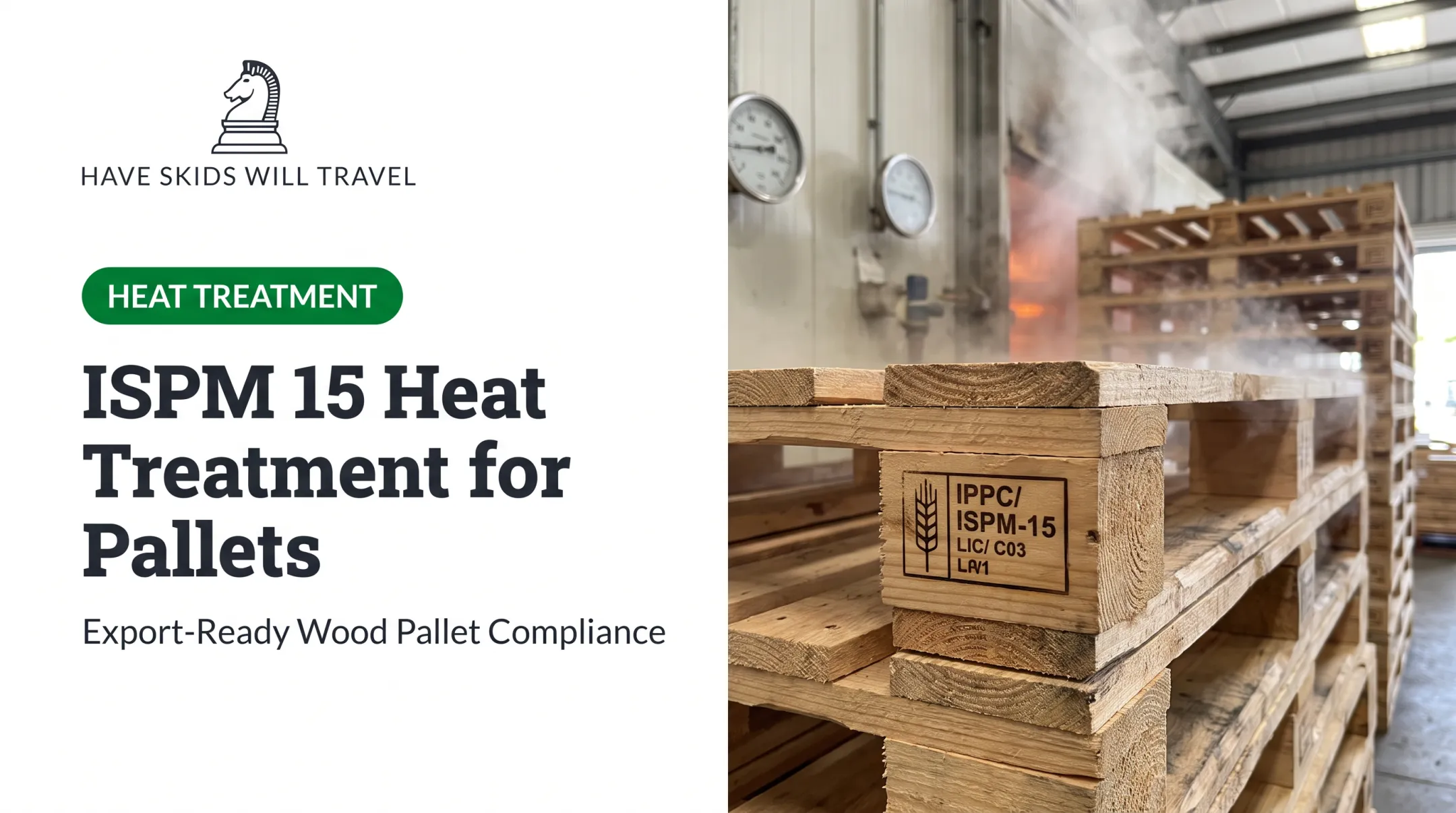
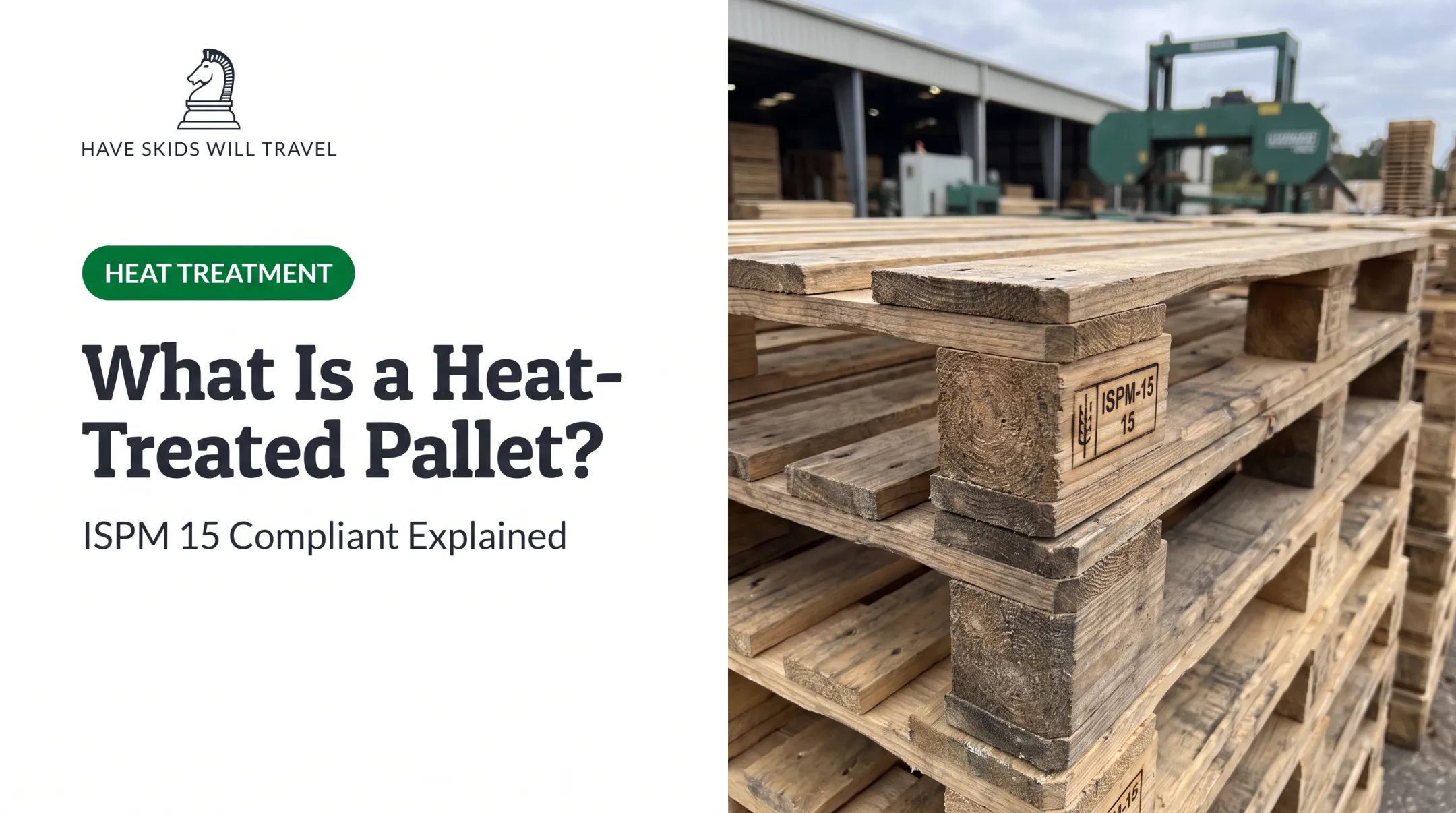
A legitimate ISPM-15 stamp shows:
- The IPPC symbol
- A two-letter country code
- A producer or treatment-provider code
- A treatment code (HT for conventional heat treatment, DH for dielectric heating)
Palleton's own stamp format follows this structure, reading something like "US-02334 HT" (country code, facility ID, treatment type).
Compliance is not quality. An ISPM-15 mark confirms a recognized phytosanitary treatment. It says nothing about moisture content, load rating, grade, cleanliness, or structural soundness. You still need to inspect the pallet itself.
Common use cases for heat-treated pallets:
- Export pallets for overseas shipments
- Custom crates for machinery, equipment, or oversized loads
- Mixed-load shipments where only part of the product is going outside the U.S.
Kiln-dried pallets often make more sense when moisture control matters more than export stamping. Common KD fits include:
- Food and beverage operations
- Pharmaceuticals and electronics
- Paper goods and long-term storage
- Humid facilities and cold-chain environments
Kiln drying alone still does not guarantee sanitation or prevent mold. Storage conditions matter.
Palleton provides ISPM-15 heat-treated pallets and crates and can help match export requirements to your pallet or custom crate needs.
How Pallet Heat Treatment Works
The process has a logical sequence: inspect and load the wood, heat it to the required internal temperature, hold that temperature, then document and mark the finished units.
What affects heating time and uniformity:
- Wood species and board thickness
- Pallet construction and stacking pattern
- Starting moisture content
- Chamber capacity and ambient conditions
The official ISPM-15 threshold requires the entire wood profile (including the core) to reach at least 56°C (133°F) for 30 continuous minutes (IPPC/FAO ISPM-15, 2019). That's a wood-temperature requirement, not just an air-temperature setting on the kiln dial.
Step 1: Inspect and Load
Pallets or lumber get inspected, arranged, and loaded so the thickest components receive adequate exposure. Sensors need clear access to measure internal temperature accurately, not just surface heat.
Step 2: Heat and Hold
The chamber raises and maintains heat until the verified internal wood temperature and required exposure period meet the standard. Calibrated sensors and temperature probes, placed in representative or challenging spots, track this in real time. Failed or incomplete cycles get flagged and reprocessed. They don't get marked.
Step 3: Record, Mark, and Release
The treatment provider logs the cycle, confirms it met the standard, marks eligible wood packaging, and releases it for shipment. Palleton runs this through controlled, monitored kilns that bring pallets to the required ISPM-15 temperature and hold them there for the full duration. Those cycles create records for inspectors and customers alike.

Kiln drying follows a different schedule. It is a slower, controlled drying process aimed at a moisture target, not a pest-elimination benchmark.
Factors, Misconceptions, and When Treatment May Not Be Needed
What Actually Drives the Decision
- Destination and transport mode — does the shipment cross an international border?
- Product sensitivity — moisture exposure, storage duration, warehouse humidity, condensation risk
- Pallet construction — wood thickness, species, load requirements, customer specs
- Documentation — valid treatment records, legible markings, supplier traceability
Three Misconceptions Worth Correcting
- "Heat-treated means kiln-dried." Heat treatment may remove some moisture as a side effect, but it's not designed to hit a controlled low-moisture target. Treat it as a pest-control process, not a drying process.
- "Kiln-dried means export-ready." Kiln drying doesn't replace required ISPM-15 treatment or marking. A well-dried pallet with no stamp still gets stopped at customs.
- "The stamp proves the pallet is structurally sound." It doesn't. Buyers still need to inspect condition, repairs, contamination, dimensions, and load capacity themselves.

When Treatment May Not Be Necessary
Heat treatment isn't always the right spec. You can often skip it when:
- The shipment is domestic and no customer requires HT
- The product is not moisture-sensitive
- Use is short-duration and indoor only
- Another packaging material fits the job better
Match the treatment to the route, product, and customer requirements instead of defaulting to HT on every order.
Before you order, confirm:
- Destination country requirements
- Treatment type needed (HT, kiln-dried, or both)
- Moisture requirements for your product
- Pallet condition and construction
- Required markings and documentation
- Storage conditions at origin and destination
- Order volume and delivery schedule
Conclusion
Kiln drying manages moisture. Heat treatment addresses pest control and export compliance. They're related but not interchangeable, and the right choice depends on your shipment's destination, product sensitivity, storage environment, and customer requirements.
Don't take the words "kiln dried" or "heat treated" at face value:
- Verify the markings
- Check the records
- Inspect the construction
- Confirm your supplier can back up what's stamped on the wood
Palleton builds ISPM-15-certified heat-treated pallets and crates alongside standard and custom options. They can help you sort out the right fit for domestic or export supply-chain needs, from a single export pallet to an ongoing program across multiple facilities.
Frequently Asked Questions
Is kiln-dried wood good quality?
Kiln-dried wood typically offers lower moisture, better dimensional stability, and less risk of moisture-related problems. Overall quality still depends on lumber grade, construction, storage, and inspection.
What is the difference between kiln-dried and heat-treated pallets?
Kiln drying focuses on reducing wood moisture content. Heat treatment focuses on eliminating pests and meeting ISPM-15 phytosanitary requirements for international shipping. They address different problems.
Are kiln-dried pallets heat treated?
No. A kiln-dried pallet is not automatically ISPM-15 compliant. Always confirm the treatment record and required mark with your supplier.
Can a pallet be both kiln dried and heat treated?
Yes. Dual treatment works well for exporters shipping moisture-sensitive products internationally, as long as the supplier confirms both specifications and documents each process separately.
Do all international shipments require heat-treated pallets?
It depends on the destination, shipment type, and current regulations. Verify specific requirements with official plant-health authorities and your importer before shipping.
Does heat treatment prevent mold on wooden pallets?
No. Heat treatment doesn't guarantee a controlled moisture level or stop new mold spores from developing. Kiln drying where appropriate, plus clean storage and ongoing moisture control, matter just as much.