
Many businesses struggle with damaged shipments, hours lost building crates in-house, and confusion over compliance rules like ISPM-15. A rejected shipment at customs can stall a shipment for days.
This guide covers the materials, construction steps, compliance requirements, and the build-versus-buy decision every shipper eventually faces.
Key Takeaways
- Select the right lumber, panels, and skid design for the load to lock in crate strength
- Skids and corner bracing prevent forklift damage and shifting during transit
- Export shipments require ISPM-15 heat-treated wood, or customs can reject the shipment
- In-house crate building hides extra labor, floor space, and compliance costs
- Partnering with an experienced manufacturer like Palleton delivers compliant, durable crates faster
What Does "Crate Construction" Actually Mean?
If you searched "crate" instead of "create," you're in the right place. Crate construction is the engineering and building of wooden shipping containers designed to protect goods during transit.
Crates differ from pallets and boxes in one key way: they're fully enclosed structures built around the shape and weight of the item they carry. A pallet is an open platform. A crate wraps around the product on all sides.
In industrial and job-site contexts, "construction crate" typically refers to crates built for shipping tools, heavy equipment, or building materials — the same engineering principles apply regardless of what's inside.
Materials That Go Into Building a Sturdy Crate
Lumber and Framing Materials
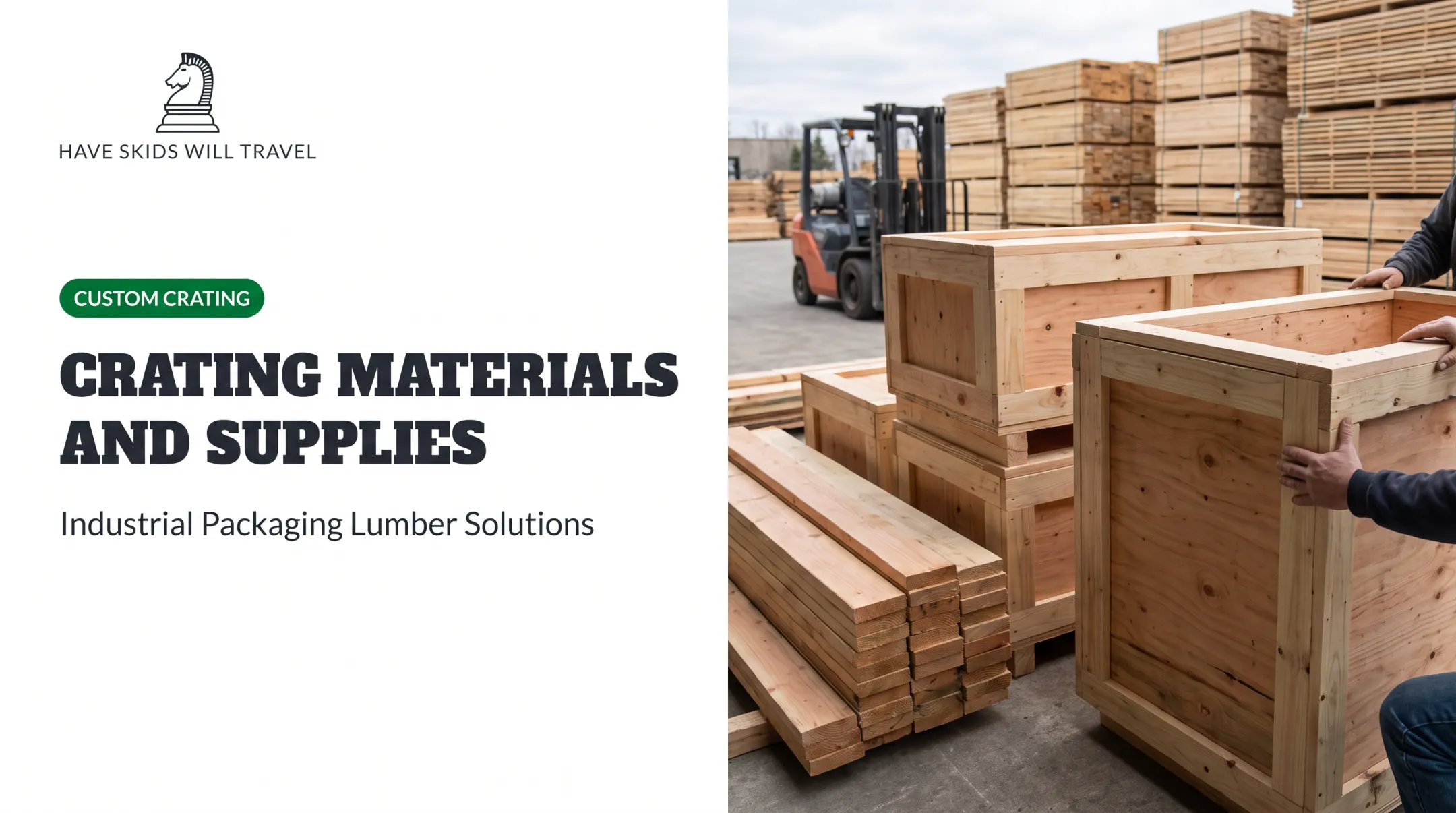
Solid lumber, whether softwood or hardwood, forms the framing and skids that carry the load. The NWPCA Uniform Standard for Wood Containers classifies lumber by density, defects, and load requirements rather than ranking one species as universally best.
Moisture matters just as much as species. USDA Forest Service guidance targets an average moisture content of 15%, not exceeding 19%, for framing lumber. Properly dried lumber:
- Resists warping during storage or transit
- Machines more precisely for tighter joints
- Reduces splitting and checking under stress
Panel and Sheathing Options
Plywood, OSB, and hardboard each bring different trade-offs:
- Plywood: moisture-resistant bonding options; widely used for structural panels
- OSB: cross-oriented strands with moisture-resistant adhesive; leave roughly a 1/8-inch edge gap for expansion
- Hardboard: resists marring and abrasion, but isn't rated for the same structural or wet-service demands as plywood or OSB
Panel thickness should scale with crate size and cargo weight. A 12-inch crate holding light parts needs far less sheathing than a 48-inch crate carrying 3,000 pounds of machinery.
Fasteners, Adhesives, and Reinforcements
Construction screws, ring-shank nails, wood glue, and metal corner brackets hold the structure together under stress. Fasteners should never be driven into wane or decay. That creates a weak point that can fail mid-transit.
For crates facing weather or long-term outdoor storage, a protective coating or sealant helps limit moisture swelling and rot. Matching lumber grade, panel type, and fasteners to the load and shipping route is what keeps a custom crate intact from dock to destination.

How a Shipping Crate Is Built: Step-by-Step Process
- Measure the item plus clearance. Get exact dimensions before cutting any material. Too tight, and the item won't fit; too loose, and it shifts in transit.
- Build the base and skids first. A flat-bottomed crate without skids risks serious forklift damage. Skids lift the load and give equipment a clean point of entry.
- Frame the sides and attach panels. Bracing strips at corners and edges add rigidity and stop panels from flexing under pressure.
- Add internal bracing or dividers. This immobilizes contents and prevents shifting, which is often the actual cause of "shipping damage."
- Seal with the top or lid. Add external labeling and any final weatherproofing.

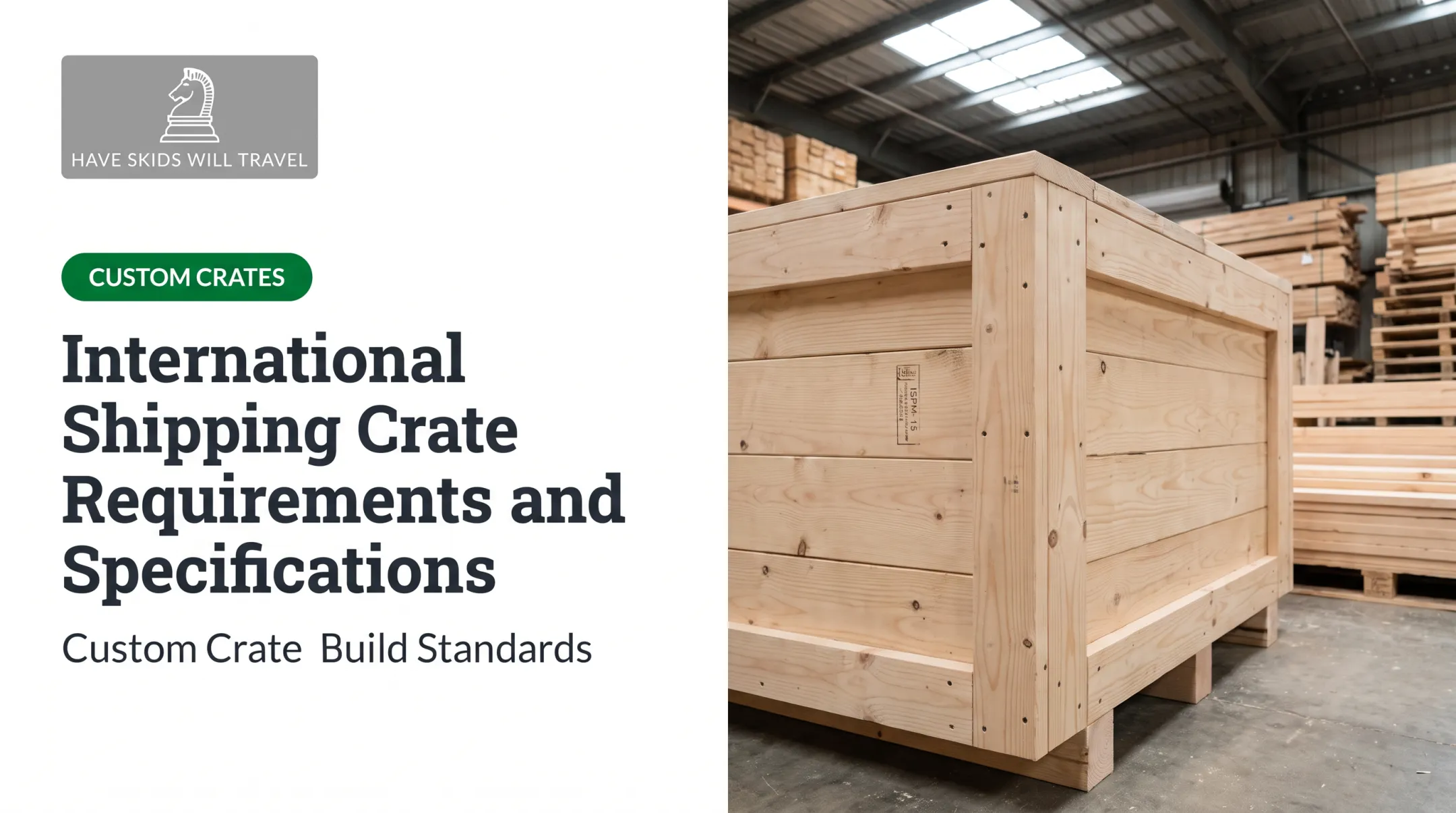
Palleton's custom crate shop applies these same engineering principles at scale, evaluating product weight, dimensions, and handling requirements before choosing materials and structural design. The result is crates built for automotive parts, machinery, and oversized industrial loads. Designs may include padding, bracing, or climate-control features for sensitive cargo.
Compliance Standards: ISPM-15 and Export Requirements
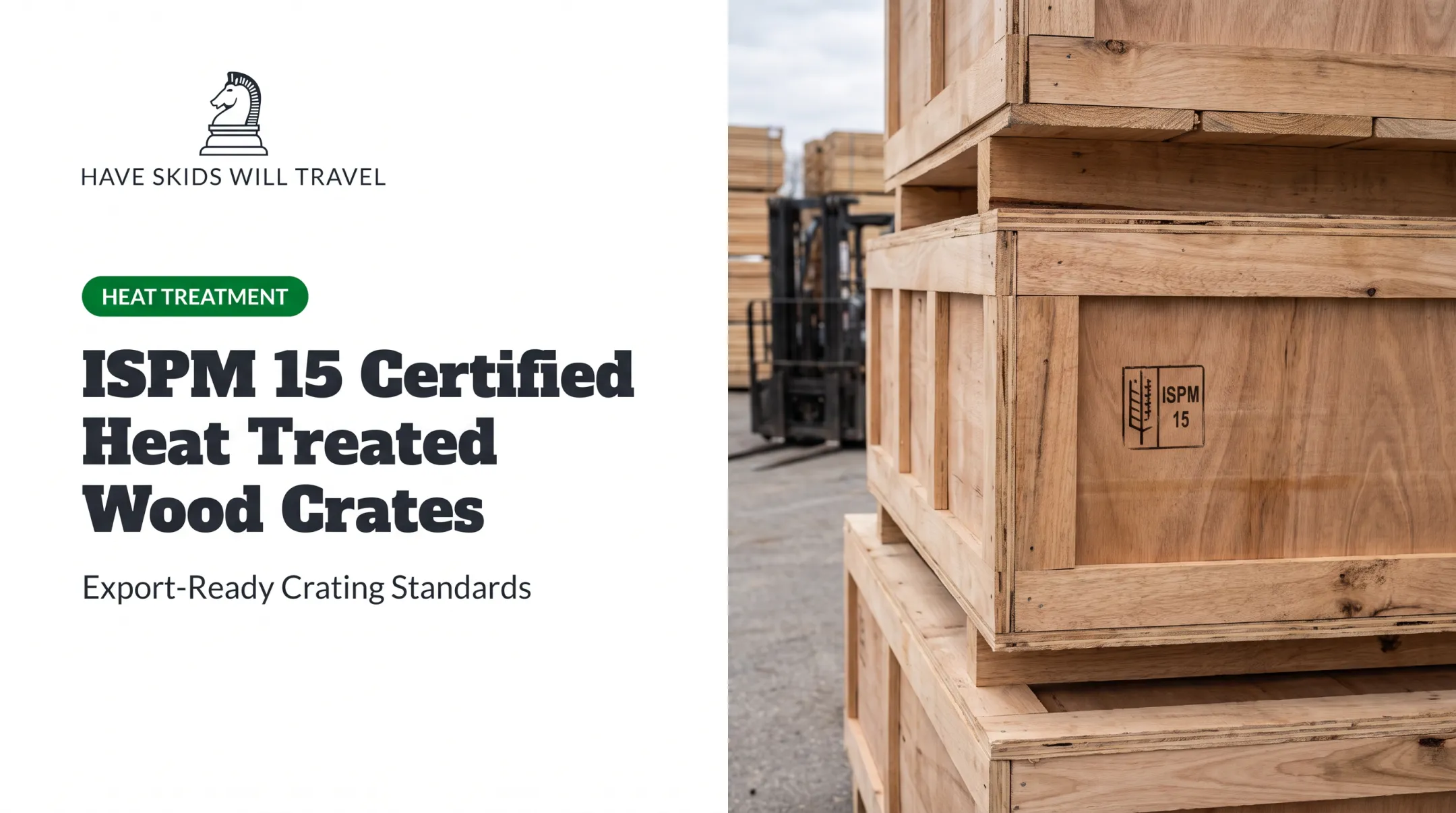
ISPM-15 is the international standard regulating wood packaging material in global trade. If your crate is solid wood and crossing a border, APHIS requires it to meet these conditions:
- Pest-free and debarked
- Heat-treated to the required core temperature
- Marked with the official ISPM-15 stamp
The treatment threshold: wood core temperature of at least 56°C (140°F), held for a minimum of 30 minutes.
Skip this step and the consequences are severe. A UK government report covering April 2024 through March 2025 found that 84% of non-compliant wood packaging interceptions were destroyed, with the remaining 16% re-exported. Non-compliance means lost inventory and a missed delivery deadline.

Palleton is ISPM-15 Heat Treat Certified for pallets and crates. Each unit is processed in a monitored kiln, brought to the required core temperature, and marked with the approved stamp. Exporters get a compliant, ready-to-ship option without building in-house treatment capability.
Should You Build Your Crates In-House or Partner with a Professional?
Building crates in-house looks cheap on paper. The real costs hide elsewhere:
- Labor — designing, cutting, and assembling crates pulls skilled workers away from core production
- Space — dedicated shop area for lumber storage, cutting, and assembly
- Tooling and safety — saws, nailers, and guards add capital cost, and OSHA warns that poorly guarded woodworking machines can cause serious injury
- Compliance overhead — sourcing ISPM-15-certified lumber or arranging outside treatment
Poorly built crates raise the risk of damaged goods, reshipment costs, and liability claims. High-volume custom crating also needs dedicated capacity, floor space, and labor just to keep pace—none of which shows up in a simple lumber quote.
Palleton brings 45+ years of custom pallet and crate manufacturing, seven facilities including a lumber mill and dedicated crate shop, and a national sourcing network. For most businesses, that's a more reliable path than standing up an in-house crating operation from scratch.

What Does Crate Construction Cost?
Costs vary widely based on size, wood type, and load rating. For reference, publicly listed standard crates run from roughly $62 for a small 12x12x12-inch unit to $200+ for larger 48x40x30-inch crates rated for 3,000 pounds. Custom industrial builds with reinforced bracing or climate control run higher.
Outsourced crate quotes typically bundle several cost centers into one:
- Design and engineering
- Materials (new, combination, or recycled lumber)
- Construction and quality inspection
- ISPM-15 heat treatment, when required
Partnering with one provider for design and construction, rather than juggling separate vendors, can cut total spend. You drop duplicate labor and avoid delays from supplier miscommunication.
Frequently Asked Questions
How much does a construction crate cost?
Costs vary widely, from roughly $50 for small job-site crates to several hundred dollars for large industrial crates. Size, wood type, and compliance treatment all drive the final price.
What does "construction crate" mean?
It's a fully enclosed wooden shipping container built to protect tools, equipment, or materials during transit. The term is common in industrial and job-site shipping contexts.
Is it "crate" or "create"?
"Crate" is the correct term for the shipping container. "Create" is a verb meaning to make something.
What's the difference between a pallet and a crate?
A pallet is an open platform that supports goods for handling and stacking. A crate is a fully enclosed structure that wraps around and protects the contents on all sides.
How long does it take to build a custom shipping crate?
Simple crates can be built in under an hour. Custom industrial crates take longer, depending on size, bracing requirements, and specifications.
Do all shipping crates need ISPM-15 heat treatment?
No. ISPM-15 applies specifically to international or export shipments using solid wood packaging. Domestic shipments within the U.S. generally aren't subject to this requirement.